The lifesaving case for CPR dummies with breasts
Every once in a while, I feel the urge to shout “women are not small men!” at inanimate objects.
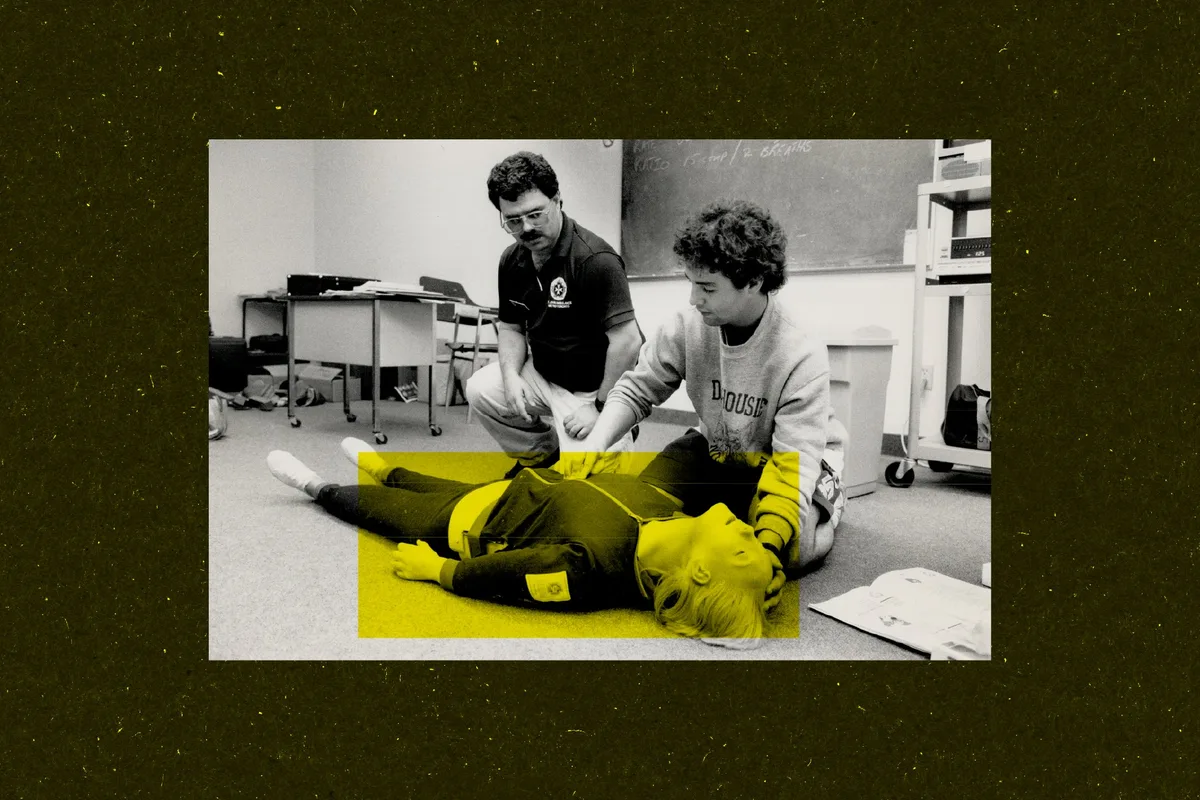
Today, that object is the flat-chested plastic torso typically used for CPR training.
Breasts, it turns out, are really the bane of every woman’s existence — the back pain, the boob jail , the running.
But here’s a new one: In a public cardiac arrest, they may be the reason nobody helps you.
Two years ago, an analysis of over 300,000 cardiac arrests showed that women are 14 percent less likely than men to receive CPR from a stranger if they have a cardiac arrest in public.
Bystanders tend to be more hesitant and feel less comfortable providing CPR or using external defibrillator paddles, called AEDs, on people with breasts.
Experts have time and again pointed, in part, to the fact that nearly everyone learns to perform CPR using the traditional, flat-chested dummies called “ manikins ,” which overwhelmingly represent the male anatomy.
If the first time a stranger has to perform CPR on someone with breasts is in the middle of a high-stakes emergency — what else would you expect? For the last 20 years, not only has the survival rate for out-of-hospital cardiac arrests been around 10 percent, but also the chances of the victim surviving decrease by 10 percent every minute that interventions like CPR are not performed.
It makes it all the more harrowing that women are not receiving the care they need when they experience cardiac arrests — especially in places where they are surrounded by people.
Whether it is manikins used for CPR training, crash tests or medical care in combat, the default stand-in for what is “human” has long been male.
But recently, researchers, advocates and governing bodies like the American Heart Association and European Resuscitation Council are pushing for better representation in CPR training and education.
Increases in simulation-based research on the use of representative manikins, like ones that accurately represent female anatomy, are changing how people train to respond to cardiac arrest — and simultaneously exposing bigger gender gaps in design that systematically exclude women from experiencing the same level of safety and care as men.
One size doesn’t fit all The first CPR manikin was developed in 1960 by the Norwegian toy manufacturer Laerdal.
The manikin, called Resusci Anne, which had the anatomy of a prepubescent teen, was ironically modeled off an unnamed girl who was thought to have drowned in the river Seine in Paris.
5News aggregated this summary from the outlet’s public feed. The full article, with all the context, is on www.vox.com — the content belongs to Vox.