Body found at bottom of Scottish well may be from rare ritual burial performed centuries ago
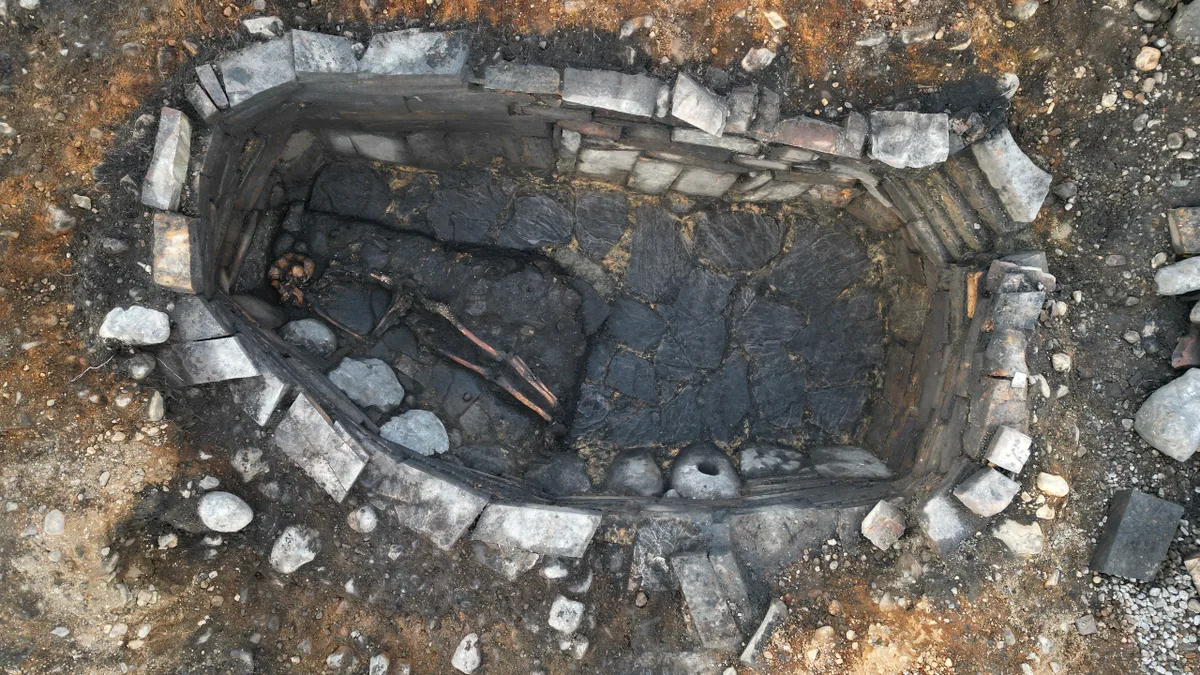
Archaeologists in the Scottish Highlands have discovered the 2,000-year-old burial of an adult in a possible ritual well.
The burial may have been made during a closing ceremony when the well was abandoned.
Archaeologists discovered the enigmatic grave during expansion of a quarry in northern Scotland, according to a statement from Highland Archaeology Services that was emailed to Live Science.
The base of the well, which is about 10 feet (3 meters) long and 3 feet (1 m) deep, "is lined with stone slabs and clay pushed between the gaps in the stonework, possibly to help the structure hold water," the archaeologists wrote in the statement.
Based on artifacts found near the well, the archaeologists believe the burial was made during the Iron Age (800 B.C. to A.D.
400).
Animal bones were placed on top of the burial, but no other grave goods were found.
"Iron Age burials from the north of Scotland are fairly rare finds in general," Lachlan McKeggie , co-director of Highland Archaeology Services, told Live Science in an email.
The archaeologists are not yet certain of the sex of the skeleton , what age they were or how they died.
Further analysis will be taking place over the next few months, which should give us a date for both the feature and the human remains, as well as confirm the sex, age range and pathologies, McKeggie said.
The burial is located not far from an Iron Age settlement at Camore Wood , McKeggie said, where archaeologists have previously found the remains of at least 20 hut circles.
The remains of possible roundhouses were also found near the well burial, the team said in an Aug.
7 field report .
But it’s not clear if this burial is related to the Camore Wood settlement, which is located about 1 mile (1.6 km) away.
5News aggregated this summary from the outlet’s public feed. The full article, with all the context, is on www.livescience.com — the content belongs to Live Science.