Companies Are Bracing Themselves For El Niño’s Ripple Effects
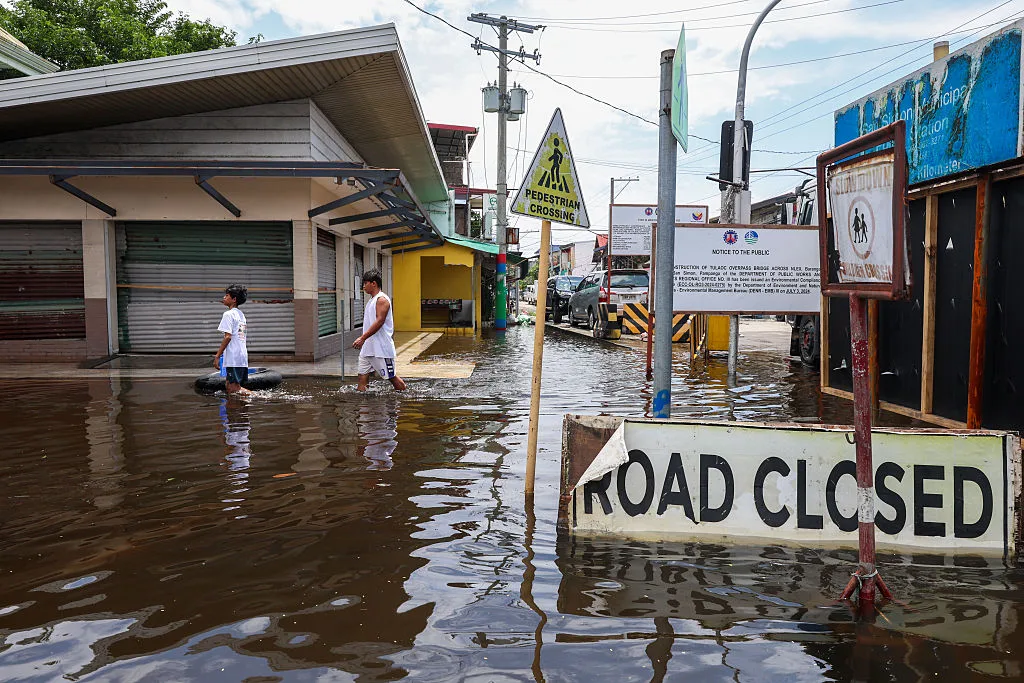
People wade through a flooded road caused by monsoon rains, in Apalit, Pampanga, Philippines, on Aug.
20. —Daniel Ceng/Anadolu—Getty Images The warnings from meteorologists have been growing slowly but steadily in recent months: the most severe El Niño on record may be coming soon.
Record-breaking temperatures and a slew of extreme weather events are likely to follow.
For companies and investors, alarm bells are already sounding.
Hundreds of publicly traded companies—particularly in the food and chemicals sectors—have used earnings calls in recent months to outline their contingency planning.
And banks have warned about the possibility of a supply shock that drives up prices as extreme weather disrupts production chains.
In other words, the potential effects of El Niño over the coming year are both local and specific to companies and their operations, and cumulative across the economy.
Unlike many phenomena in our climate-changed world, El Niño isn’t new or unfamiliar to most decision makers.
Past cycles in the 1970s and 1990s have wrought enough damage that supply chain planners know to watch out.
But this El Niño will inevitably be different.
For one, it’s happening against the backdrop of a world that has already warmed roughly 1.5°C since the Industrial Revolution.
And, second, modelers have observed an especially significant difference between recent sea-surface temperatures and the historical averages, an indicator of an especially strong El Niño.
A typical El Niño cycle lasts less than a year, but the economic effects may extend far longer.
An initial shock of crops destroyed by heavy rain, for example, would harm farm economies immediately while disrupting global supplies for several seasons.
5News aggregated this summary from the outlet’s public feed. The full article, with all the context, is on time.com — the content belongs to TIME.