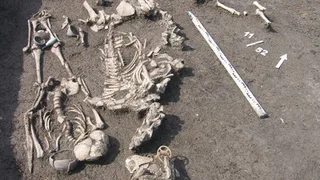
'The back of her head had been removed by a single blow from a sharp blade': Archaeological clues are revealing the horrific lives and deaths of the people enslaved by Vikings
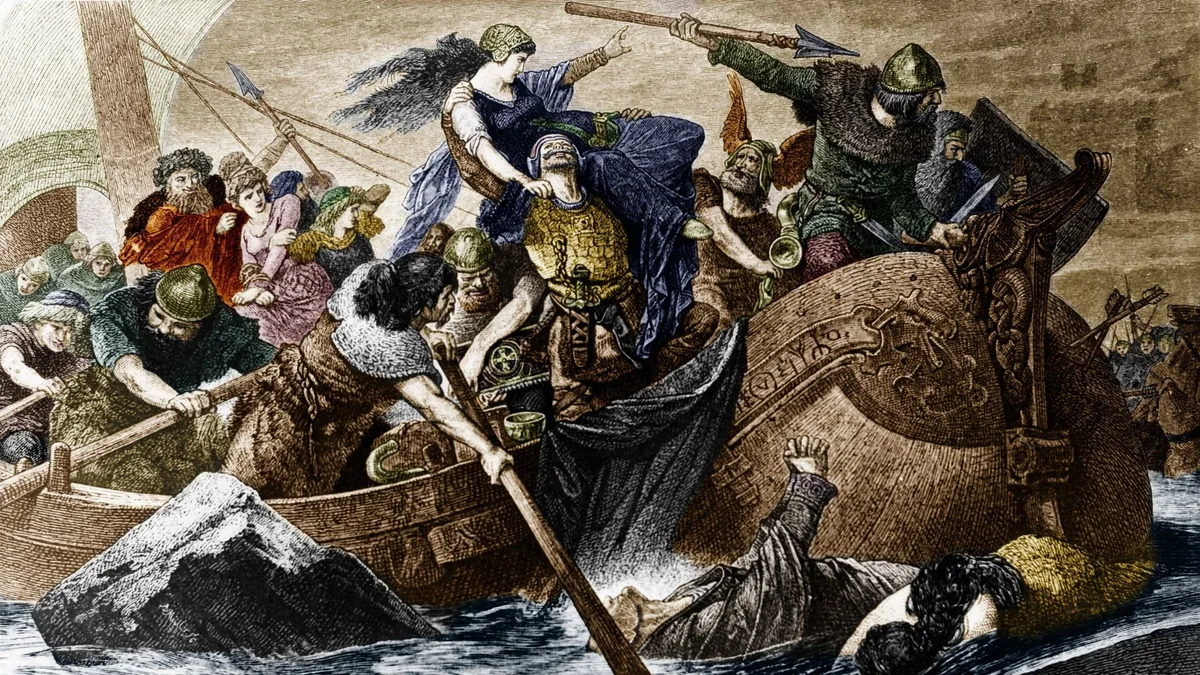
Slavery has existed for thousands of years, permeating ancient and modern societies across the world.
The Vikings were no different.
Enslaved people were valuable commodities , being captured and then traded across the Vikings' vast networks.
Legal texts and written sources show how enslaved people were sold at trading centers in the same vein as cattle.
In this excerpt from " The Sea-King and the Sorceress: Life and Death in the Viking Age " (Basic Books, 2026), author and archaeologist Neil Price looks at the horrific lives of the "thralls" — the Viking term for the enslaved.
In it, he highlights the inhumane treatment of enslaved people, from the raids to kidnap people into the slave trade to a woman who appears to have been killed as a tribute to a high-status man.
Neil Price interview: 'It gives us a glimpse of a different kind of Viking life': Archaeologist Neil Price on the sea-kings, sorcerers and Sámi who lived during the Viking Age The vast majority of the Norse population were farmers, but there is another group of people who were almost as numerous, though very hard to find in the archaeological record: the enslaved.
They have only recently begun to be properly acknowledged in our histories, partly because of the long-standing neglect of the marginalized and vulnerable in many cultures, but in the Viking world also due to a particular coincidence of terminology.
For the Norse, the unfree were þrælar, translated into English as "thralls," which is too mild a word to convey its true meaning.
Today, we can be enthralled by a work of art or even a person, but we do not say that we're enslaved by them.
Norse thraldom took many forms, some less severe or permanent than others, but all involved the loss of liberty and rights, and the subjugation of one person to another through servitude.
A chapter here, even with tangential references in a few others, is nowhere near enough to do justice to this side of the Norse experience (or rather, often the non-Norse experience, since many of them were kidnapped abroad during raids and other campaigns).
Archaeological recognition can at least restore some measure of individual dignity, though more comforting to us than to them.
Slavery, as both a practice and an integrated economic system, was an indivisible part of Viking-Age Norse society and had probably already become established in Scandinavia centuries or even millennia earlier.
5News aggregated this summary from the outlet’s public feed. The full article, with all the context, is on www.livescience.com — the content belongs to Live Science.