Why Tasers sometimes fail to stop suspects — and what weight has to do with it
Multiple Taser deployments failed to stop Pamela Cisneros, 49, during a roughly four-minute standoff in Times Square last Monday, after she allegedly stabbed two people .
The attack left a 32-year-old woman dead and a 68-year-old man wounded.
"As multiple officers discharged Tasers, which proved to be ineffective, the subject continued to advance toward our officers with the knives," Jessica Tisch, New York City police commissioner, said in a news conference that evening.
When the Tasers failed to subdue Cisneros — who stated, "I’m not dropping anything.
I would rather kill both of you" — two officers opened fire, striking her.
Cisneros was taken to Bellevue Hospital, where she was pronounced dead.
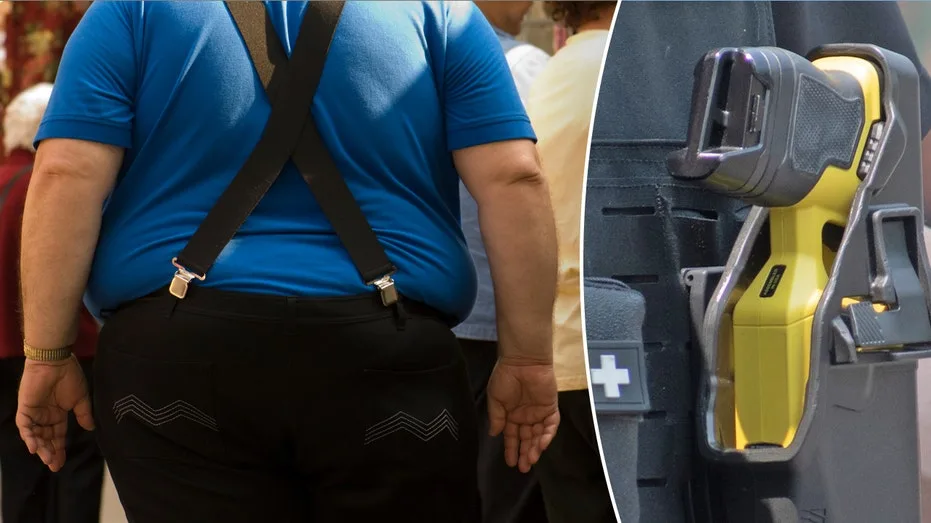
NYPD IDENTIFIES WOMAN KILLED IN TIMES SQUARE STABBING SPREE The incident sparked broader questions about why Tasers sometimes fail and whether obesity or body composition can impede their effectiveness.
A standard Taser is designed to fire two small, barbed probes connected to the device by insulated, conductive wires, according to Axon, the manufacturer.
"Electrical pulses travel along those wires and into the body, triggering involuntary muscle contractions," Axon’s website states.
"For NMI to occur, it is best that two probes make contact 12 inches (30 cm) or more apart." Steve Keller, a retired police sergeant in Blue Ash, Ohio, said the most common causes of Taser failure include clothing, probe placement, substance abuse by the perpetrator and connectivity between probes.
However, obesity can affect the Taser, he said, as a large layer of body fat could interfere with the connectivity.
"The purpose of the Taser is neuromuscular in capacity," Keller told Fox News Digital.
"Your large muscle masses are your back and thighs.
Officers are trained to aim for those areas," he said, just as they are also trained to adjust their aiming for clothing and the distance between them and the subject.
5News aggregated this summary from the outlet’s public feed. The full article, with all the context, is on www.foxnews.com — the content belongs to Fox News Health.