Microscopic alien technology may be hidden in moon dust, scientists say
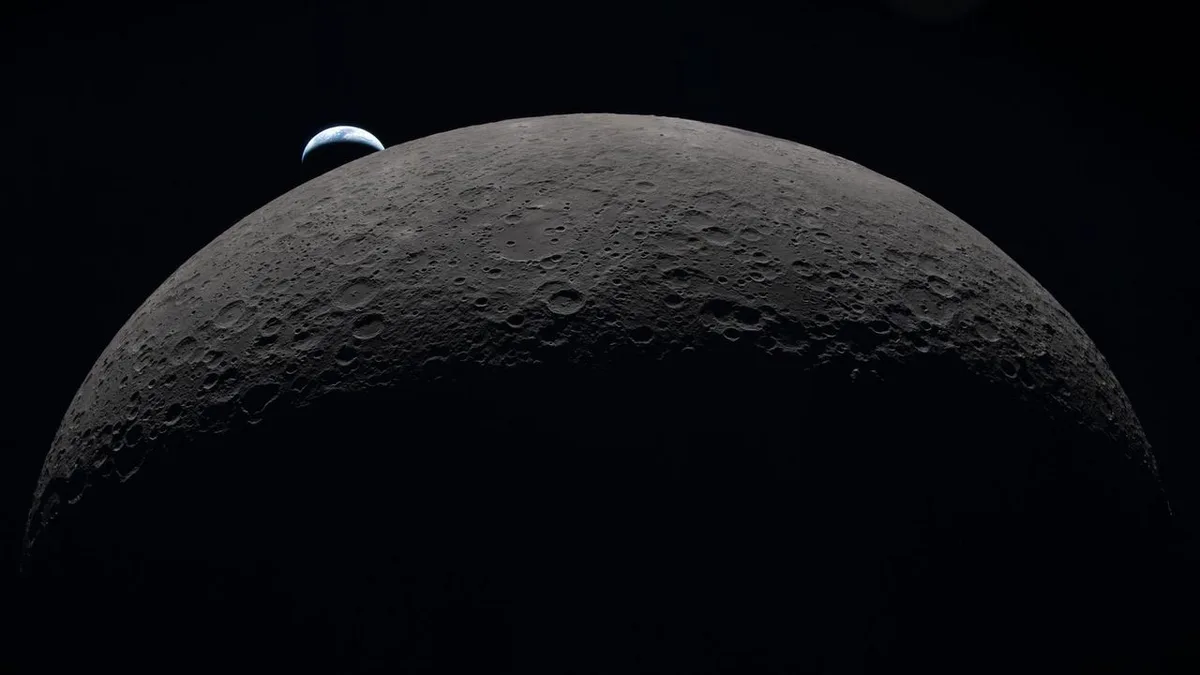
Could we find alien technology embedded in moon dust? The bold idea, not yet peer-reviewed, suggests checking out the lunar surface for "microscopic technosignatures." The SETI Institute — or the Search for Extraterrestrial Intelligence Institute — describes these technosignatures as "tiny engineered particles" that may have come from interstellar space before settling on the moon .
The institute recently highlighted a paper on the topic, published on arxiv in August, and added the research is undergoing peer review for consideration in the International Journal of Astrobiology.
The study is led by SETI Institute Affiliate Scientist Lewis Pinault.
"The moon has been quietly accumulating material from space for billions of years, much of it likely billions of years older than the moon itself," said Pinault in a statement .
"We're asking whether that ancient collection might contain microscopic traces of technologies that existed long before humans ever looked up at the sky." Even if no aliens turn out to be there, the search could help advance models of how dust goes through interstellar space, as well as effects on lunar geology or impact science, the institute added.
"The study reports no evidence of extraterrestrial technology," the institute added in the statement.
"Instead, it demonstrates that searching for these microscopic technosignatures is now scientifically testable." That's in large part because the NASA-led Artemis program, which will ultimately bring astronauts to the moon, as well as China's Chang'e robotic series, would provide opportunities to return samples, the institute said. (China is also eyeing bringing its taikonauts to the moon by 2030.) SETI is best known for looking for artificial radio signatures in space that may have come from extraterrestrials.
This new study, the institute added, is focusing more on past alien communities that may have preserved their knowledge in "durable particles," even if the communities are no longer in existence.
The study examines how these particles could (in theory) move from star to star, stay viable over long distances and periods, embed themselves in the lunar surface and then — if humans could find them — use AI-assisted imaging, materials analysis and microscopy to take a closer look, among other techniques.
Helping in that search is the environment of the moon itself, which — compared with Earth , at least — has slow-moving geology.
As the institute points out, the surface has no flowing water or substantial atmosphere like our planet does.
What's more, the moon has picked up dust in its environment for about four billion years (from not long after the solar system was formed 4.5 billion years ago), presenting a potential archive of dust in the solar system and interstellar space.
5News aggregated this summary from the outlet’s public feed. The full article, with all the context, is on www.space.com — the content belongs to Space.com.