Voters Are Turning to AI for Election Help. The Answers Aren't Always Right
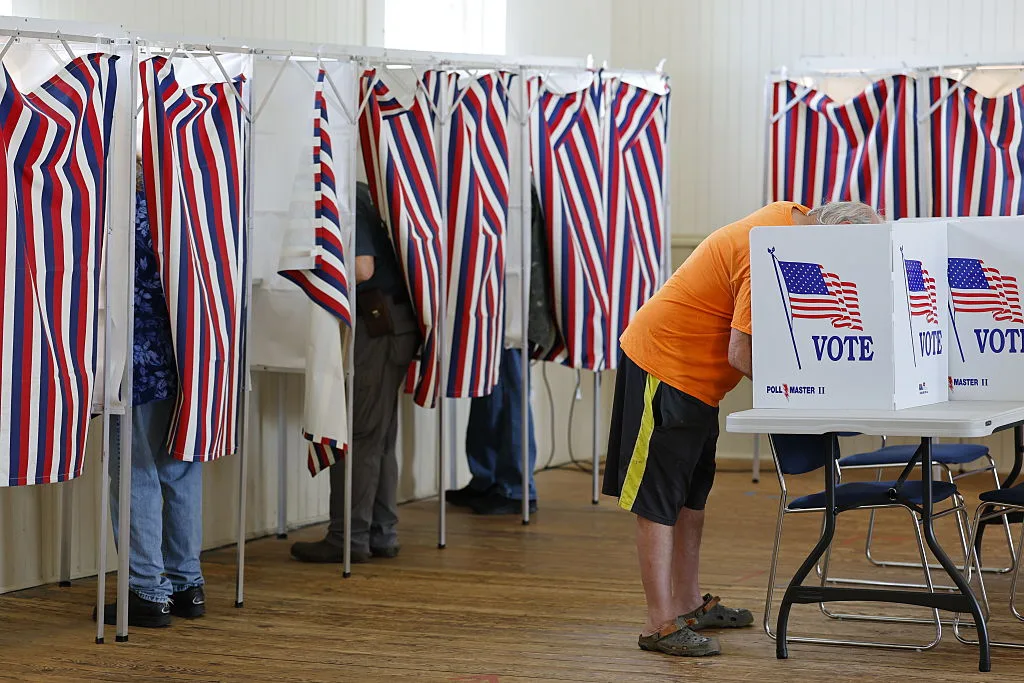
Voters cast their ballots in the primary midterm elections on Sept.
8, 2026 in Sanbornton, New Hampshire. —CJ Gunther—Getty Images After years of Google restricting Gemini’s ability to answer users’ questions about major elections, the tech giant is shifting tactics.
Google announced Wednesday that the company would add credible election information about the upcoming midterms—including details about where and how to vote—to its Gemini app, along with AI-generated responses in its search products.
The company said it would share information on polling locations and voter registration instructions from state and local governments and the voting information group, Democracy Works, along with race results from The Associated Press.
As Gemini wades deeper into politics, the risk of the chatbot giving voters misleading, biased, or outdated election information will only grow.
A Pew Research Center study earlier this year found about half of adults under 50 rely on chatbots to search for information, while a smaller share use them to read news.
“We know that voters are going to turn to chatbots more and more,” said Valeria de la Fuente, a digital research analyst at the Institute for Strategic Dialogue who recently co-authored a report on election-related misinformation from chatbots.
“So the quality of the responses that we found is concerning.” Google’s new election policy is a less cautious stance than the one the company took in 2022 and 2024 when it blocked Gemini from answering certain election-related questions, pushing users to seek answers from Google search instead.
“People come to Google to stay informed during election season—like when finding their polling site, watching candidate debates, or tracking results on election night,” the company said in Wednesday’s blog post .
“We take the responsibility to deliver high quality, trustworthy information seriously.” Other tech companies have taken similar approaches.
Both OpenAI and Anthropic said their chatbots would direct users to voting information from the nonprofit Democracy Works.
OpenAI also plans to provide live vote counts from The Associated Press, and monitor its systems for signs of political bias.
Meta spokesman Corey Chambliss said when MetaAI users ask about voting and participating in elections, the service will give them local information or direct them to government sources.
But how effective those approaches will be as the contest gets closer remains an open question.
5News aggregated this summary from the outlet’s public feed. The full article, with all the context, is on time.com — the content belongs to TIME.