What a Bicentennial Baby Knows
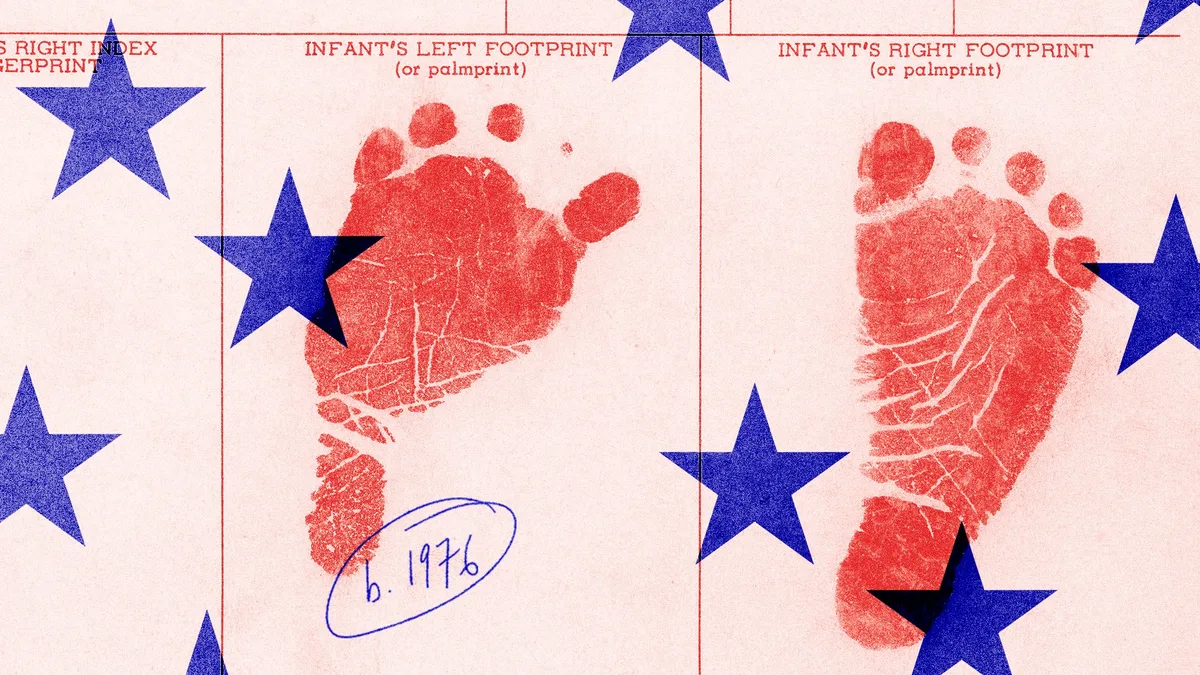
Thirteen seconds after midnight on July 4, 1976, Karen Steele was born in Montclair, New Jersey, and was anointed the first “bicentennial baby.” Newspaper articles followed.
President Gerald Ford and his wife, Betty, sent a note to the family.
And then it kind of became a thing.
Any baby born that year was treated like they had emerged playing the fife and drums.
In Mobile, Alabama, new mothers received a commemorative blanket.
In Covington, Louisiana, a hospital handed out (for $2.50) special “bicentennial baby” certificates on faux parchment, a “memento that can be framed and cherished as a family heirloom for endless generations.” This was a year of jaw-dropping kitsch , an explosion of red, white, and blue everything —toilet paper, lollipops, even condoms (pleading: One Time for Old Glory ).
Branding newborns this way became part of the general patriotic fun.
And although the tchotchkes surely ended up moldering in a red, white, and blue landfill somewhere, the label stuck.
I know: I was one of those babies, born in August 1976.
Being a bicentennial baby was not anything I ever thought about all that much.
In fact, it was really only when meeting another person born in 1976 that it came up at all.
Oh, you’re a bicentennial baby too , one of us would say to the other, smiling dumbly.
This was a secret handshake that opened zero doors.
But unlike other indelible parts of my identity that felt small in their particularity—like being the child of immigrants or being nearsighted—having my birth hitched somehow to the history of the country, to its forward motion, felt big whenever I was reminded of it.
5News aggregated this summary from the outlet’s public feed. The full article, with all the context, is on www.theatlantic.com — the content belongs to The Atlantic.