Trump tried to scrap NASA's Roman Space Telescope last year. Now it's ready to launch
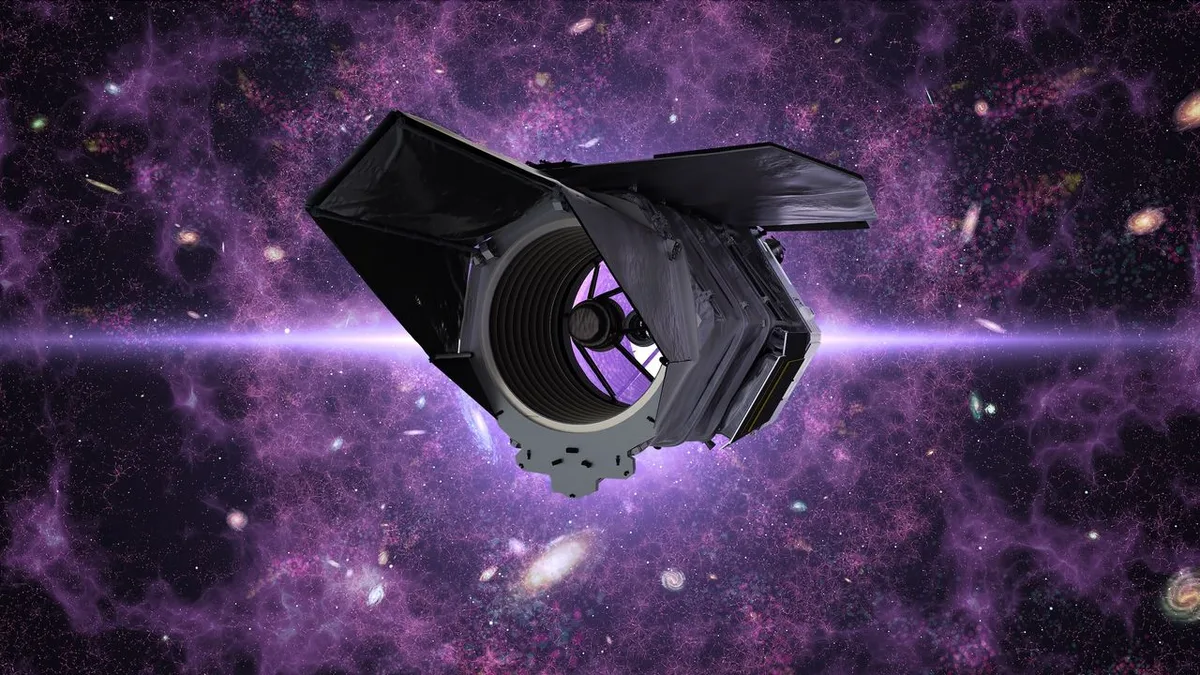
The hours are counting down to the launch of NASA's newest flagship orbital observatory.
The spacecraft recently got its last glimpse of terrestrial light before being encapsulated in its rocket's protective payload fairing last week and is imminently bound for liftoff.
The Nancy Grace Roman Space Telescope is NASA's next-generation research satellite , and it's currently slated to launch on Sunday (Aug.
30).
Roman will lift off atop a SpaceX Falcon Heavy rocket at 7:27 a.m.
EDT (1127 GMT) from NASA's Kennedy Space Center in Florida.
The scope will then head to sun-Earth Lagrange Point 2 (L2), an orbital sweet spot about 930,000 million miles (1.5 million km) away that will park the spacecraft on the side of Earth opposite the sun.
Roman's upcoming launch will cap nearly two decades and $4 billion of development and usher in a new wave of astronomical research into dark matter and dark energy , exoplanet discoveries and the ability to capture visible-to-near-infrared images of the universe that are 50 times wider than the field of view on the James Webb Space Telescope (JWST).
But last year, as Roman's assembly and testing neared completion, President Trump's leaked budget proposal for fiscal year 2026 (FY26) stoked fears that the entire mission could be canceled.
In April 2025, reporting about initial "passback" budget documents outlined a proposal for the largest cut in NASA's history — a 24% overall reduction in funding, with a 50% loss to science programs.
The document detailed continued support for missions like Hubble and JWST but allocated "no funding … for other telescopes." The news shocked scientists and engineers across NASA missions, who were suddenly dealt a dose of uncertainty as their job security teetered in political limbo.
For Roman's team, the prospect of abandoning the telescope just before the finish line hit hard.
Lisa, an engineer who worked on Roman's team at NASA's Goddard Space Flight Center in Maryland and wished to be identified by an alias, was left confounded at the time.
"We're 95% there.
5News aggregated this summary from the outlet’s public feed. The full article, with all the context, is on www.space.com — the content belongs to Space.com.