The military shrank the MRE for a future fight. Now it's deploying the new food rations with troops on the ground.
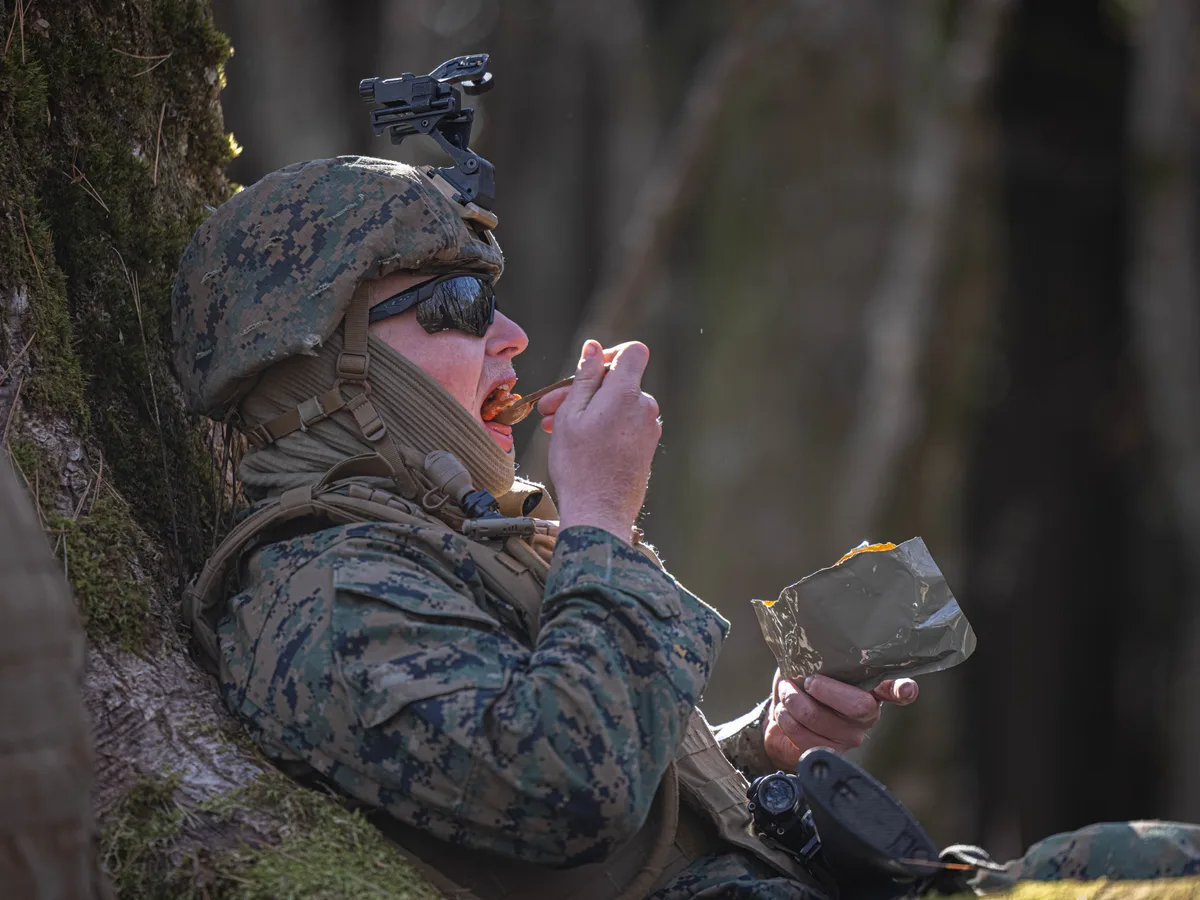
A Marine eats a field ration during a training event in Japan last year.
LCpl Weston Brown/US Marine Corps Marines are deploying a new combat ration built for the first days of war.
C-CARs replace three MREs with one lighter daily ration for mobile operations.
Less food weight means more room for gear and fewer early resupply missions.
Marines are deploying with a new combat ration — that is, stuff to eat — built for the first days of war After entering service last year, the Close Combat Assault Ration, or C-CAR, is now deploying with frontline Marine units.
The new ration condenses what would normally be three Meal, Ready-to-Eat packets into a single daily package, reducing the weight troops carry to free space for ammunition, batteries, and other mission-essential gear.
The Defense Logistics Agency, which manages and develops the rations, told Business Insider that the C-CAR is intended for use during the first 72 hours of a conflict, when troops need a lighter, less bulky alternative to traditional MREs.
Carrying less food gives Marines more room.
It reduces the need for risky resupply missions during the first few days of a conflict, Capt.
Matt Burdick, a logistics officer with the 13th Marine Expeditionary Unit , told Business Insider.
A soldier holds a Close Combat Assault Ration.
US Army The 13th MEU recently deployed to the Middle East with the new rations after they entered service last year.
Business Insider spent three days on the USS Makin Island with the 13th MEU off the coast of California this summer as they prepared for their deployment.
Unlike traditional MREs, which are designed to be heated and eaten during longer pauses, C-CARs are built for troops on the move, Burdick said.
5News aggregated this summary from the outlet’s public feed. The full article, with all the context, is on www.businessinsider.com — the content belongs to Business Insider.