'This is probably the safest time to be playing the sport of football': Concussion expert explains why viral CTE study may not be as scary as it sounds
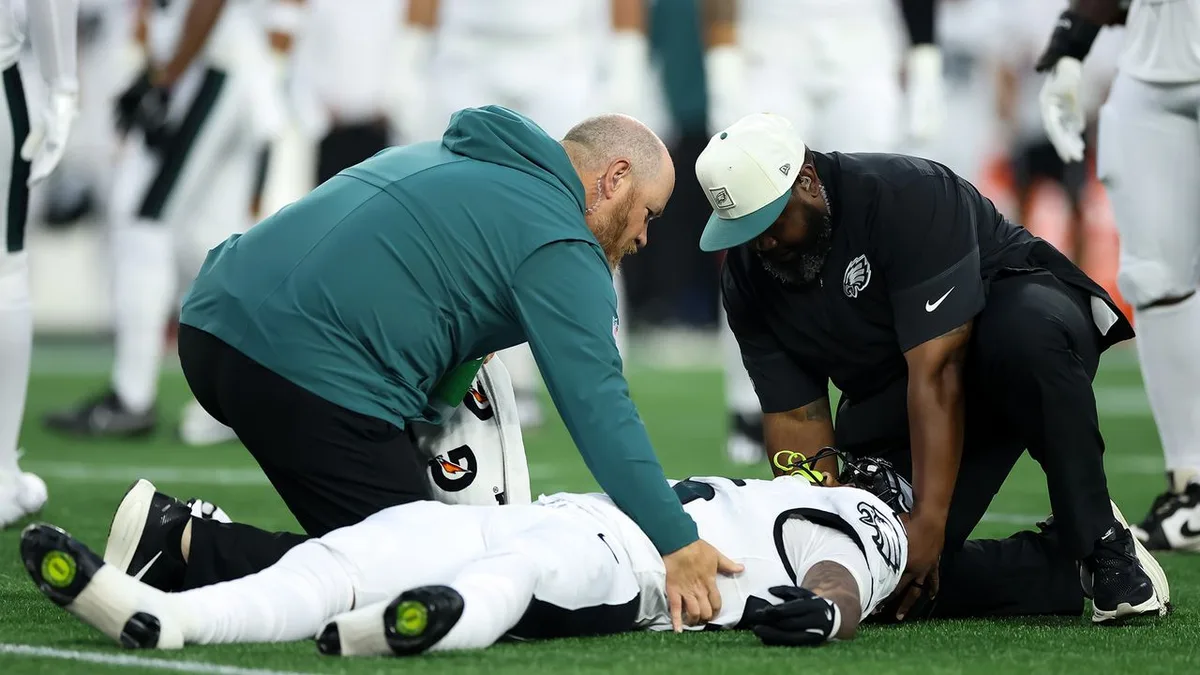
Of the former National Football League (NFL) players who died in recent years, at least 25% had brain changes related to chronic traumatic encephalopathy ( CTE ), a new study suggests.
The study, published Aug.
25 in the journal The BMJ , examined donated brain tissue from 338 former NFL players who died between 2008 and 2021.
A total of 1,712 former players died in that time frame, so the analysis included only about 20% of the players' brains that could theoretically have been examined.
Then, the researchers used that subset of brains to estimate the likely prevalence of CTE in the overall group.
Among the donated brains, over 93% showed physical signs of CTE, meaning an accumulation of abnormal proteins in specific places within the tissue.
About 30% had stage IV CTE, the most severe form that comes with the most extensive brain changes.
These physical signs of CTE aren't always associated with overt symptoms, such as cognitive decline, mood and behavioral changes, or dementia.
Only about 60% of the individuals with CTE-related brain changes were also diagnosed with dementia in this study.
That said, those with stage IV CTE were more likely to have dementia, with 90% having a diagnosis.
Across the full study time frame, the researchers estimated that between 18.5% and 98.7% of the deceased players likely had CTE.
Zooming in on the period with the highest number of brain donations — 2016 to 2021 — they estimated the rate to be between 24.5% and 97.7%.
That latter time frame was likely the more representative sample, the researchers determined.
What can this study tell us about the CTE risk that current football players face, from youth sports to the professional level? To put the research into context, Live Science spoke with Thayne Munce , an associate professor and director of the Jayhawk Athletic Performance Laboratory at the University of Kansas, who was not involved in the BMJ study.
5News aggregated this summary from the outlet’s public feed. The full article, with all the context, is on www.livescience.com — the content belongs to Live Science.