Trump Is Betting on the Wrong Europe
Donald Trump says he wants a Europe that is more capable of defending itself.
But the nationalist-populist movements he is championing there will not advance this agenda and may put Europe at odds with the United States over China.
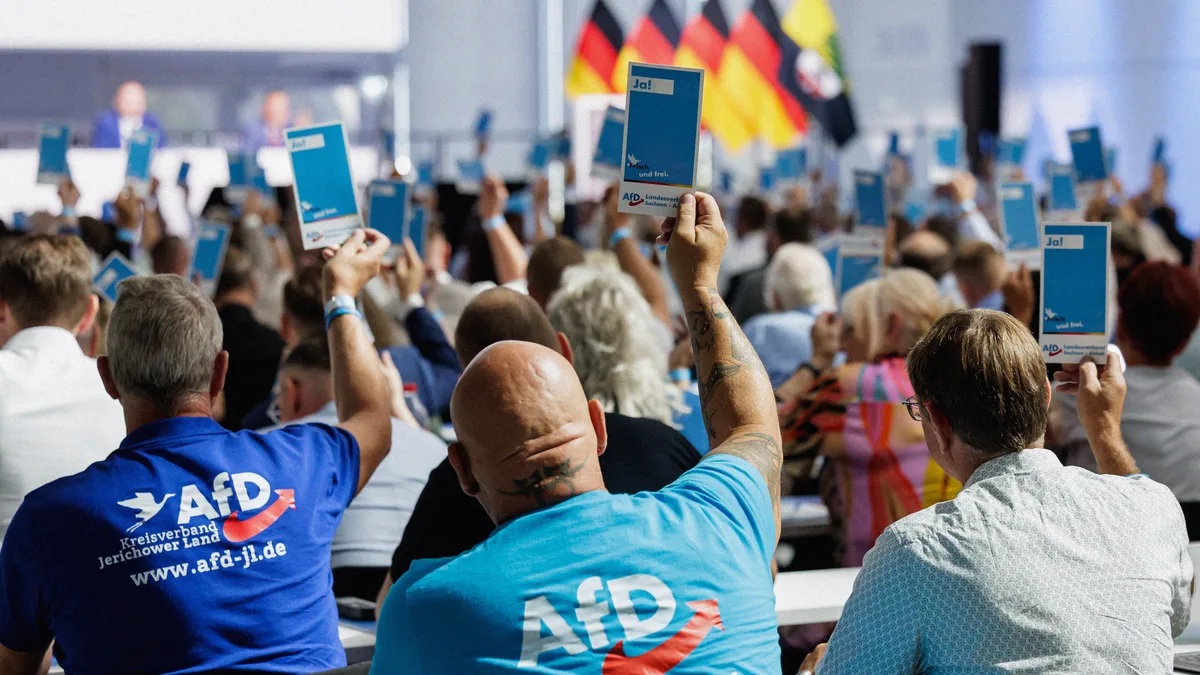
Earlier this month, the nationalist-populist Alternative for Germany party came just a few seats short of an outright majority in a regional parliament, its best-ever result.
This Sunday, Germans will vote in two more regional elections.
The ruling Christian Democrats are behind in both races, and the AfD is expected to do well in one.
On Wednesday, Chancellor Friedrich Merz canceled his visit to the United Nations General Assembly next week, sparking speculation that he could soon be forced to resign.
U.S. officials are ebullient.
Trump greeted the AfD’s recent electoral victory with a triumphant message on Truth Social that finished with “MGGA” (Make Germany Great Again).
Richard Grenell, Trump’s former ambassador to Germany and now a presidential envoy, called the result “a huge win and a new day in Germany.” The Trump administration has consistently embraced Europe’s nationalist-populist parties as ideological partners, and even launched a State Department fund to support MAGA-aligned European groups.
It surely sees the AfD’s ascendance as a sign that politics are moving in its direction.
But that is true only if Trump’s real goal is a fragmented Europe that accommodates Russian and Chinese power and is unable to punch its weight.
Such an outcome would be catastrophic for U.S. interests. [ Read: Europe without America ] Some people in the administration insist that the idea is not to weaken Europe but to shift the burden for its conventional defense to the Europeans themselves.
Undersecretary of Defense for Policy Elbridge Colby and Secretary of State Marco Rubio, for example, reject claims that the administration is soft on Russia and say that they are calling instead for greater European self-sufficiency.
Colby advocates for what he calls NATO 3.0, in which Europeans would take on the primary responsibility for their conventional defense.
5News aggregated this summary from the outlet’s public feed. The full article, with all the context, is on www.theatlantic.com — the content belongs to The Atlantic.