Wired vs. wireless internet: Which should you choose for your home?
The right choice depends on the services available at your address and your networking needs.
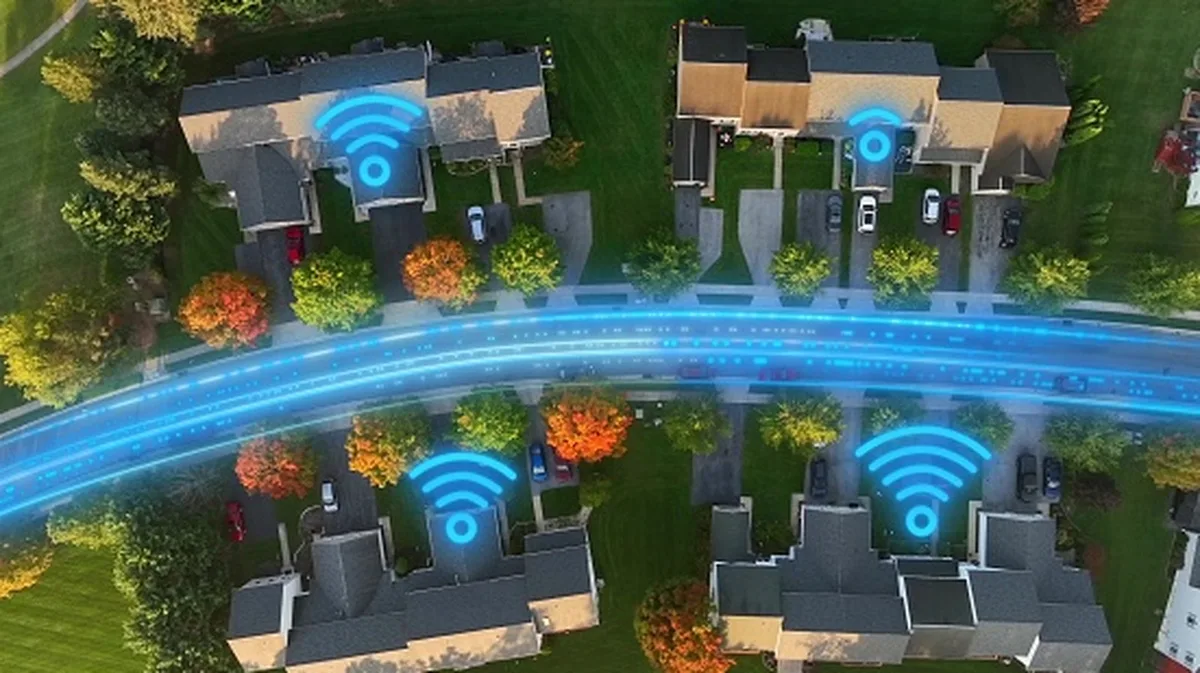
With wired internet, your provider's internet service reaches your home through a physical line, such as fiber, coaxial cable or a DSL connection. Fixed wireless home internet works differently. Instead of running that final line into the property, the provider sends the connection over a 4G LTE or 5G cellular network to a gateway inside your home. That gateway then passes the connection onto your phones, laptops, TVs and other devices over Wi-Fi or Ethernet.
fadfebrian/Shutterstock With wired internet, a physical line runs to your home. Depending on the service, that might be fiber-optic cable, the coaxial cable used for cable internet or older telephone wiring used for DSL. Once the connection reaches your property, a gateway (usually a modem, optical network terminal or similar) converts the incoming signals into ones the devices in your home can use.
Fixed wireless home internet replaces that final physical line with a wireless connection. A gateway inside your home connects to the provider's 4G LTE or 5G network, much like a smartphone connects to a cellular network. The gateway then passes that internet connection onto your other devices.
After that, wired and wireless home internet work in much the same way from the user's perspective. Your gateway may be an all-in-one device that also functions as a router and Wi-Fi access point, or you might have a separate router plugged into the gateway. Either way, the router's job is making sure traffic coming in and out goes to the right devices.
Either connection can provide Wi-Fi throughout the house, and a fixed-wireless gateway can also have Ethernet ports for devices you want to plug in directly. Thus, choosing 5G home internet doesn't mean your TV, computer or game console has to connect over Wi-Fi.
This is also why poor Wi-Fi in one part of the house doesn't necessarily mean the internet connection coming into your home is slow. A weak signal in an upstairs bedroom or a distant corner may instead be a coverage problem inside the house. In that case, a mesh Wi-Fi system can extend coverage across a larger space and reduce dead zones, regardless of whether the internet itself arrives over fiber, cable or 5G.
The same separation applies if you prefer wired connections for certain devices. You can use Ethernet with either type of home internet, and there are even ways to get a wired connection in rooms without running Ethernet cables over long distances.
Natallia Boroda/Shutterstock "Wired" covers several different technologies, so it doesn't automatically mean faster. A strong 5G home connection can outperform an old DSL service. Fiber sets a much higher performance ceiling, and modern cable can also deliver fast download speeds.
Opensignal's April 2026 US analysis provides some useful real-world context. Among subscribers who bought both home broadband and mobile service from the same provider, those using fiber or cable for home broadband experienced higher average download speeds than those using fixed wireless.
5News aggregated this summary from the outlet’s public feed. The full article, with all the context, is on www.engadget.com — the content belongs to Engadget.