The U.S. Is Having One of Its Most Active Wildfire Seasons. Here’s How the Costs Are Adding Up
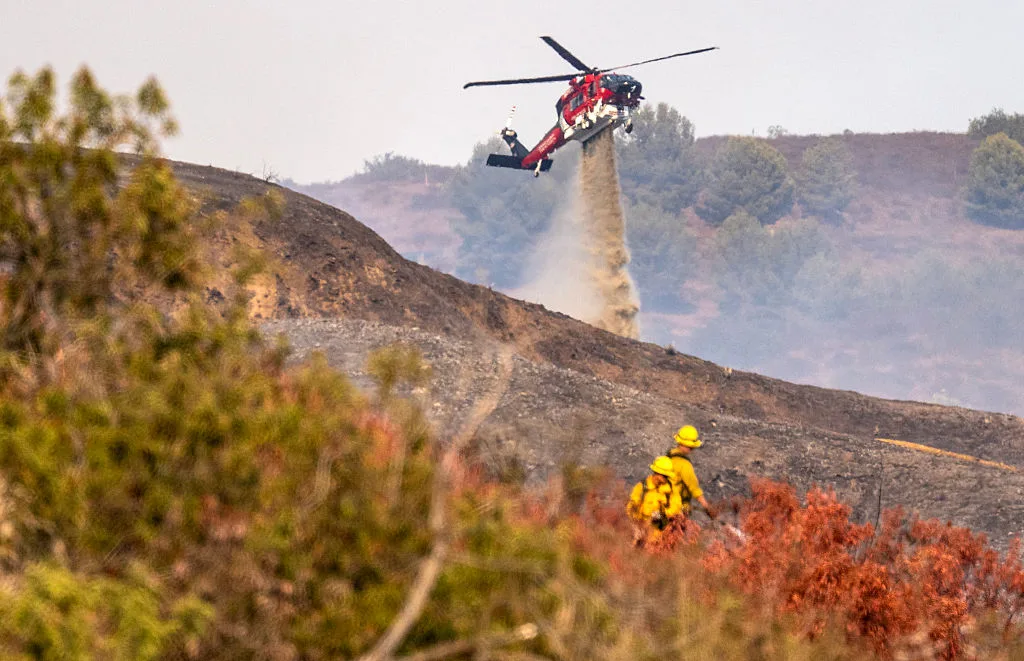
An Orange County Fire Authority helicopter drops water on the Gibby Fire near Caspers Wilderness Park in Trabuco Canyon, California, on Sept.
2, 2026. —Jeff Antenore—Orange County Register/Getty Images The United States is on pace to see one of its most active wildfire seasons on record.
According to a new AccuWeather report , large fires were active in at least 13 states as of Sept.
9, while more than 8.4 million acres had burned nationwide this year—about 1.3 million acres above the full-year annual average over the previous decade.
The extraordinarily active season is testing a recently overhauled federal wildfire-response system while placing mounting financial pressure on governments, taxpayers, insurers, and individual households.
How the U.S. changed its wildfire response after the Los Angeles fires The Los Angeles fires in January 2025 were high-profile incidents that drew widespread attention to the nation’s risk.
They were notable as sudden, highly concentrated, urban conflagration events—and they stand in contrast to the 2026 wildfire season, which has garnered less attention with the incidents geographically dispersed across the U.S.
However, almost twice as much land has burned so far in 2026 as had burned at the same point in 2025, according to AccuWeather.
The Palisades and Eaton fires in L.A. showcased just how costly massive wildfires are in terms of infrastructure damage, loss of life, and economic impact.
Collectively, the fires burned about 37,500 acres and destroyed nearly 17,000 structures, killing at least 31 people.
Munich Re estimated total damage at $53 billion, including $40 billion in insured losses—“by far the largest insured loss on record from a wildfire event,” according to the United Nations .
Read More : What Happens When the World Is on Fire In response, President Donald Trump signed an executive order on June 12, 2025, calling for the consolidation of wildfire response resources within the Interior and Agriculture departments within 90 days.
The U.S.
Wildland Fire Service was formed as a result.
5News aggregated this summary from the outlet’s public feed. The full article, with all the context, is on time.com — the content belongs to TIME.