Xi Jinping has made China’s hard-tech rise core to his policy—and U.S. containment is only fueling those plans
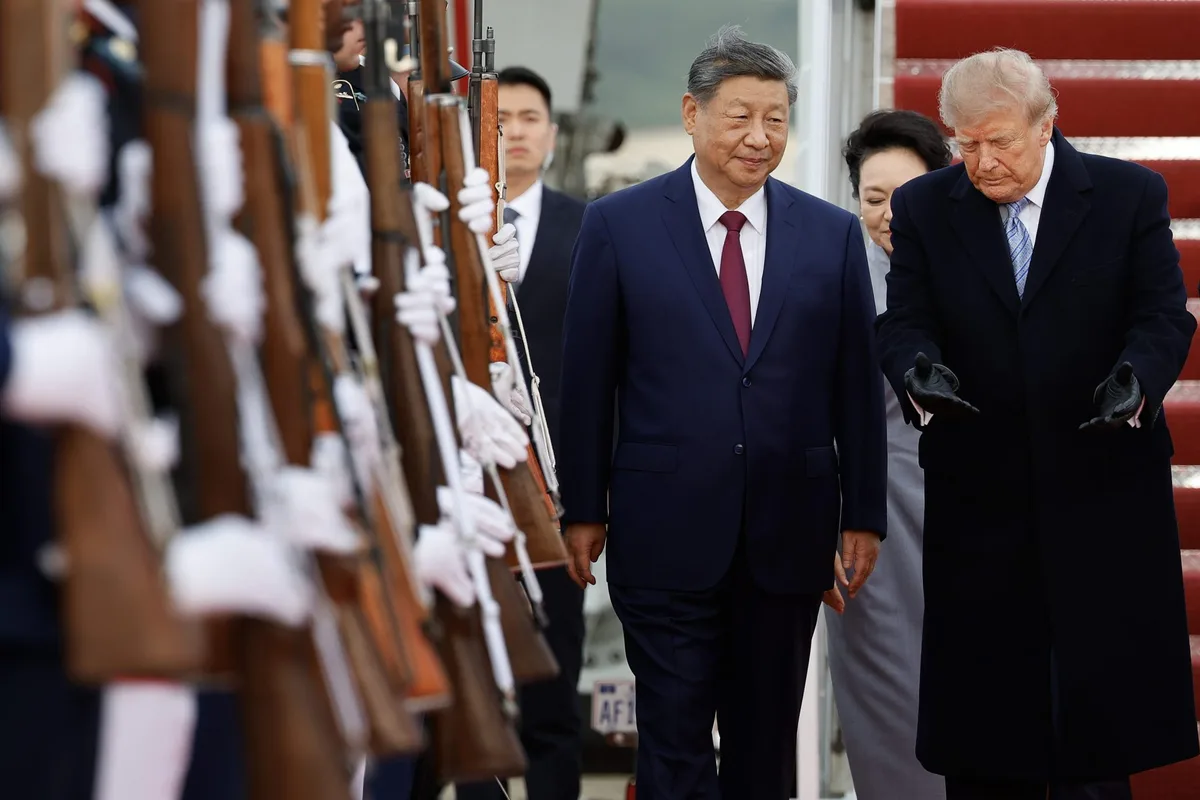
When Xi Jinping arrives in Washington on Thursday, artificial intelligence will top the agenda.
Both sides have even agreed to an “AI hotline” to warn each other of runaway systems—at least according to the U.S.
Whereas once the U.S. looked upon China as a “fast follower” in technology, it now confronts a country that’s also on the frontier —ironically, in part due to U.S. action.
Washington’s technology blockade is proving to be one of the greatest accelerators of Beijing’s hard-tech rise.
Far from isolating China, U.S. pressure has mobilized capital, talent, and global partners to turn containment into the very fuel of China’s technological superiority.
The blockbuster debuts of ChangXin Memory Technologies and Unitree Robotics are proof that Beijing can deliberately mobilize capital and scientific expertise to build national champions in semiconductors, robotics, and advanced manufacturing.
China’s 15th Five-Year Plan (2026–2030) is both the blueprint for Beijing’s push for absolute technological sovereignty and the decisive test of that ambition.
A flurry of signals from the top validates this shift towards hard technology.
Chinese President Xi Jinping made a personal trip to Shanghai in April, elevating basic research as the main control switch for downstream industries.
This was followed by Xi’s attendance at the National Science Conference in Beijing, where the president ordered China’s financial system “to invest early, invest in small-scale projects, invest for the long term, and invest in hard technology.” The capstone came at the World Artificial Intelligence Conference in Shanghai , when Xi warned against creating “new historical injustices” in the era of AI.
The U.S. is trying to hold back China’s tech development.
Washington has expanded its entity-list sanctions and launched the “Pax Silica” initiative to secure AI, semiconductor, and critical-mineral supply chains among trusted partners.
Now it is pressing international partners to stay out of China’s digital frameworks: The U.S. is preparing to tell dozens of countries they must pick sides in the AI race, warning that they will be excluded from the U.S.-led AI coalition if they also sign up for Beijing’s competing framework, Reuters reported last month.
Yet history suggests the tech blockades don’t keep China behind but instead force it to accelerate its journey to self-reliance.
5News aggregated this summary from the outlet’s public feed. The full article, with all the context, is on fortune.com — the content belongs to Fortune.