The rise of gas station opioids
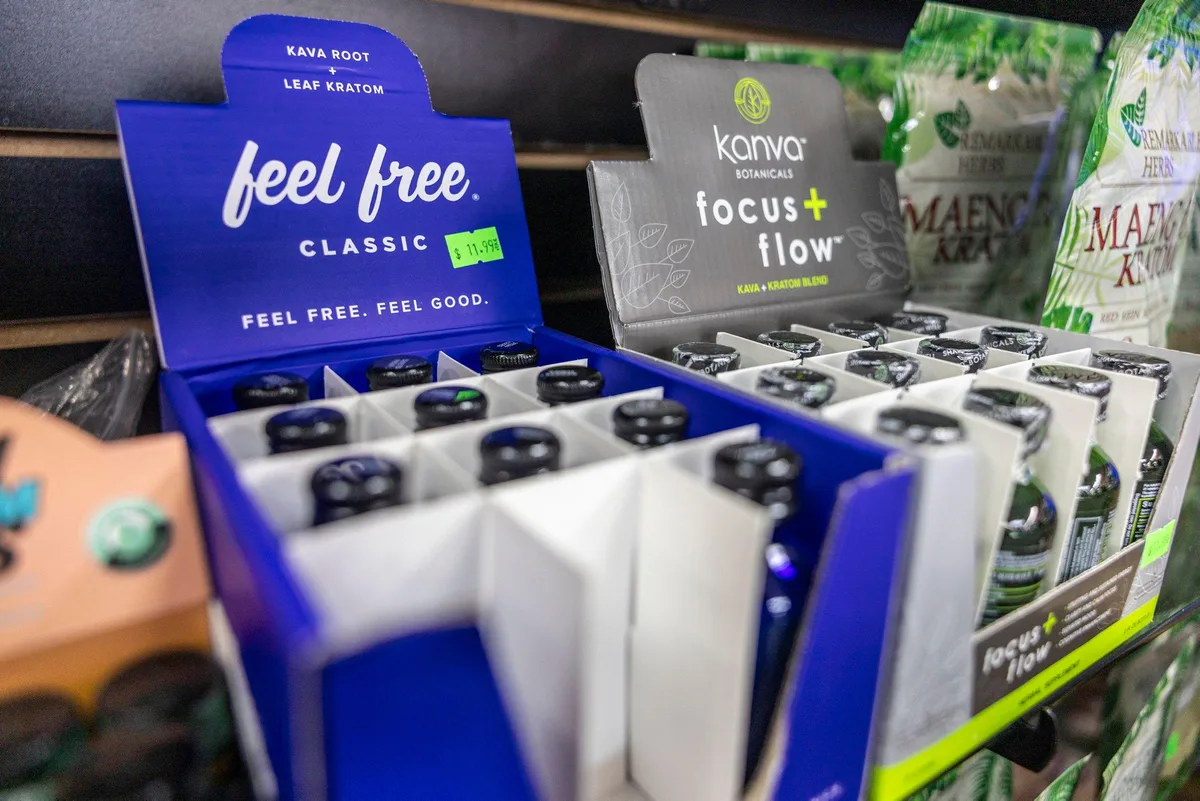
Products containing kratom from the brand Feel Free on sale at a tobacco store in Huntington, New York. | Alejandra Villa Loarca/Newsday RM via Getty Images They have fun names like Feel Free, Smurphs, and Hazy Tabz.
They come in colorful packages and in gummy form.
They’re widely available at gas stations, corner stores, and smoke shops across the country.
They’re also highly addictive, largely unregulated, and in the news after they were found near the bodies of two dead University of Mississippi students .
The drugs are called Kratom and 7-OH.
The first, kratom, is derived from the leaves of a coffee-like plant in Southeast Asia.
When taken in small doses, kratom causes a low-key buzz.
In higher doses, the high is described as euphoric .
It operates like an opioid — a chemical in kratom called mitragynine binds to opioid receptors in the brain, which leads to that euphoric high.
It also can lead to addiction and overdose .
Social media is full of videos of people trying to kick the drug, with harrowing stories of dependence and withdrawal.
7-OH is a highly concentrated compound derived from kratom, which dials up both the high and the danger.
The drug has caught the attention of US Health Secretary Robert F.
Kennedy Jr., who warned in a press conference last year that 7-OH was “marketed for children.” “They’re gummy bears, they’re bright colors, they’re candy-flavored,” Kennedy said.
5News aggregated this summary from the outlet’s public feed. The full article, with all the context, is on www.vox.com — the content belongs to Vox.