What if making your neighborhood safer means breaking the rules?
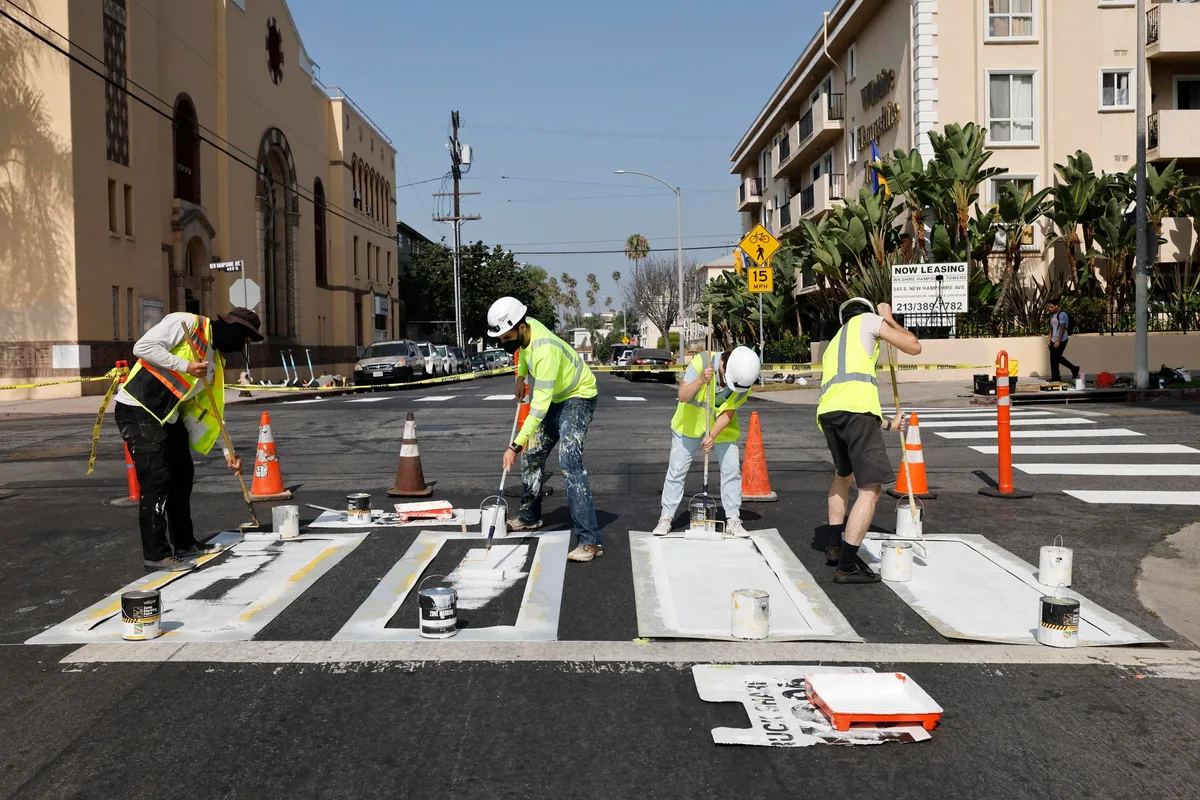
Across the country, civic paralysis has compelled a legion of guerrilla urbanists to take their city’s matters into their own hands. | Carlin Stiehl/Los Angeles Times via Getty Images Jonathan Hale was ready to lay down his paint rollers.
Hale, a law student turned viral road safety advocate , had run into legal trouble for painting his own DIY crosswalks across some of Los Angeles’s most dangerous intersections.
In a meeting with LA Mayor Karen Bass earlier this year, he told her that if the city could commit to making its own streets safer for pedestrians, then he would stop his own vigilante activism.
“Dude, you’re the mayor.
Do something about this.
It’s you, dude,” he recalls insisting to Bass — in so many words — after she apologized for his arrest on vandalism charges for a paint job last December.
For months, Hale upheld his end of the bargain and stopped painting, believing in her office’s emailed assurances that a new executive order was coming soon.
View this post on Instagram But, eventually, after weeks of unresponsiveness, Hale grew tired of waiting, just as he had the first time he picked up a stencil and a bucket of white paint.
“We’re so focused on looking for reasons why we can’t do stuff instead of ways that we can,” he said, “and it’s just paralyzed our institutions.” Across the country, such civic paralysis has compelled a legion of guerrilla urbanists to take their city’s matters into their own hands.
In Boston, a group of cyclists used strips of green and white duct tape to build a bike lane at an intersection where a truck struck and killed 36-year-old Louisa Gag in July.
In Nashville, Kansas City, and across the Bay Area, volunteers have built and installed their own public benches at bus stops where city officials had slowly removed places to sit, after years spent curating increasingly hostile public spaces .
Every time one of these friendly neighborhood vigilantes paints a crosswalk, fills a pothole , or builds a bench, they remind us that it is not actually that hard — or even that expensive — to do many of the simple things that can make our cities safer and more pleasant places to live.
Though our local governments may seem incapable of getting these basic tasks done, they are probably less constrained by money than they are by a sluggish status quo.
And in some cases, they’re so afraid of being sued that they’d rather build nothing at all.
5News aggregated this summary from the outlet’s public feed. The full article, with all the context, is on www.vox.com — the content belongs to Vox.