I've chased the 'false dawn' for years — this is the week to find and photograph it
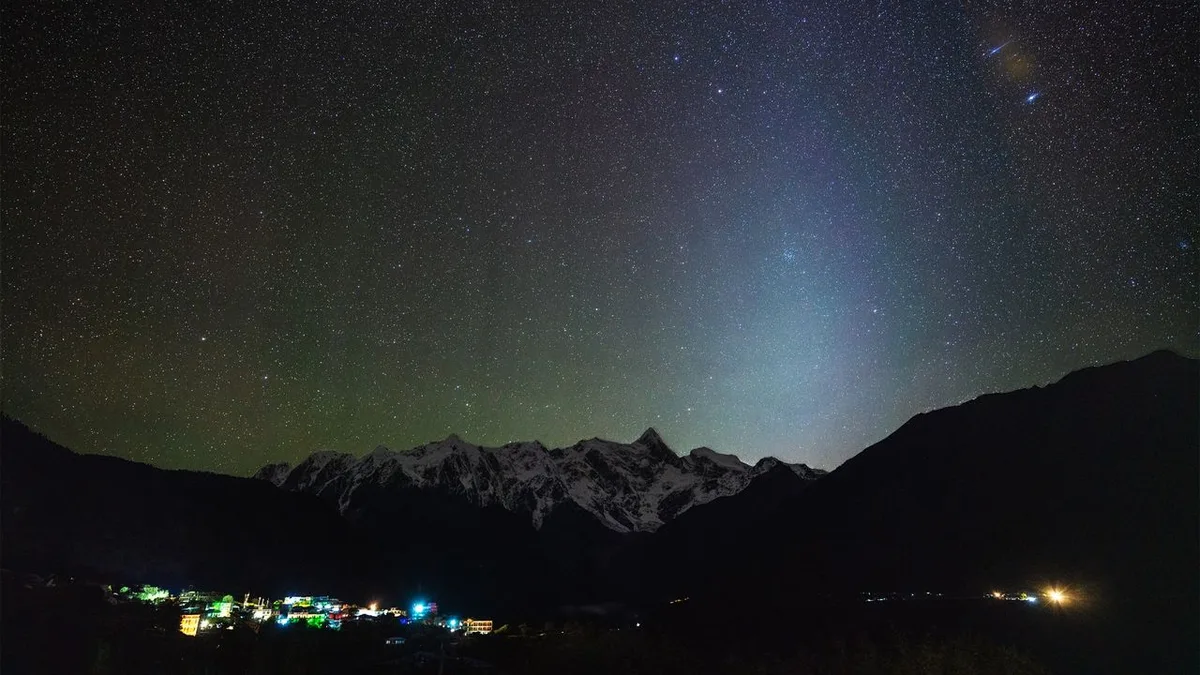
Some stargazing feels like you know exactly what you are looking for, but you're still slightly unsure whether you are actually seeing it.
Zodiacal light — meaning "light from the circle of animals" — is often like that.
I have chased this so-called "false dawn" for years, and the first few minutes are always the same.
I stare toward the horizon and wonder whether the sky is genuinely brighter there, or whether I am simply seeing distant light pollution, the first hint of morning twilight, or something my eyes have invented because I badly want to see it.
However, under a genuinely dark sky — and particularly in a long-exposure image — its cone shape becomes obvious.
Zodiacal light is enormous.
It appears as a broad, softly glowing pyramid rising from the horizon.
It can be fainter than the Milky Way and has no hard edges, which is precisely why it is so easy to overlook.
This week is a particularly good time to try because the new moon occurs on Sept.
10-11.
With no moonlight interfering with the predawn sky, the main problems become familiar ones to any skywatcher: clouds, haze and artificial light.
The phenomenon itself could hardly be more epic.
Zodiacal light is sunlight scattered by dust spread through the inner solar system , concentrated broadly around the plane in which the planets orbit.
From Earth, we see that dusty structure edge-on along the ecliptic — the path through the sky followed by the sun , moon and planets.
5News aggregated this summary from the outlet’s public feed. The full article, with all the context, is on www.space.com — the content belongs to Space.com.