Trump signs new national space policy to enable 1,000 US rocket launches per year
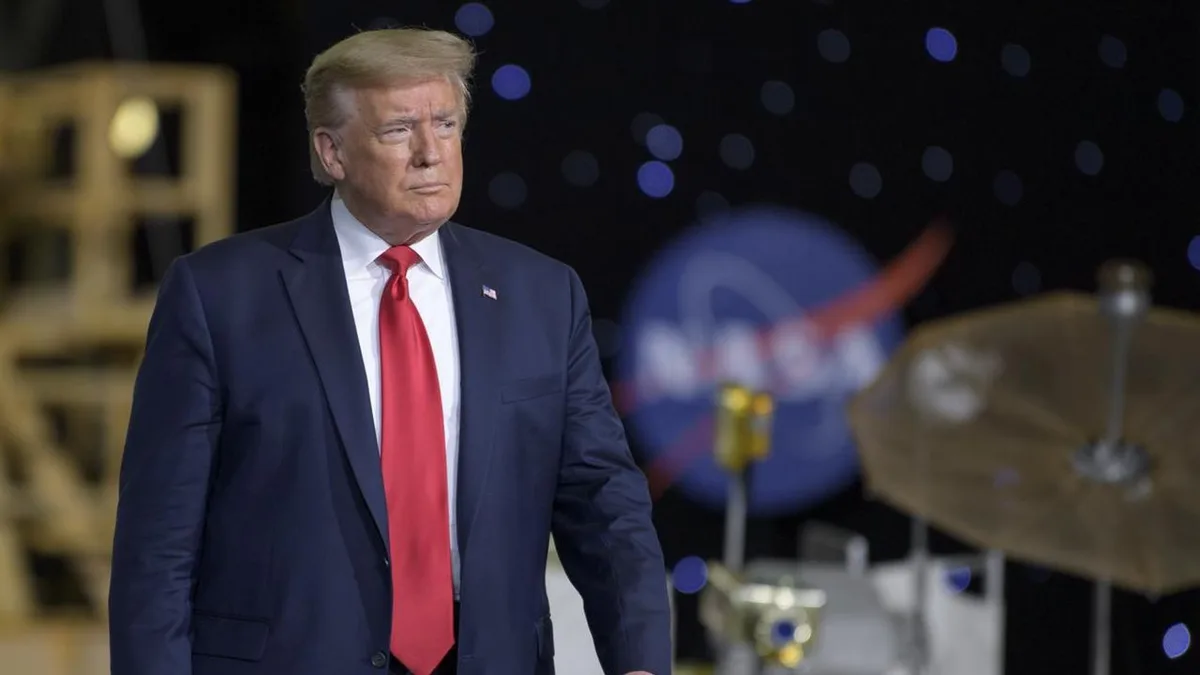
The United States is updating its approach to managing spaceflights that lift off and land within its borders, and aims to expand the nation's capabilities to support more than 1,000 rocket launches per year by 2030.
President Donald Trump just signed a new National Space Transportation Policy that lays out priorities for commercial, civil and national security missions to orbit.
The memorandum, published Thursday (Aug.
20), introduces the first update to the policy since 2013 , and comes as commercial operators such as SpaceX have driven U.S. launch cadences up more than 800% since 2015.
The policy centers on expanding the infrastructure and procedures needed to support a much busier space industry.
It directs federal agencies to identify and broaden commercial access to additional launch and reentry sites, and to incorporate spaceflight operations and critical launch corridors into air traffic control management and modernization efforts.
The document gives agencies a deadline to get the work started.
Within 180 days of the memo's publication, NASA , the Department of Transportation (DOT) and the Department of Defense (DOD) are directed to begin identifying potential locations for future launch activities, as well as existing facilities that could be upgraded to further increase capacity.
Agencies were also directed to establish leases and commercial investment opportunities to incentivize the co-development of new launch sites.
The new properties can be funded, in part, by the same private entities that are lined up to use them.
Rocket landing sites are getting extra attention, with the president's policy designating agencies to identify federal lands available for development as independent launch vehicle reentry sites within the next 90 days.
It also reinforces a framework to expedite environmental review processes first laid out in a commercial space executive order that Trump signed in August 2025 , which sought to remove regulatory hurdles for commercial launches and spaceport construction.
SpaceX is already planning for launch rates far beyond the administration’s 2030 target.
The company's Starship rocket, which remains in development, is poised to become the first fully reusable launch vehicle in history.
5News aggregated this summary from the outlet’s public feed. The full article, with all the context, is on www.space.com — the content belongs to Space.com.