On this day in space! Sept. 6, 1947: The US Navy launches 1st V-2 rocket at sea in ballistic missile test
On Sept.
6, 1947, a rocket launched from an aircraft carrier for the first time.
The V-2 rocket was captured from a German manufacturing site by the Allied forces at the end of World War II.
V-2s were the world's first long-range guided ballistic missile .
They were designed by German rocket scientist Wernher von Braun , a famous aerospace engineer, invented them for Nazi Germany before he was secretly moved to the U.S. and started working for NASA.
Von Braun and the seized V-2 missile parts were brought to the White Sands Missile Range in New Mexico, where the scientists assembled the parts and began experimenting with launches.
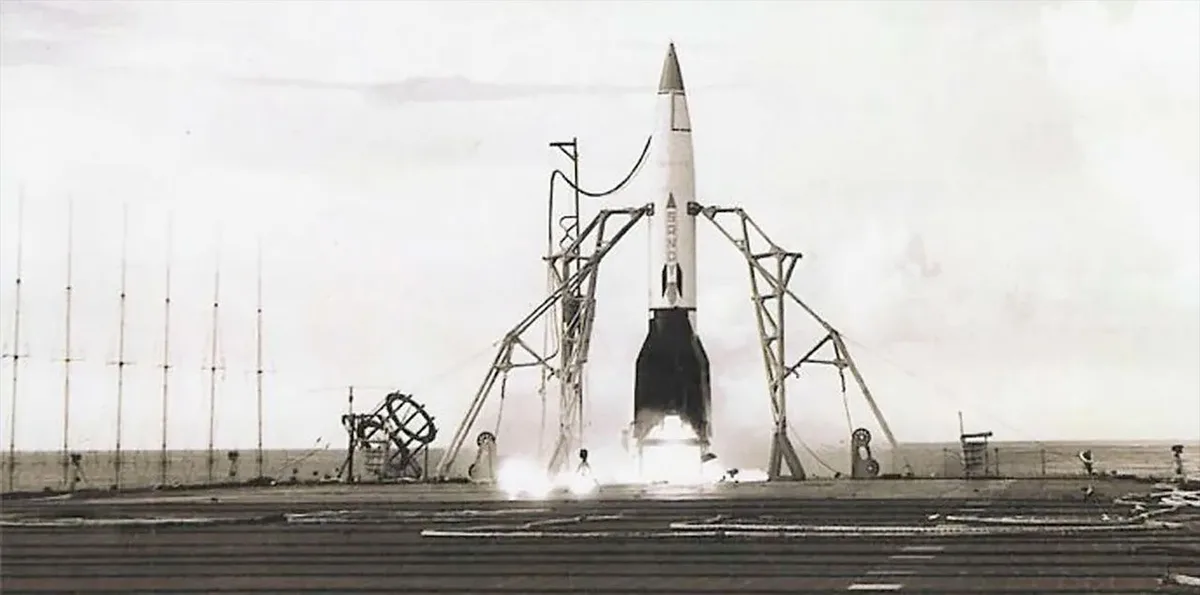
The first V-2 to launch at sea blasted off from a U.S.
Navy ship called the USS Midway in a mission titled "Operation Sandy." The aircraft carrier sailed a few hundred miles south of Bermuda for the launch.
After liftoff, the V-2 started tilting midair and only made it to an altitude of 15,000 feet (4,600 meters) before falling back to Earth .
A V-2 rocket ignites its engine on the deck of the USS Midway during the U.S.
Navy's first ballistic missile test on Sept.
6, 1947. (Image credit: USS Midway Museum) Why it mattered Rockets may be great for space exploration, but the technology's roots are firmly embedded in military applications, with the V-2 rocket standing out as a clear example.
The rocket was designed as a military weapon first and foremost, and it was U.S. military's push to secure such tech that led to Operation: Paperclip, which secreted Von Braun and many other German aerospace scientists out of Germany at the end of World War II.
Operation: Sandy marked the first ballistic missile launch by the U.S.
5News aggregated this summary from the outlet’s public feed. The full article, with all the context, is on www.space.com — the content belongs to Space.com.