What was the PSX? The souped-up PS2 rarely sold outside of Japan
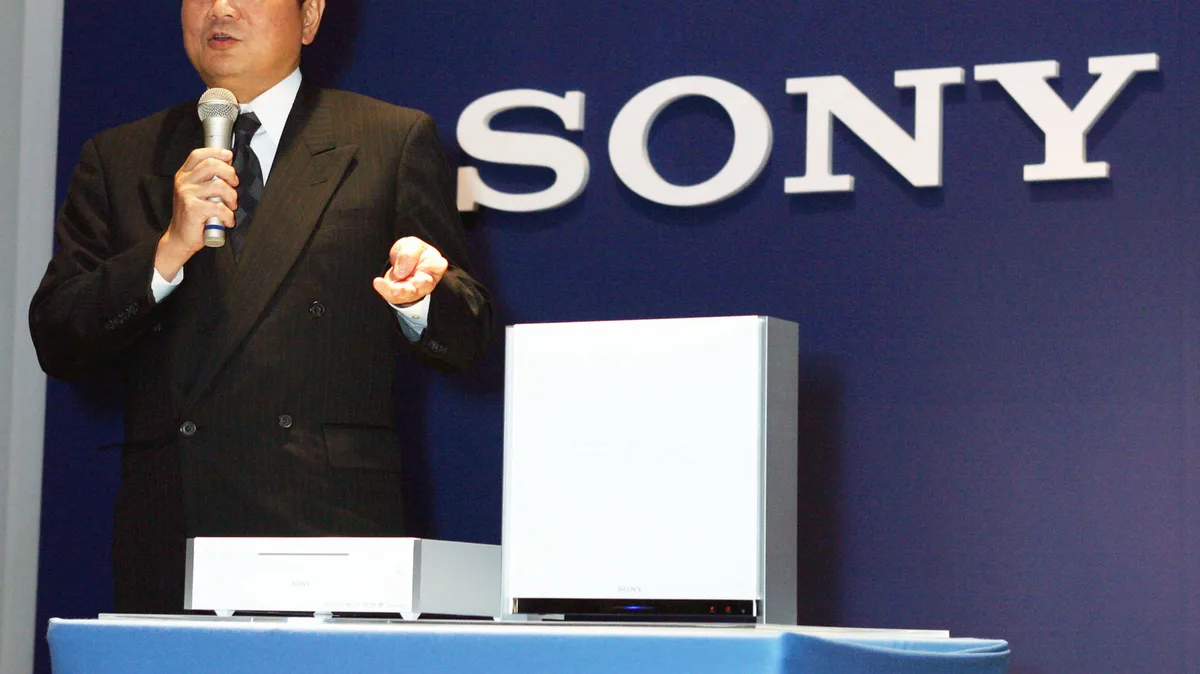
Speaking of weird machines that were never released outside of Japan, enter Sony's PSX: a hybrid PS2 that was also a DVR, among other functionality. Not to be confused with the internal codename for the original PlayStation, there are several reasons the PSX never got a worldwide release (which we'll get to).
If you've never heard of Sony's niche machine, we don't blame you. Released at the height of the PS2's era but a couple of years before the PS3, the PSX was a confusing offering. It was a clumsy beast that failed to capture the imagination of either gamers or DVD enthusiasts. Let's get into exactly what the PSX was and why it failed so badly.
Unlike the PS2, which didn't natively support a hard drive — though you could optionally install one via the PS2's expansion bay — the PSX shipped with either a 160GB or 250GB HDD. With the company apparently seeing it more as a digital video recorder/entertainment player than an actual console, the PSX was promoted under the Sony brand, not PlayStation.
The doomed machine's greatest legacy was it being the first Sony system to showcase the XrossMediaBar (XMB) home menu that the PS3 would later make famous... or should that be infamous?
Why did the PSX bomb as hard as it did? The somewhat niche selling point of the system didn't help: a hybrid video recorder/DVD player that's also a PS2 is hard to market succinctly. In the spring of 2004, GameSpot reported internal conflicts at Sony might have hindered any potential success the PSX would've had. An unnamed source "close to Sony" told the site, "A lot of things have been said about the failure of the PSX inside the company, but it was probably due to the unrealistic way that its development was conducted." Said source would then claim that Sony's games division and its Blu-ray disc department (who were both handling production of the PSX) "couldn't work too well together," ending up with "a machine that's neither a game console nor a DVD recorder." Cue the machine being phased out in early 2005.
A couple of additional factors sealed the early demise of the PSX. In particular, it cost a heck of a lot more than a PS2. The 160GB model cost ¥79,800, while the 250GB PSX was priced at ¥99,800 (roughly $730 and $910 respectively, circa 2003). By contrast, the PS2 had dropped to around ¥19,800 in Japan the month before the PSX launched, with the colossally successful console costing around $179 in the US by that time.
There were also broadcasting rights issues that made a full-scale international release tricky to pull off. Because the PSX was a DVR designed around Japanese TV, an overseas version of the machine would have required the additional overheard of Sony coordinating with US and European broadcasting regulators.
Matthieu Tuffet/Shutterstock This is a pretty easy mistake to make, but no, these consoles are distinct. "PSX" was a codename Sony used internally during the original PlayStation's development, which video game journalists and eventually gamers adapted as a short way of referring to it.
5News aggregated this summary from the outlet’s public feed. The full article, with all the context, is on www.engadget.com — the content belongs to Engadget.