NATO’s Nightmare
W estern military planners do not seem eager to talk about their nightmare scenario, much less prepare for it.
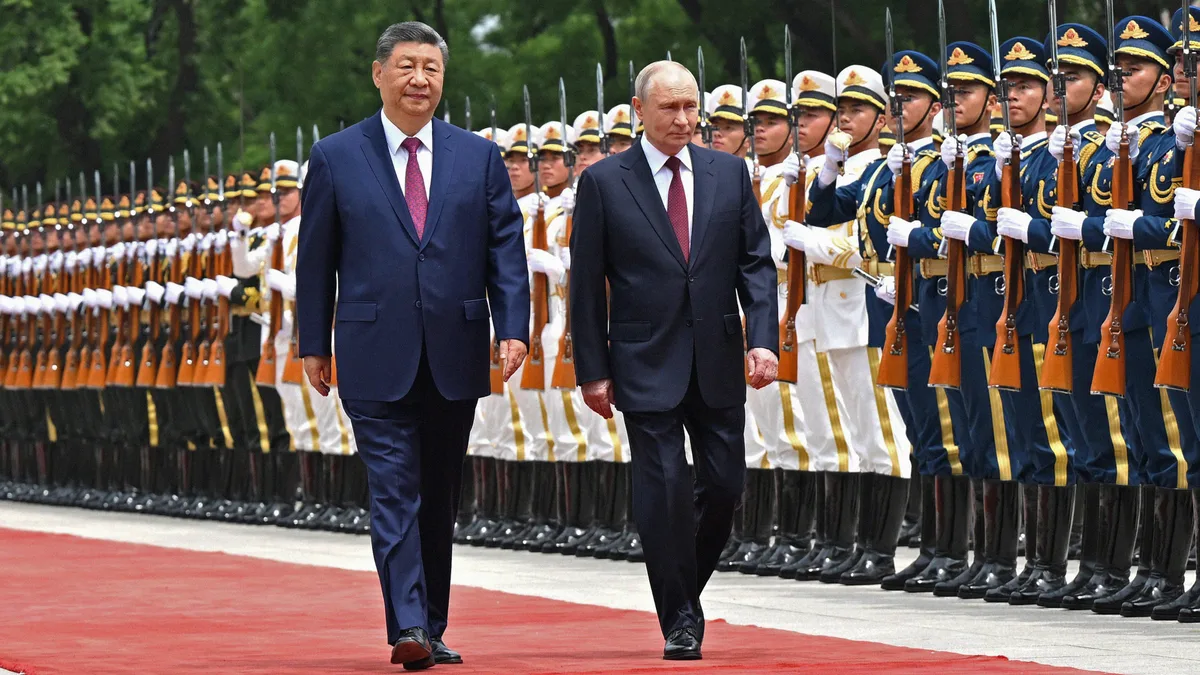
But they tend to agree on how it would begin: a coordinated, near-simultaneous attack on opposite sides of the planet, in which Russia targets a NATO member in Eastern Europe while China makes its move against Taiwan.
The U.S. military would need to react on two fronts at once—three if it remains at war in the Middle East.
Until recently, this possibility sat at the more outlandish end of the threat spectrum, somewhere between a loose nuke and an alien invasion.
Synchronized attacks would require a conspiracy too big for Beijing and Moscow to hide.
Satellites would see their forces getting into position, giving the United States and its allies time to rally their defenses.
About a year ago, General Alexus Grynkewich, the top NATO commander in Europe, issued a rare public warning about the risk of a two-front war against Russia and China, and he called on European allies to help the U.S. prepare.
But when I asked a range of military experts and strategists what the West would do in such a situation, the responses rang surprisingly hollow.
Most of them expressed bewilderment and a bit of shame about how little has been done in recent years to study this risk in detail.
“Let’s just say this is the scenario we’re currently not ready for,” Florence Gaub, the director of the research division at the NATO Defense College, one of the alliance’s main academies for officers, in Rome, told me.
NATO strategists remain “keenly aware” of this gap in their planning, Gaub, who specializes in the forecasting and analysis of future threats, said.
But they have not taken steps to fill that gap.
Even as Russia and China have intensified their military cooperation, the West has held only a few low-profile exercises to analyze what would happen if the two launched a joint attack.
Public discussion of this possibility has been remarkably muted among Western experts and military brass, who seem to lack the theoretical frameworks to process such a calamity and game out a response.
5News aggregated this summary from the outlet’s public feed. The full article, with all the context, is on www.theatlantic.com — the content belongs to The Atlantic.