Why South Korea and Ukraine Are Fighting Over Two Prisoners of War
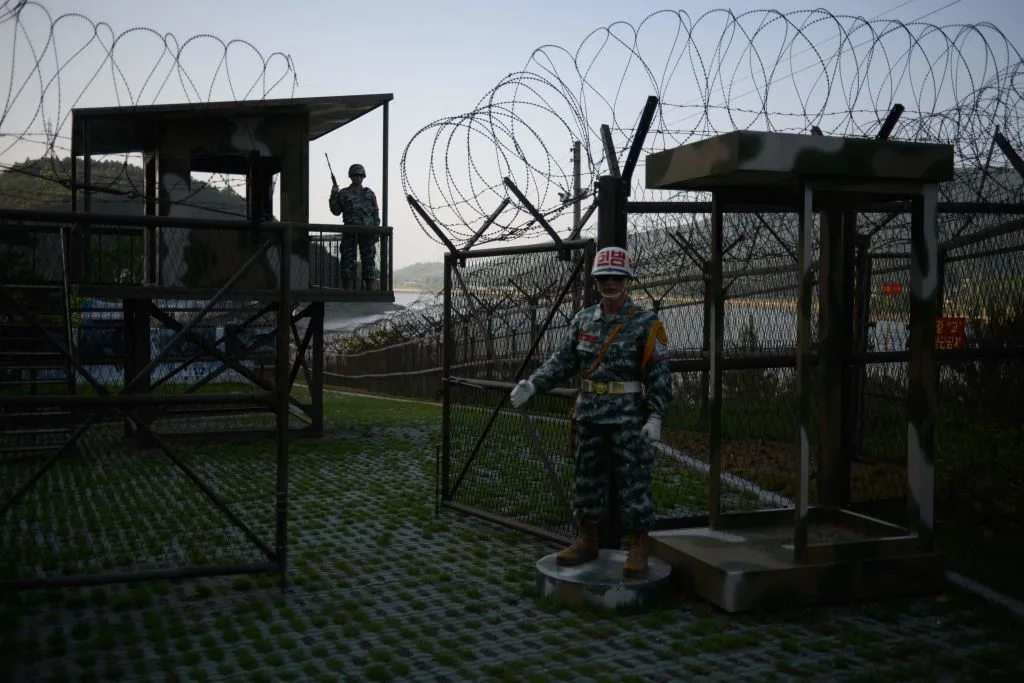
Mannequins of South Korean soldiers at a guard post beside the barbed wire fence of the Demilitarized Zone between North and South Korea on Ganghwa island on May 24, 2018. —Ed Jones-AFP-Getty Images On Sept.
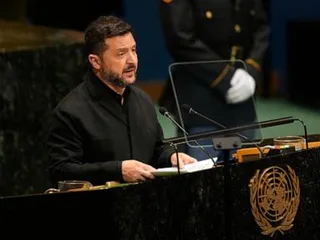
23, President Volodymyr Zelensky of Ukraine spoke at the UN General Assembly about the military support Russia was getting from North Korea and the deaths of North Korean soldiers on the Ukrainian front.
“Recently, we sent two North Korean prisoners of war to the Republic of Korea,” he revealed.
He seemed to be trying to highlight the global reach of Russia’s war and also hoping that the revelation would increase popular and political support in Seoul for providing weapons and aid to Ukraine.
Zelensky ended up igniting a diplomatic dispute between Ukraine and South Korea.
Seoul claimed that Ukraine had agreed to keep the transfer confidential; Kyiv denied that such an agreement existed and downplayed the episode as a misunderstanding.
Now South Korea is recalling its ambassador to Ukraine.
The quarrel over diplomatic protocol highlights the human cost paid by two soldiers caught in a geopolitical conflict linking European and Northeast Asian security.
Their story captures the complicated geopolitics of the two Koreas now playing out on a European battlefield.
It also underscores South Korea’s push for inter-Korean peace, even as North Korea tests Seoul’s patience by launching hypersonic missiles and planting landmines .
The men from North Korea The two soldiers at the center of the dispute were captured while fighting in the Kursk region of Russia in January 2025.
They were part of a 10,000-strong North Korean contingent reinforcing Russian troops on the front line.
Shortly after their capture, Ukraine’s military released video footage of the two soldiers.
The images helped confirm North Korea’s direct involvement in the Russia-Ukraine war.
5News aggregated this summary from the outlet’s public feed. The full article, with all the context, is on time.com — the content belongs to TIME.