Waymo’s driverless cars continue to crash less often than people
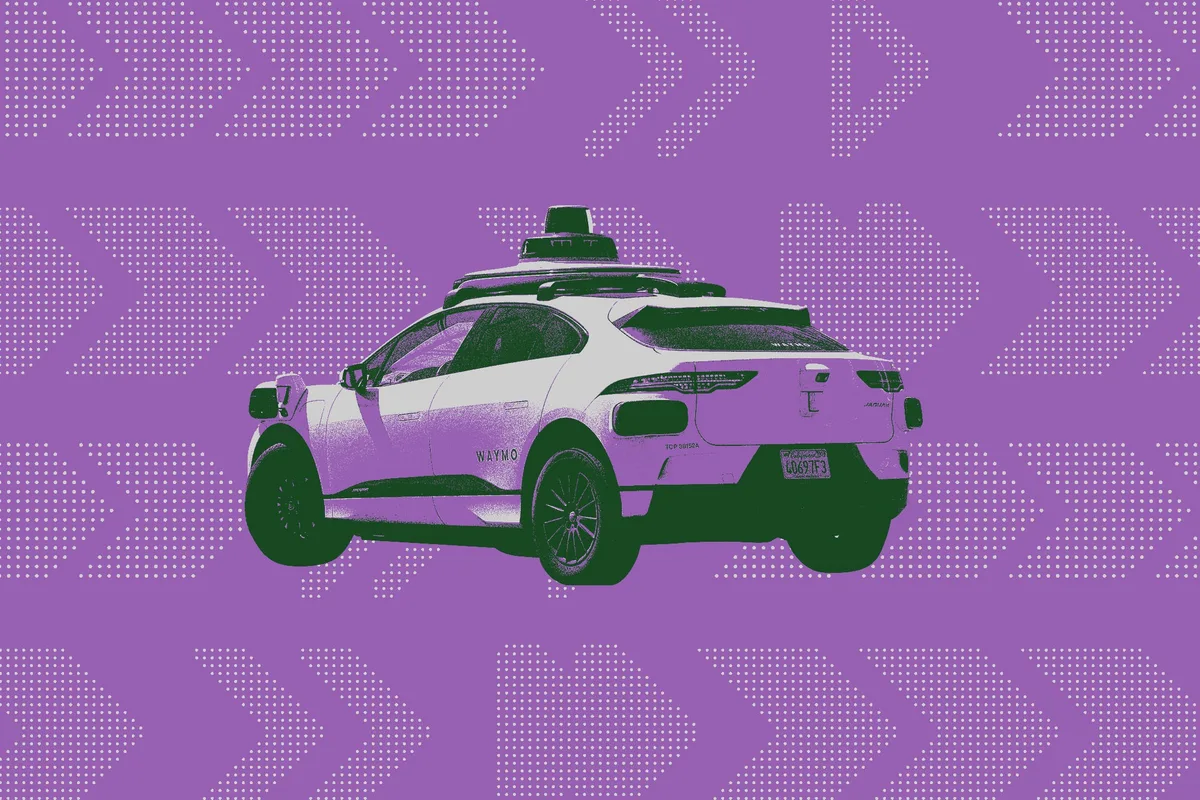
Waymo says after 271 million driverless miles, its vehicles were involved in 82 percent fewer injury-causing crashes as compared to human drivers.
Waymo says after 271 million driverless miles, its vehicles were involved in 82 percent fewer injury-causing crashes as compared to human drivers.
Waymo’s latest batch of self-reported data continues to affirm the company’s message that its driverless cars are safer than human drivers. As policymakers continue to debate the safety and economic impact of autonomous vehicles, Waymo is hoping that its own data will help bring more supporters to its side — even as some experts say the data fails to capture the non-crash traffic disruptions caused by its robotaxis.
Waymo said it examined 271 million driverless miles in five cities through the end of June, which is 50 million more miles than its last safety report . The total number of miles driven across Atlanta, Austin, Phoenix, Los Angeles, and the San Francisco-Bay Area is the equivalent of over “300 human lifetimes behind the wheel,” assuming every human drives the equivalent of 850,000 miles in their lifetime. The company plans to update its online safety hub to reflect the new driving figures.
Waymo’s mileage seems like a lot, but its still a drop in the bucket compared to the 3 trillion miles driven by humans in the US every year. So there’s still a pretty big gap when trying to draw comparisons between robot driven vehicles and humans.
While Waymo’s data only covers five cities, the company is operating nearly 4,000 vehicles across more than 10 US cities, logging roughly two million driverless miles per week while delivering over 500,000 paid rides weekly.
But some cities, including big ones like New York, Boston, and Washington, DC, are still reluctant to let Waymo open up shop, citing concerns about traffic disruptions and job losses. Waymo is hoping that by continuing to show that its technology can drastically cut down on injuries and fatalities on roads, it can help persuade those officials who remain unconvinced.
But don’t just take Waymo’s word for it. A recent study by the Insurance Institute for Highway Safety found that per vehicle mile traveled, Waymo’s driverless vehicles were involved in 68 percent fewer crashes than human drivers. But the researchers warned that the present data collection system “isn’t good enough to allow continuous monitoring of a large-scale expansion,” IIHS President David Harkey said in a statement .
Indeed, there’s some concern about relying on Waymo’s self-reported data to assess the safety of its autonomous vehicles. Experts from institutions like Johns Hopkins University point out that a lack of uniform guidelines across the industry makes it hard to compare data apples to apples.
Critics also note that comparing expensive, sensor-laden robotaxis against average human-driven vehicles —which often include older cars or distracted drivers — mostly proves that advanced emergency braking and sensors work, rather than explicitly validating autonomous software superiority.
5News aggregated this summary from the outlet’s public feed. The full article, with all the context, is on www.theverge.com — the content belongs to The Verge.