Banks are pulling back as AI's massive debt pile disconnects from economic reality
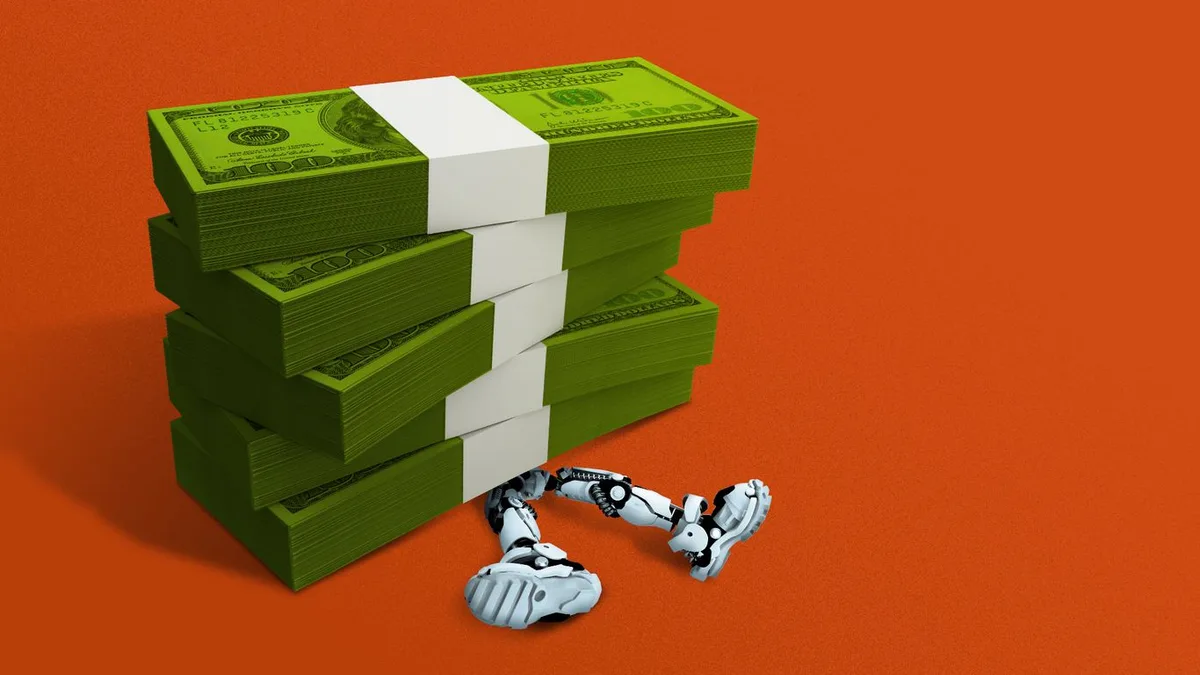
Wall Street appears to be hitting its limit on AI, and financiers are starting to say the quiet part out loud: All of this AI spending doesn't look like it can pay off, at least not for everyone.
Why it matters: The gap between what it costs to build AI infrastructure and what companies are actually paying to use it is widening.
Wall Street's anxiety is surging as the debt piling up to fund data centers and chips looks increasingly disconnected from economic reality.
Driving the news: A massive gap is opening up between AI infrastructure spending and expected returns.
While AI providers are projected to spend $7 trillion on infrastructure through 2030, research from Gartner forecasts they will generate no more than $3.6 trillion in related revenue over that same period.
More than $4 trillion in AI infrastructure spending could be at risk of write-downs by the end of 2032 if companies maintain their current investment pace.
Gartner also predicts that more than 80% of specialized AI cloud providers, known as neoclouds, will cease operating independently by 2030.
Case in point: CoreWeave, one of the largest neoclouds with among the closest ties to Nvidia — the AI boom's financial and spiritual foundation — has faced a multi-day selloff of its stock and debt.
Yields pushed above 15% and its stock tumbled 15.5% before rebounding after Nvidia CEO Jensen Huang spoke up on the company's behalf.
Follow the money: Sources on Wall Street used to tell Axios that as long as the AI buildout was paid for in cash, there was nothing to worry about.
But today, a third of the capex being spent on AI is coming from debt, and capital markets are showing signs of severe fatigue.
It's getting harder to secure financing.
Global AI-related debt issuance plunged to $23 billion in September 2026, down sharply from $113 billion in June, per the Financial Times .
Banks are actively pulling back to avoid concentration risk, with JPMorgan CEO Jamie Dimon confirming his bank is tightening up on credit.
5News aggregated this summary from the outlet’s public feed. The full article, with all the context, is on www.axios.com — the content belongs to Axios.