China's Chang'e 7 moon probe will launch this weekend on the most ambitious lunar mission in history
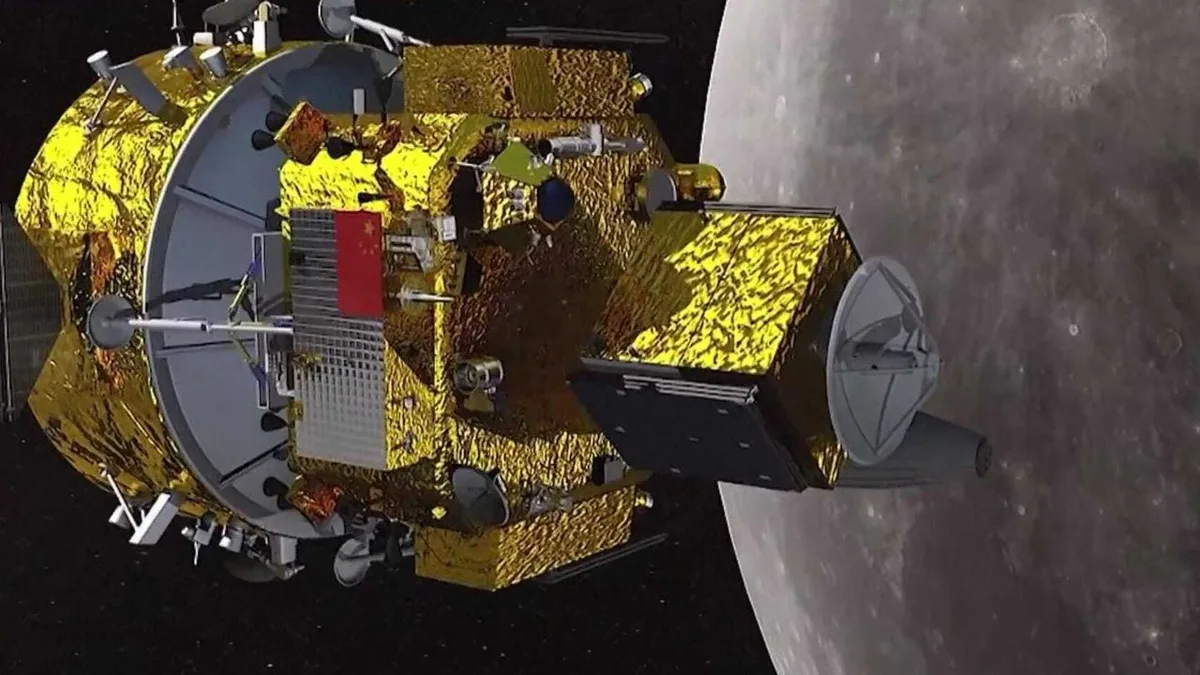
China's moon exploration program is readying an ambitious robotic mission, one composed of an orbiter, a lander, a rover, a hopper, and a wide range of international experiments including a U.S.-supported payload.
In April of this year, Chang'e-7 hardware was transported to the Wenchang launch site, targeting an Aug.
24 (Beijing time) launch atop a Long March 5 Y14 rocket.
The lander's destination is the edge of Shackleton Crater in the lunar south pole region.
After launch, the Chang'e-7 orbiter will spend several months orbiting the moon before releasing its lander for an attempted touchdown near the end of the year.
While Chang'e-7 will carry out ambitious, groundbreaking lunar science , it will also serve to lay the groundwork for the first Chinese human landing on the lunar surface by 2030 .
James Head is a leading moon scientist at the department of geological sciences at Brown University in Providence, Rhode Island.
He says China's upcoming moon launch will set a new benchmark for lunar science voyages.
"Chang'e-7 is the most ambitious, comprehensive, and complex robotic lunar mission ever attempted by any nation or entity," Head told Space.
Likewise, Zhang Jingbo, a spokesman for the China Manned Space Agency (CMSA) agency, said earlier this year that the mission will "fully leverage the technological expertise and practical experience accumulated over decades" to "spare no effort to strive for the goal of achieving the first Chinese landing on the moon by 2030." Pockets of water ice Once unleashed from the Chang'e-7 lander, the hopper is slated to "jump" from sunlit areas to shadowed craters in a quest to find pockets of water ice.
The hopper utilizes active shock-absorption technology to safely land on slopes.
The lander will also deploy China's inaugural deep-space "landmark image navigation" system.
While scientists around the globe believe there's water ice on the moon , said Ye Peijian, an academician with the Chinese Academy of Sciences, no one has definitively found and fully evaluated that resource as yet.
"Now China is going to look for it, [...] And we're using many methods, from searching the surface to exploring inside craters," Ye told China Central Television (CCTV).
5News aggregated this summary from the outlet’s public feed. The full article, with all the context, is on www.space.com — the content belongs to Space.com.