'They cannot compete with the prices that fish factories will pay': How demand for fish meal takes priority over feeding people
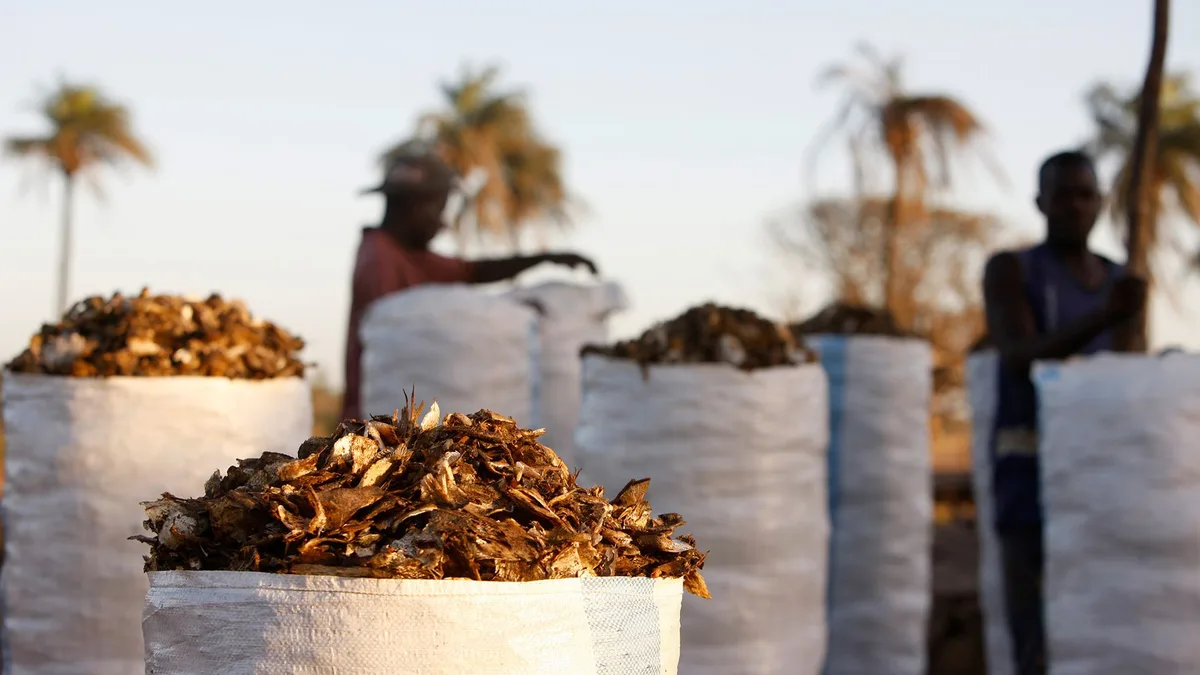
Fish meal is a commercial, protein-rich product created from raw fish and their byproducts, such as the heads and bones.
It tends to be made from smaller fish species, including anchovies, sardines and herring.
The fish are cooked, dried and ground into a powder, and then used to feed livestock, farmed fish and pets.
But it is not a straightforward market.
In this excerpt from " Every Last Fish: A Deep Dive into the World of Fishes and Fishing " (Granta Books, 2025), journalist and author Rose George looks at how vast quantities of staple fish are taken from the sea off West Africa and turned into fishmeal for farming in Europe and China, instead of ending up on the plates of people in Africa.
"Every Last Fish" was short-listed for the 2026 Royal Society Trivedi Science Book Prize .
Rose George interview: 'If you do want to be a criminal, there is no better place to do it': Diving into the dark depths of the fishing industry Take a fish.
Eat its flesh if you want, but don't scorn the rest.
It can always be used, one way or another, whether you want fishmeal or face cream.
Products derived from fish turn up everywhere.
Guanine, an ingredient produced from fish scales, is found in bath foam, perfume, nail products, shampoo, skincare products, and lipstick.
Fishes can become gelatine, glue, and squalene.
They can be in your dietary supplements or your glass of wine: isinglass, derived from dried fish air bladders, is used in wine-making.
Futuristic piscigrafts are irrelevant to most people in Senegal, but they still have to deal with the fish by-products industry, because they have to watch as fish they could eat are transformed into the most common and lucrative fish by-products and sent abroad.
5News aggregated this summary from the outlet’s public feed. The full article, with all the context, is on www.livescience.com — the content belongs to Live Science.