The End of Oak Street ending explainer: Wait, what? How? When?
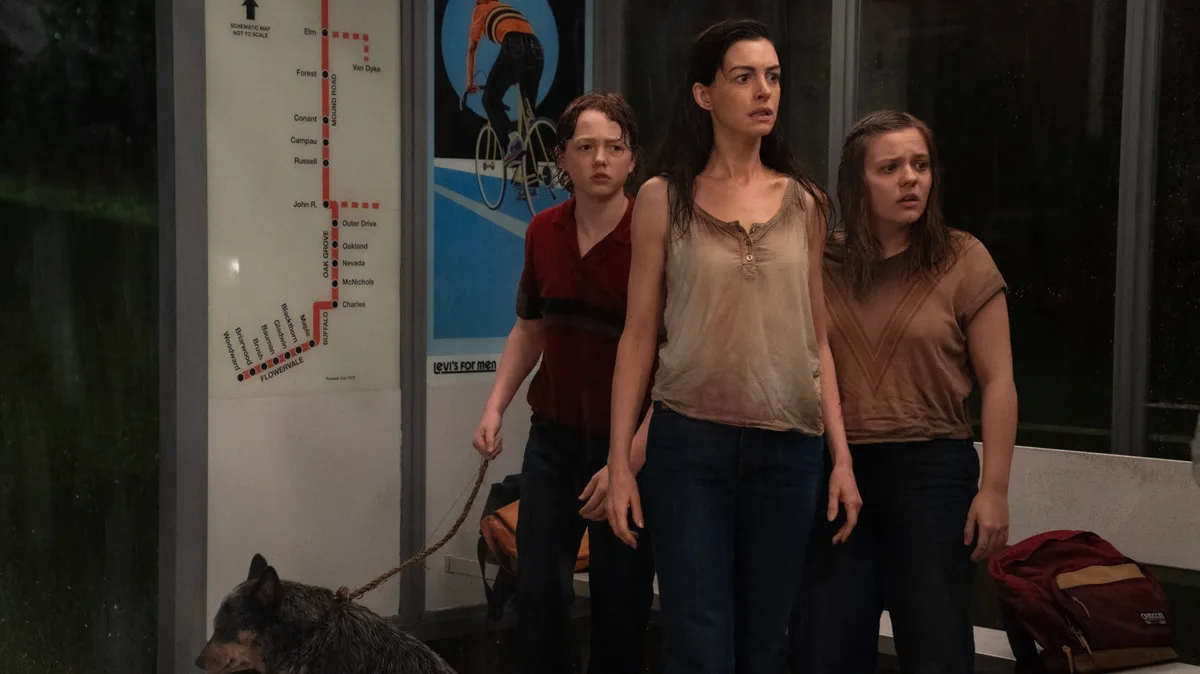
Written and directed by David Robert Mitchell, The End of Oak Street plays like a twisted reimagining of Steven Spielberg's Jurassic Park .
The suburban Platt family is having an average summer of block parties, parental bickering, and unrequited crushes when time travel upends their lives.
Dinosaurs now prowl their streets, tower over their homes, and descend from the skies.
Neighbors are turned into bloody remains, bedecking their yards like grisly lawn ornaments.
And then comes that ending.
Whether or not you liked The End of Oak Street for Mitchell's gruesome kills, slasher-style scares, or bewilderingly bad dialogue, you might well be scratching your head over that ending.
So, let's get into it.
SEE ALSO: 'The End of Oak Street' review: Imagine 'Jurassic Park' but bleak and stupid How does the time travel in The End of Oak Street work? Credit: Warner Bros.
Pictures In the film's first act, set in 1982, there's a news broadcast about NASA researching temporal anomalies.
But the Platt family is so caught up in their domestic drama, they don't take note.
The first family member to get a hint of what's to come is mother Denise (Anne Hathaway).
When visiting her friend, the widow Mrs.
Huddleston (Anne Gee Byrd), Denise is shown a strange plant that's come up inexplicably fast in Mrs.
Huddleston's backyard.
5News aggregated this summary from the outlet’s public feed. The full article, with all the context, is on mashable.com — the content belongs to Mashable.