What I Saw In Sinaloa
Sign up for our newsletter about national security here .
L ast Tuesday night, I was eating sushi with a Mexican police chief in downtown Culiacán, a city that had momentarily flickered back to life amid a bloody cartel turf war.
At the table next to us was a birthday party.
The police chief ordered a salmon roll.
Through the window, I could see groups of families and friends walking on the sidewalk, past car dealerships and strip malls, after months of self-imposed lockdown.
Among them were three influencers who pulled up to a KFC down the street.
They were dressed as food-delivery workers, carrying insulated bags on their backs, joking with one another and livestreaming everything with their phones.
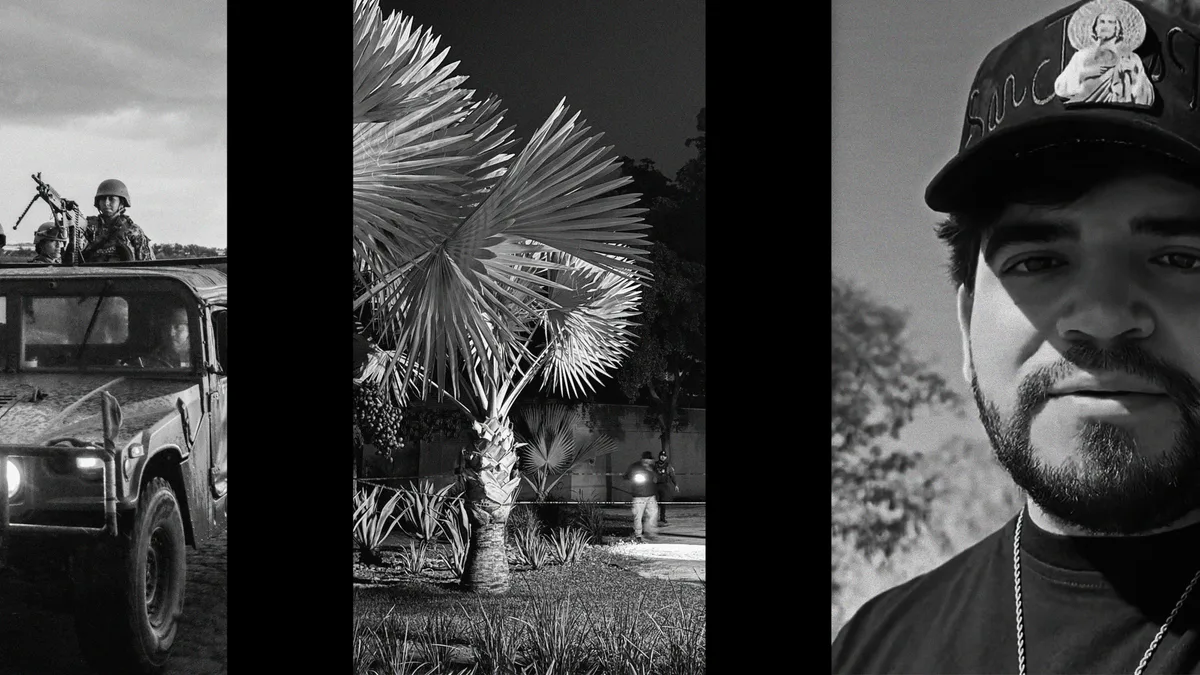
César Gastélum, the group’s front man, had become famous for such innocuous pranks.
Even as thousands were murdered by the cartels, Gastélum, a stocky, bearded 24-year-old, posted videos of himself dancing in pajamas, dressing as a priest, sipping iced coffee.
He had more than 700,000 followers on TikTok.
It was this kind of incongruity that had drawn me to Culiacán, the capital of Sinaloa.
The city is the center of the fiercest and most consequential battle between armed groups in Mexico, and I wanted to untangle what was behind the surge of violence.
From afar, it was difficult to tell whether someone like Gastélum was proof that the mundane and the horrific could coexist here, as they have for decades across Mexico, or whether he was a symbol of something else—the way drug cartels had quietly co-opted even the city’s least likely protagonists.
At about 8 o’clock, Gastélum and his friends were recording themselves waiting for their fried-chicken orders when two men on a motorcycle drove past.
5News aggregated this summary from the outlet’s public feed. The full article, with all the context, is on www.theatlantic.com — the content belongs to The Atlantic.