Stocks are in a late-stage bubble and poised to crash 21% next year, while Treasury yields above 5% will signal a new era of tight money, analysts say
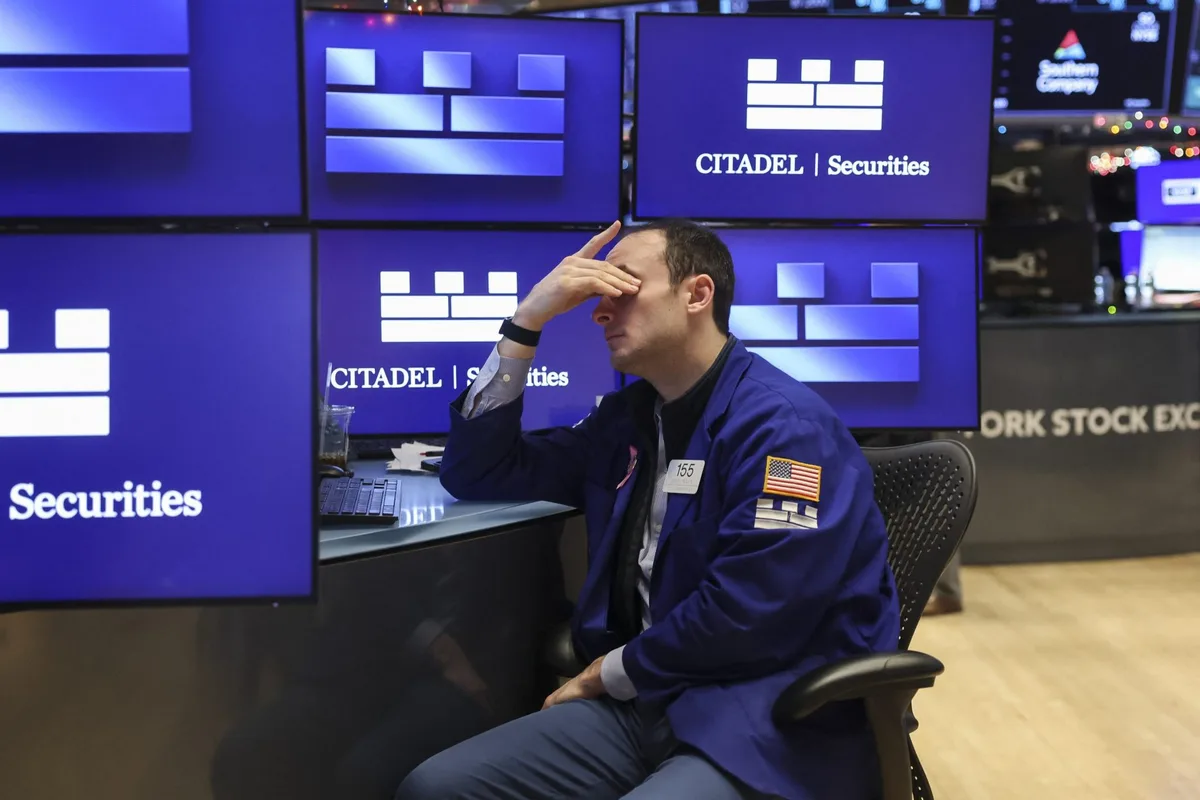
Investors should enjoy the final months of 2026 while they can as the AI-led stock market boom is due to go bust soon, according to analysts.
For now, there are still gains to be had.
James Reilly, senior markets economist at Capital Economics, reiterated an earlier forecast for the S&P 500 to end this year at 8,250, up 7.7% from Friday’s close, then plunge 21% to 6,500 by the end of 2027.
“On balance, we think the data look consistent with a late-stage bubble,” he wrote in a note on Thursday.
“Most of the factors we consider are at, or close to, levels that have preceded past stock market peaks.” Reilly flagged several bubble indicators that he’s been tracking: Stock valuations are consistent with a late-stage bubble.
For example, the market’s cyclically adjusted price-to-earnings ratio is close to its dotcom peak, while the S&P 500’s valuation compared to Treasury bonds is also near dotcom extremes.
Expected earnings growth looks unsustainable.
Forward 12-month earnings-per-share growth for the S&P 500 is in line with the peak of the dotcom bubble.
The sustainability of AI investment is in doubt amid massive spending and shrinking free cash flow.
The combined free cash flow for the top AI hyperscalers is expected to turn negative in 2027.
Market-cap concentration of indexes in fewer stocks is at extreme levels, and that narrowness is often associated with unsustainable rallies.
Equity issuance is booming and consistent with a late-stage bubble.
Given the pipeline of IPOs and follow-on offerings, another gusher of stocks is on the way.
In the past, such activity has signaled a bubble’s end is just months away, not years.
5News aggregated this summary from the outlet’s public feed. The full article, with all the context, is on fortune.com — the content belongs to Fortune.