On this day in space! Sept. 13, 2007: Japan launches Kaguya spacecraft to the moon to map the lunar surface in HD
On Sept.
13, 2007, Japan launched the Kaguya spacecraft on a mission to the moon.
Formally known as SELENE, which is short for SELenological and ENgineering Explorer, it was Japan's second moon mission.
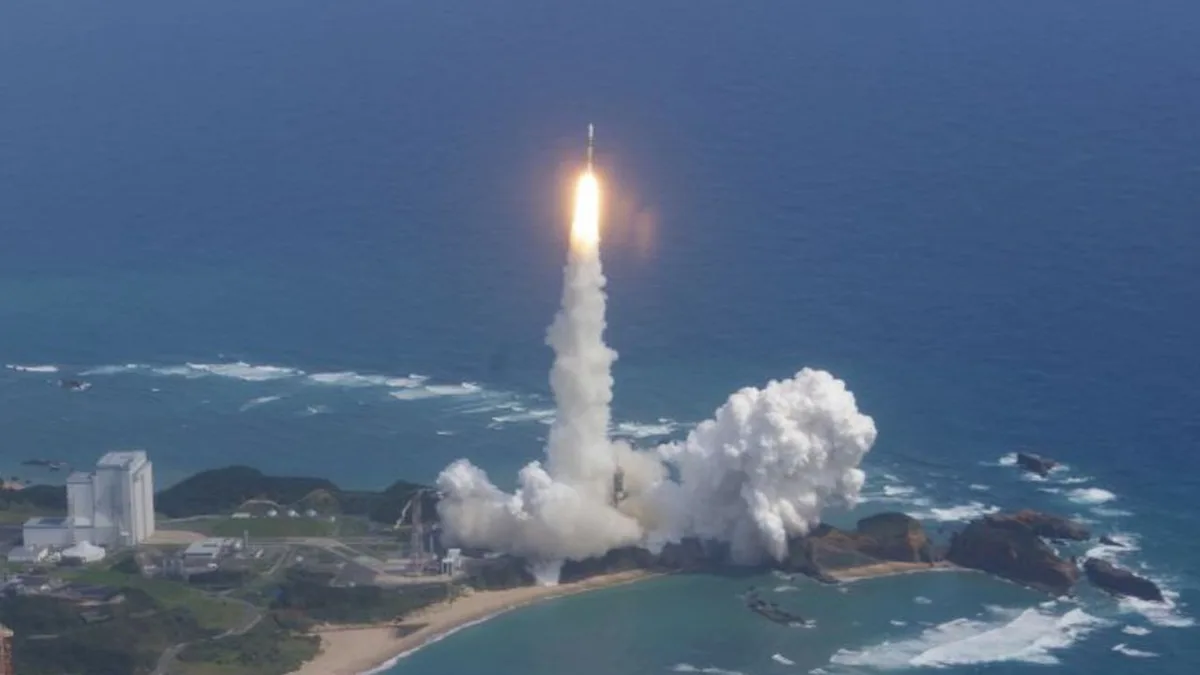
Kaguya launched from Tanegashima Space Center on a Japanese H-IIA rocket and looped around the Earth twice before heading to the moon.
NOTE: While the launch occurred on Sept.
13 in the evening Eastern Time, it was actually 10:31 a.m. on Sept.
14 at the launch site.
The spacecraft carried 14 science instruments and two tiny microsatellites to map the moon's surface and study its gravitational field.
After a 20-day journey, Kaguya arrived at the moon .
The mission consisted of three spacecraft: a main orbiter, a small communications satellite, and a third small satellite to map the moon's gravitational field.
After about a year of lunar observations, the mission ended with a planned crash landing on the lunar surface.
A Japanese H-IIA rocket launches the Kaguya spacecraft toward the moon from Tanegashima Space Center in Japan on Sept.
13, 2007. (Image credit: JAXA) Why it mattered The Kaguya moon mission was actually the second lunar probe launched by Japan, but it was the country's first spacecraft to actually orbit the moon. ( Japan's Hiten spacecraft launched in 1990, but it flew in a highly elliptical orbit around Earth that allowed it to make 10 flybys of the moon before crashing into the lunar surface in 1993.
It also released a small probe called Hagoromo near the moon.) But while the Hiten and Hagoromo missions were designed to test technology for a future moon mission, Kaguya put all that tech into practice.
5News aggregated this summary from the outlet’s public feed. The full article, with all the context, is on www.space.com — the content belongs to Space.com.