How Latinos became America’s biggest swing vote
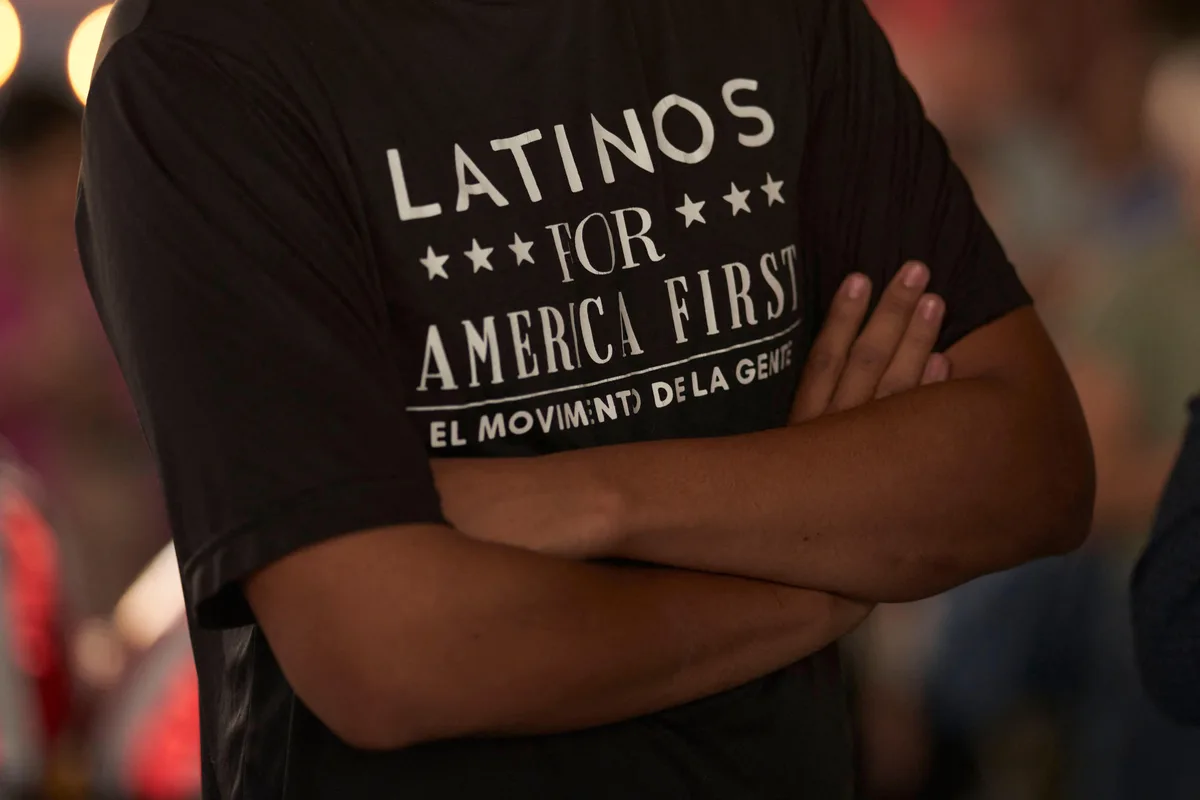
A man wearing a "Latinos for America" t-shirt attends a Republican campaign event on October 10, 2022 at the University Drafthouse in Mcallen, Texas. (Photo by ALLISON DINNER/AFP via Getty Images) | Allison Dinner/AFP via Getty Images Welcome to The Midterms, Actually.
Every week I’ll be writing about two things: one big idea or trend I see forming across the 2026 primaries, and one thing I’m hearing from a voice on the ground.
Let’s get into it.
You can sign up here to get it in your inbox every week.
Let’s get into it.
One big idea: Latinos didn’t come home.
They’re just in motion.
In the last presidential election, President Donald Trump’s strong support with Latino voters ended up one of the biggest stories of the night.
After years of Democrats telling themselves that the growing number of Hispanic Americans would help lead to a permanent liberal majority, their dreams were first dashed in 2016 (when many of those voters stayed home ) and then buried in 2024 (when they, and other nonwhite voters, swung toward Trump ).
But just as Democrats have at times been too confident that minority voters would fall in line, it now seems Republicans have replicated their mistake.
Poll after poll shows a historic reversal among Latino voters in Trump’s second term, and these days even Republican members of Congress are beginning to call Trump out on his deportation efforts.
Why? It comes back to the numbers.
As Nate Cohn observed in the New York Times this week, Democrats now lead Republicans among Hispanic likely voters by 35 percentage points on the generic congressional ballot, 64-29 — a 28-point swing from 2024, when Kamala Harris carried Hispanic voters by just 7 points.
The shift is a big reason the polling has Democrats in “blue wave” territory this November.
5News aggregated this summary from the outlet’s public feed. The full article, with all the context, is on www.vox.com — the content belongs to Vox.