Steve Jobs made Apple iconic. Tim Cook made it a $5 trillion behemoth
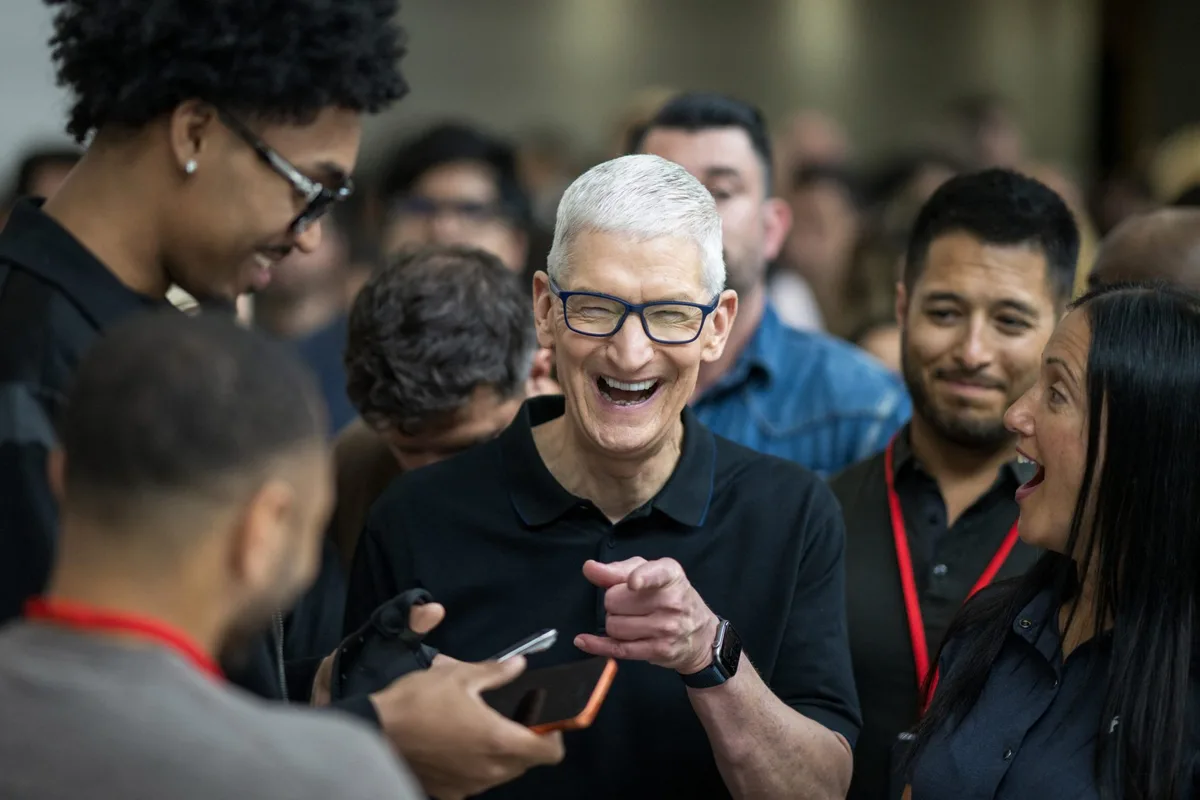
When Apple announced back in 2011 that its chief operating officer, Tim Cook, would succeed its ailing, revered cofounder and CEO, Steve Jobs, many commentators wondered whether he’d be able to fill such big shoes.
Cook was an even-keeled, soft-spoken technocrat who knew how to get stuff done, but hardly a visionary.
Could he oversee the creation of society-changing devices as his boss Jobs had? Jobs had a knack for knowing what people wanted before even they knew it, an instinct that made Mac computers, iPods, and, above all, the iPhone some of the most sought-after products of all time.
“I don’t see [Cook] as the kind of person who could ever have the focus, the kind of maniacal dedication [as Jobs],” CNET editor Molly Wood wrote, reflecting the consensus at the time.
Wood and other observers were largely right.
Cook, who stepped down as Apple CEO on Sept.
1 , never assumed the Jobs-like persona of tech tastemaker.
Under Cook’s leadership, Apple didn’t come up with a new world-altering device; in fact, it introduced a few clunkers along the way.
But at that stage of Apple’s life span, the company didn’t need another Jobs.
It needed someone who could build a sustainable business around its blockbuster products and put to rest the question that dogs many flashy startups: Could it thrive without its monomaniacal founder? Cook ultimately built his own respected legacy, not in spite of being unlike Jobs, but because of it.
“The founder story of Apple was so mythical and present that Tim Cook could have disappointed everybody by just being himself,” says Jo-Ellen Pozner, a business professor at Santa Clara University.
“But by being himself, he actually exceeded all expectations.” Cook’s biggest contribution to Apple, Pozner argues, was transforming it from a company that reflected Jobs’ cult of personality to one grounded in its values; one that’s centered on its customers—not the CEO.
Jobs hired Cook in 1998, then promoted him to executive vice president of worldwide sales and operations in 2002, and later to COO in 2005.
As CEO, operational prowess helped him make crucial, if not dazzling, changes that built up Apple’s supply-chain resilience and constructed a closed loop of products and services that locked in customers.
5News aggregated this summary from the outlet’s public feed. The full article, with all the context, is on fortune.com — the content belongs to Fortune.