What Trump’s Executive Order Could Mean for Childhood Vaccines
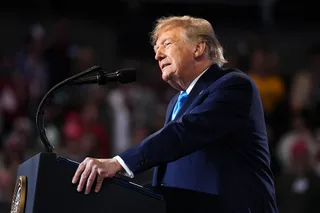
President Donald Trump on Monday signed an executive order calling for revamped childhood vaccine recommendations that promote his long-held belief that childhood shots should be spaced out into separate medical visits.
President Donald Trump has again taken aim at vaccines —this time in a new executive order .
The directive, which Trump signed in the Oval Office on Aug.
10, calls for U.S. children to receive fewer vaccines and urges states to reconsider which vaccines they require for school attendance.
It also directs the U.S.
Department of Justice (DOJ) to sue states that fail to provide religious and medical exemptions for mandated vaccines and orders the measles, mumps and rubella (MMR) shot —a combination vaccine that has been in use for more than 50 years—to be split into three separate jabs.
“Today we’re proud to officially announce the United States of America’s gold-standard childhood vaccination recommendations,” Trump said during the signing ceremony.
Doctors and vaccine scientists have expressed dismay at the order, which they say is not backed by gold-standard science.
"As measles cases reach a 35-year high in the U.S. and with cold and flu season quickly approaching, [the] executive order on vaccines is not only disheartening but dangerous,” Dr.
Andrew Racine, president of the American Academy of Pediatrics (AAP), said in a statement .
“There is no new evidence to justify significant changes to childhood immunization guidance.” But will the executive order actually change what vaccines are available to children? Probably not, legal scholars and medical experts say.
Still, it could put pressure on states to change their vaccine recommendations and requirements.
It could also have a chilling effect on vaccine uptake.
“This is going to create confusion and chaos,” says Dr.
5News aggregated this summary from the outlet’s public feed. The full article, with all the context, is on time.com — the content belongs to TIME.