ICE Is Asking Gate Agents To Help Arrest Passengers. Some Are Pushing Back
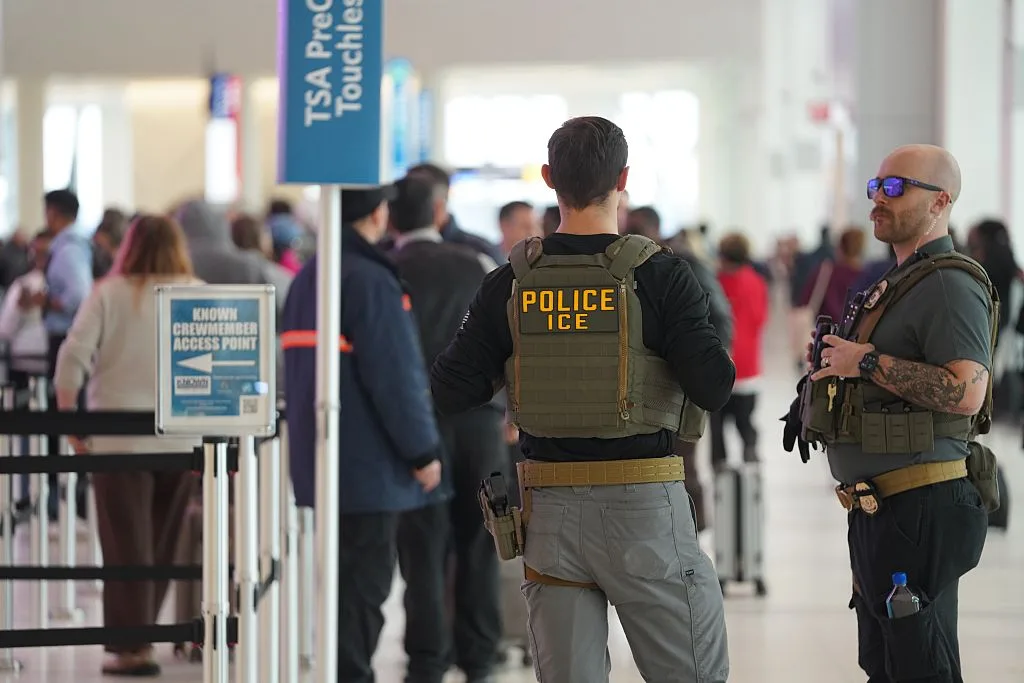
Immigration and Customs Enforcement (ICE) agents patrol LaGuardia Airport in New York City on March 23, 2026, as they assist at busy security checkpoints amid a Department of Homeland Security shutdown that has lasted more than a month. —Zhang Fengguo/Xinhua—Getty Images Laurie was on her way to a gate at the airport where she worked as a manager when a colleague called with a warning: Immigration and Customs Enforcement (ICE) agents had turned up again and were asking airline staff to help locate a passenger.
She had years of experience cooperating with federal law enforcement .
But the encounters she was accustomed to followed a protocol: airline managers were notified in advance, officers arrived in uniform with their badges visible and judicial warrants were presented for passenger arrests.
Read more: ICE Considers Expanding Detention Space in 14 Locations—Including Guantanamo Bay and Virgin Islands Multiple gate agents working at airports in Colorado, Texas and Arizona have told TIME that ICE agents have become a recurring presence in recent weeks.
With protocols for handling such encounters unclear or inconsistently applied, airline employees like Laurie say they are increasingly being left to decide for themselves how to respond.
She knew how consequential that decision could be.
Ten days earlier, two men in plain clothes had approached a gate agent, identified themselves only as federal officers and asked the employee to summon a passenger.
Laurie, who was the manager on duty, had received no advance notice of their arrival.
She approached the men and asked for identification.
She said the officers told her they were ICE agents and showed their badges, which had not been visible.
An announcement went out over the airport’s public address system.
A woman approached the desk, and the officers took her into custody.
Laurie asked to see a warrant and the men told her it was in their car.
She followed as they escorted the passenger to an unmarked vehicle with an out-of-state license plate, where the officers showed her an administrative warrant rather than a judicial warrant signed by a judge.
5News aggregated this summary from the outlet’s public feed. The full article, with all the context, is on time.com — the content belongs to TIME.