What history can teach us about the future of property rights in space (op-ed)
Rainer Zitelmann has doctorates in history and sociology.
He has authored and edited 32 books that have been translated into 35 languages.
He contributed this article to Space.com's Expert Voices: Op-Ed & Insights .
Without property rights in space, one of the most important economic incentives for the commercial development — and ultimately the settlement — of celestial bodies is missing.
The 1967 Outer Space Treaty prohibits states from claiming sovereignty over celestial bodies or land on them.
The underlying idea reflected the dominant thinking of the time: space belongs to all mankind.
The question of whether private individuals or companies may acquire property rights remains unresolved.
The treaty says nothing explicitly about private ownership, largely because in the 1960s hardly anyone imagined that, just a few decades later, entrepreneurs such as Elon Musk or Jeff Bezos would possess the financial resources and technological expertise to accomplish what was then thought possible only for governments.
The absence of property rights is one important reason why humanity has made less progress in the exploration and development of space than many expected.
Once the United States had won the race to the moon , the incentive for the next stage of space exploration largely disappeared.
Consider a thought experiment.
Imagine that whoever reaches an asteroid with a spacecraft and begins mining it acquires the right to claim ownership of that asteroid and list it on the stock market as a real estate investment trust (REIT).
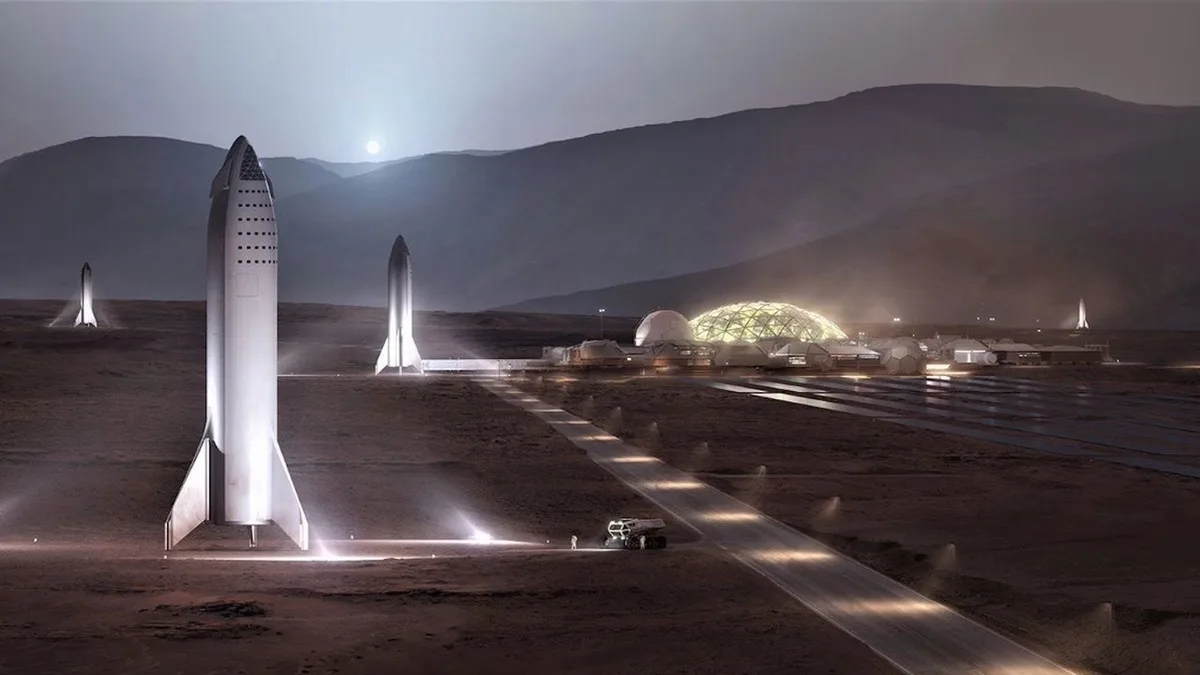
Or imagine that whoever reaches Mars and begins constructing a settlement — whether with robots or eventually with human settlers — gains the right to declare the surrounding land as private property.
Such rights would create extraordinarily powerful economic incentives.
5News aggregated this summary from the outlet’s public feed. The full article, with all the context, is on www.space.com — the content belongs to Space.com.