Iran war causes global pain at the pump
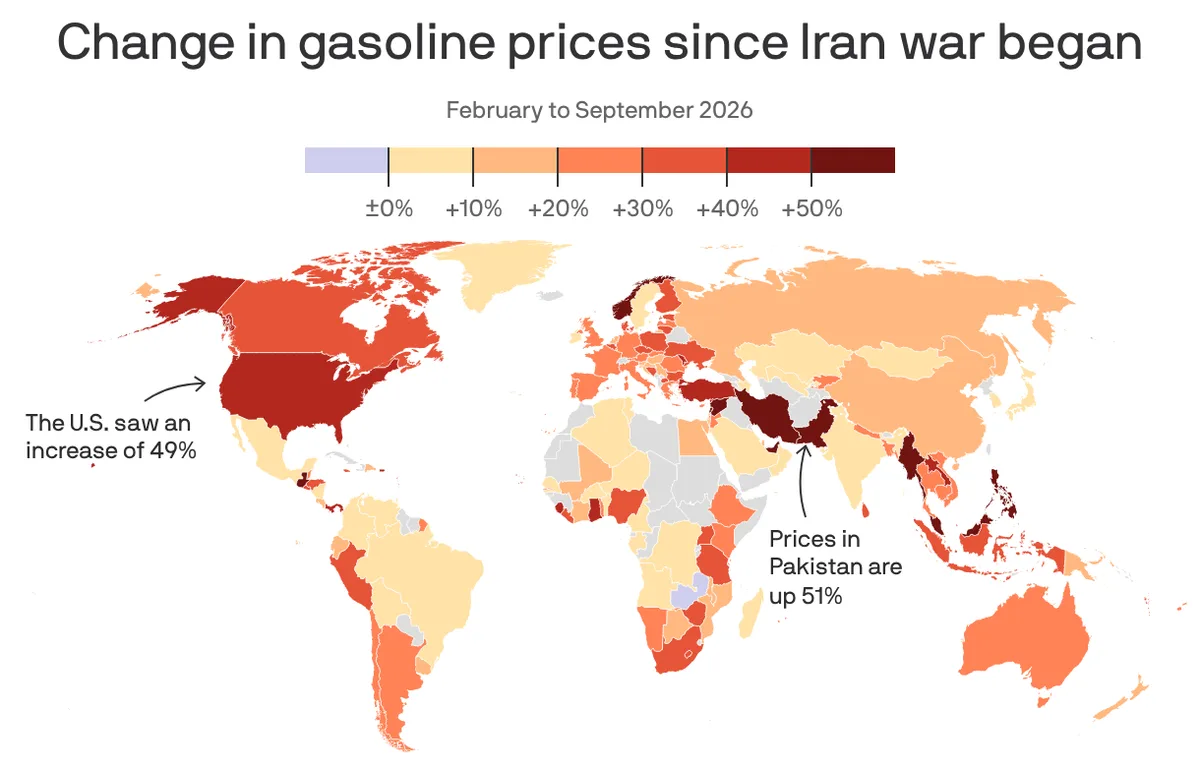
Data: Axios research.
Note: Some countries use a quota system for gasoline.
Malaysia's figure reflects the unsubsidized market rate.
Chart: Noah Bressner/Axios The Iran war is driving fuel prices higher worldwide, leading to angry protests around the globe and straining the economies of countries that have nothing to do with the war.
Why it matters: It's not just driving up prices in the U.S.
The war is causing problems around the world — in some cases far worse than anything Americans are experiencing.
The surge in prices squeezes consumers, and worsens the finances of governments trying to contain the shock — especially poorer and developing countries with little fiscal running room.
It affects many nations that are also facing higher prices for natural gas, diesel and other fuels.
Zoom out: The map above, based on World Bank data, shows the upward global trend.
Yes, but: Price increases vary greatly from country to country.
A number of countries that are heavily reliant on fuel imports, like Pakistan and Myanmar, have seen steep price hikes.
But the U.S., the world's largest oil and gasoline producer, also has soaring prices.
Crude oil prices, the biggest input into gasoline costs, are set on global markets.
The U.S. federal government, unlike some nations, has not set caps or subsidies on retail prices.
5News aggregated this summary from the outlet’s public feed. The full article, with all the context, is on www.axios.com — the content belongs to Axios.