What Hanging from a Bar for 30 Seconds Can Do for Your Body
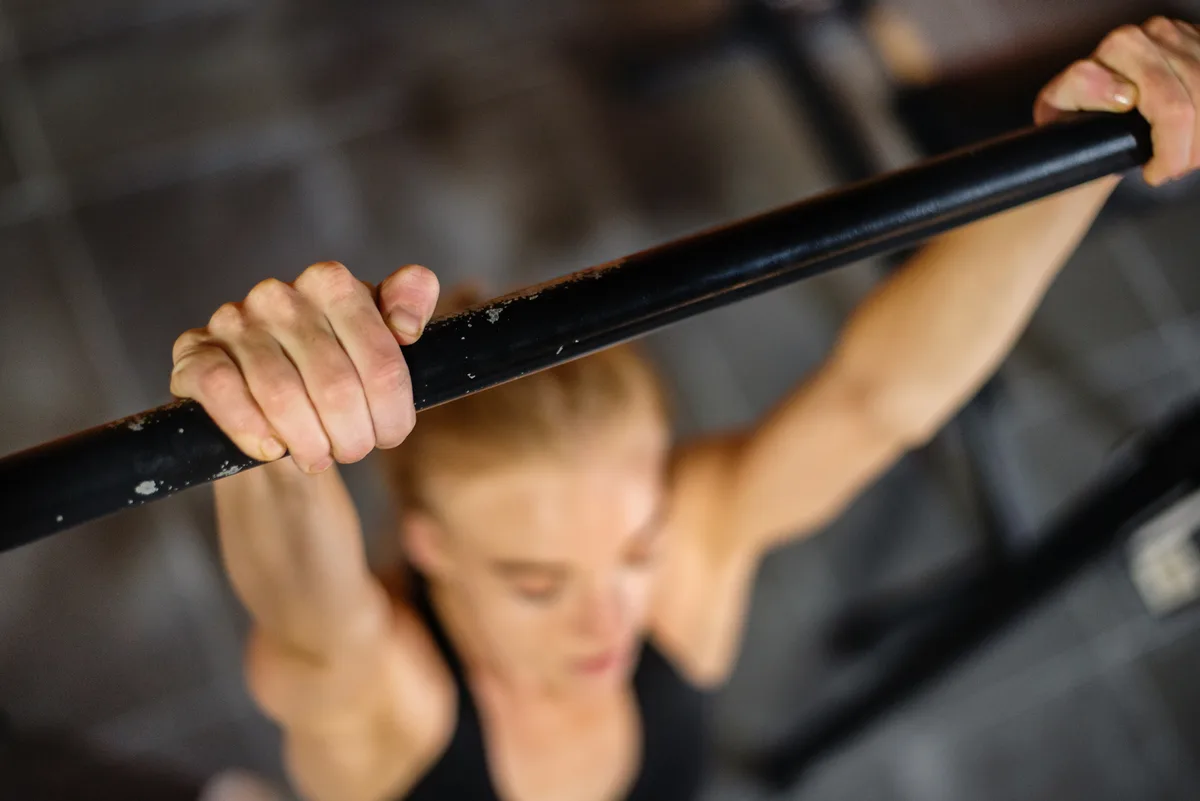
—NickyLloyd––Getty Images Most people leave the monkey bars behind with childhood.
Yet hanging from a bar—right-side up, don’t worry—may be one youthful habit worth picking back up, especially if you spend your days hunched over your desk and phone. (Guilty.) “We look at kids on a playground—what are they doing?” says Australian physiotherapist Daniel Vadnal, owner of FitnessFAQs , who posts instructive videos on Instagram and YouTube .
“They don’t need to be told to hang.
They just intuitively do it.” A few years ago, Vadnal persuaded his grandmother, now 93, to try a supported hang.
That means gripping a bar overhead with straight arms but keeping your feet planted on the floor, rather than dangling your entire body weight.
She was skeptical: She hadn’t even raised her arms fully overhead since she was a kid.
But after just 30 seconds, she felt taller and looser—and found it easier to reach her kitchen cabinets.
Here’s what hanging can do for your body, how to keep your feet planted while you build strength, and why just 30 seconds is long enough.
It gives your upper body a stretch At its simplest, hanging means gripping a secure overhead pull-up bar—the kind that can be installed in a doorway —with straight arms while supporting some or all of your body weight.
You remain right-side up: Your hands are above your head, and your feet point toward the floor or remain planted on it.
Hanging upside down, known as inversion, is an entirely different exercise.
“It’s fairly simple, but it’s not easy,” says Hazel Anderson, a physical therapist and faculty member at the University of St.
Augustine for Health Sciences in Austin.
Whether your feet stay planted for support or lift off the floor, there are two ways to position your upper body.
5News aggregated this summary from the outlet’s public feed. The full article, with all the context, is on time.com — the content belongs to TIME.