Artemis II crew witnessed meteor flashes on the moon with their own eyes
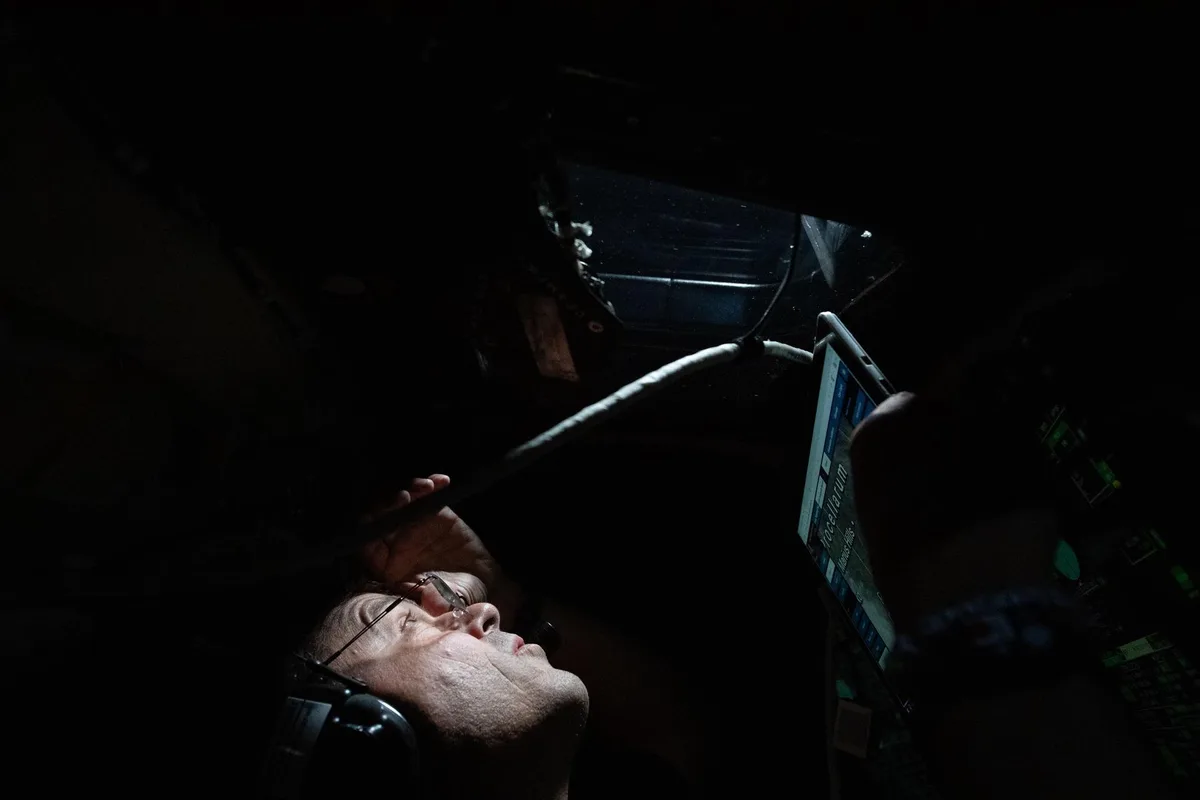
The astronauts who swung around the moon aboard NASA 's Orion capsule spotted five tiny sparks from space rocks slamming into the lunar surface, likely the faintest impact flashes humans have ever seen.
The Artemis II Commander Reid Wiseman caught the first one during the mission just six months ago.
"I just saw a flash, 100 percent," he called out, placing it at about the 7 or 8 o'clock position on the moon.
Moments later, he and crewmate Jeremy Hansen both saw another.
Hansen described a "pinprick" of light on the lower third of the moon.
"It's just like a bloop," Hansen said.
Those sightings stunned the mission control room back in Houston, literally causing Kelsey Young's jaw to drop.
Young, the mission's lunar science operations lead, admitted she hadn't expected the crew to see any micrometeorites at all.
Artemis II flew during a quiet stretch of the year, outside any major meteor shower.
"You probably saw the surprise and shock on my face," she later told reporters, who had watched a broadcast of the space-to-ground communications.
"And though I was not in the science evaluation room, I heard that there were audible screams of delight." Each flash tells scientists something about how often bits of comets and asteroids pummel the moon and where they hit.
NASA wants those numbers before it sends astronauts to live and work there.
Lori Glaze, a senior NASA official, said the agency will use such data to judge the risk that meteorites , even the tiniest of space rocks, pose to future moon bases .
SEE ALSO: Mars' weird 1,100-mile cloud runs on physics no one has ever seen before A flash happens when a speeding space pebble smacks the moon.
5News aggregated this summary from the outlet’s public feed. The full article, with all the context, is on mashable.com — the content belongs to Mashable.