Astronomer proposes jaw-dropping reason why we dont have a super-Earth
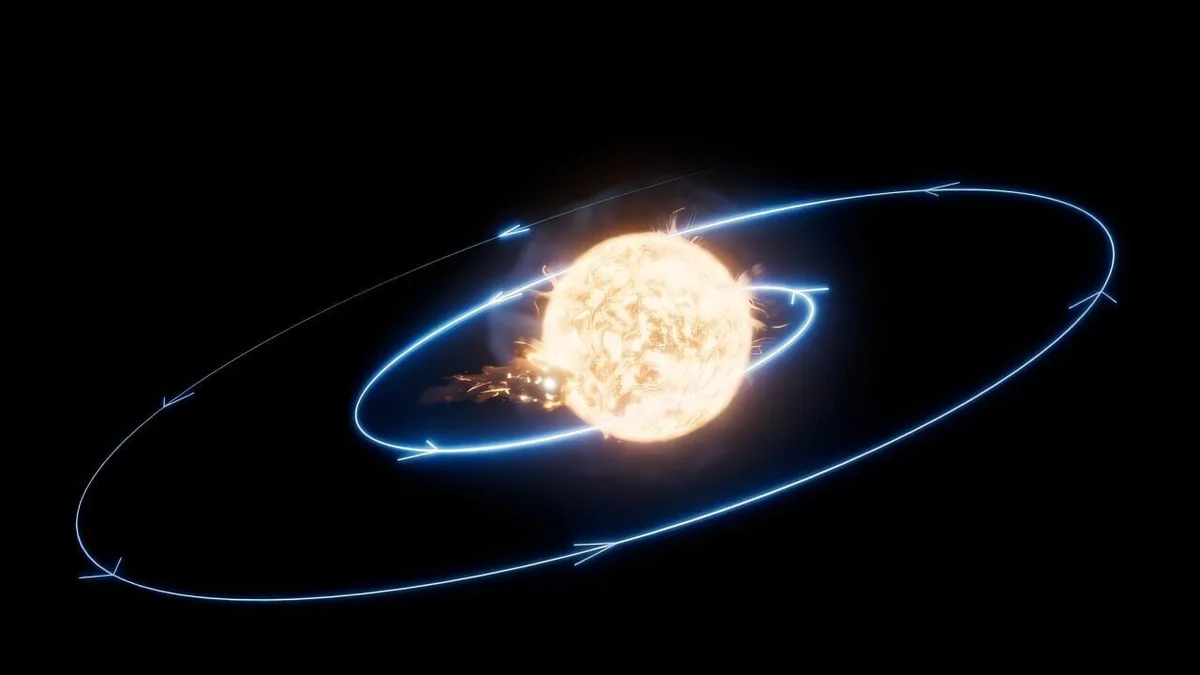
Why our solar system missed out on having a super‑Earth , a type of world that teems across the galaxy, has long bugged astronomers.
Now, a new study proposes an intriguing explanation: maybe the sun ate it.
Mutlu Yildiz, an astronomy professor at Ege University in Turkey, used computer simulations to wind back the clock and study the young sun with and without a swallowed planet to see which version best matches the star we know today.
His models that fed the sun a dense, rocky super‑Earth — about five to 10 times more massive than Earth and rich in heavy elements like Mercury — lined up closely with real measurements.
Earlier work has proposed that a super‑Earth could have formed and then spiraled through space into the sun billions of years ago, but this paper is perhaps the first to delve deeply into the idea, asking whether the sun retains evidence that such an event took place.
"We believe it could," Yildiz said in a statement .
SEE ALSO: 3D map reveals cities of galaxies taking shape in early universe Lithium is one of the most important chemical clues pointing to a planet's engulfment.
When the sun formed, it was made from the same stuff as meteorites and the gas cloud around it.
From those rocks and gases, scientists can estimate how much lithium the newborn sun should have had.
Today, the sun's surface has over 100 times less lithium than expected.
Lithium atoms only break apart deep inside a star, where it is much hotter, so the missing element hints that something might have dragged it down.
An artist's rendering of a super-Earth orbiting a sun-like star Credit: NASA / JPL-Caltech illustration The new study , published in Monthly Notices of the Royal Astronomical Society , suggests a scenario in which the ill‑fated planet brings in material that is poor in lithium but rich in heavier elements.
Yildiz dubbed the hypothetical planet Dev Dilek, meaning "Great Wish" in Turkish.
The name Dilek is traditionally associated with wishes directed toward Mercury, and the prefix "Dev" means giant.
5News aggregated this summary from the outlet’s public feed. The full article, with all the context, is on mashable.com — the content belongs to Mashable.