The Philips Hue Ecosystem Now Includes Sonos and Nanoleaf Shapes
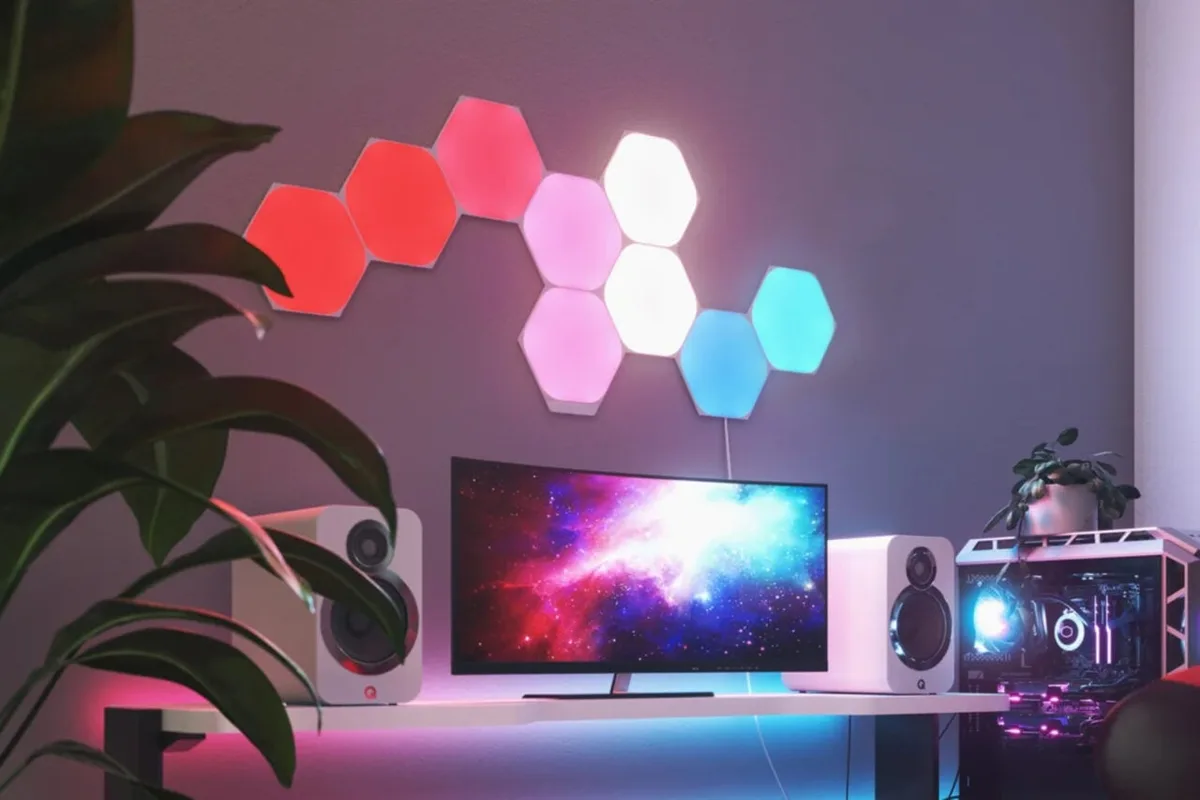
Philips Hue is making some big moves at IFA 2026 , including announcing new partnerships that expand its ecosystem to include both Nanoleaf and Sonos.
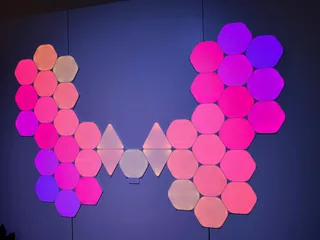
The Nanoleaf integration will be available first, and you’ll need to buy a new $40 Philips Hue x Nanoleaf Wall Light Module to make it work. This module lets Hue users with Nanoleaf Shapes lights connect the colorful panel smart lights to the Hue app. That means you’ll be able to control the lights using Philips Hue switches or from the Hue app, and you can automate them using the app, as well.
I got to see the Wall Light Module in action at an off-site Philips Hue event. It’s a very small, white rectangle of a thing that attaches to the edge of a Nanoleaf panel, the same way you would fix the panels together. And when it’s connected to the Hue app, you can control the panels very similarly to the way they work natively in the Nanoleaf app.
We were shown some control options from an update that’s coming later to the Hue app, such as the ability to change the angle of the Nanoleaf Shapes’ sweep when displaying a gradient. You’ll also be able to use the lights in concert with other Philips Hue lights for scenes—I watched as a shimmering gradient flowed diagonally across a set of one of Philips Hue’s new curtain lights and the Nanoleaf panels in near-perfect sync.
The demonstrator also confirmed for me that if you connect your Hue Bridge to another smart home platform, like Apple Home or Google Home, it will expose the Nanoleaf Shapes to it the same way it would any other Hue light. Of course, that comes with the great big caveat that you won’t be able to do anything fancy with the lights—no gradients or effects, just turning them on and off, setting a single color for all panels, and changing their brightness. Later this year, Philips Hue says it will start selling Nanoleaf Shapes starter packs that include the Wall Light Module, but for now, only the module itself is available straight from Hue’s website.
As for the Sonos integration, Philips Hue says that it will release a software update in November that enables you to control your Sonos speakers using Philips Hue switches. The supported controls include play/pause, volume adjustment, moving to the next or previous song, and assigning your Sonos Favorites items to the switches’ buttons. According to a representative at Philips Hue’s event, any Philips Hue Switch will work.
I also watched this in action, and it worked exactly as described. A Hue representative used controls on the Hue Tap Dial Switch to pause and play music, to trigger a favorite playlist, and adjust the volume.
Philips Hue is no stranger to third-party partnerships. Beyond its direct connection with other smart home ecosystems, the company has let users connect their accounts with Spotify for synchronized light and music shows; sync with Razer to have lights react to their games; and set lights to react to whatever is happening on your LG or Samsung TV. And of course, through Matter, Hue lights are interoperable with pretty much any old smart home ecosystem.
5News aggregated this summary from the outlet’s public feed. The full article, with all the context, is on gizmodo.com — the content belongs to Gizmodo.