Philips Hue adds Nanoleaf’s light panels to its ecosystem with a $40 module
The smart lighting rivals team up to bring a deep integration between their products.
The smart lighting rivals team up to bring a deep integration between their products.
If you buy something from a Verge link, Vox Media may earn a commission. See our ethics statement.
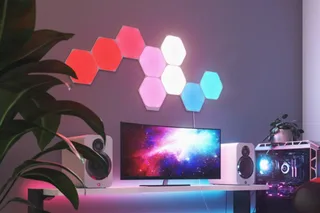
Philips Hue is finally adding wall panels into its smart lighting portfolio. But instead of developing its own, it’s partnered with longtime rival Nanoleaf, the company that invented the smart modular wall panel category.
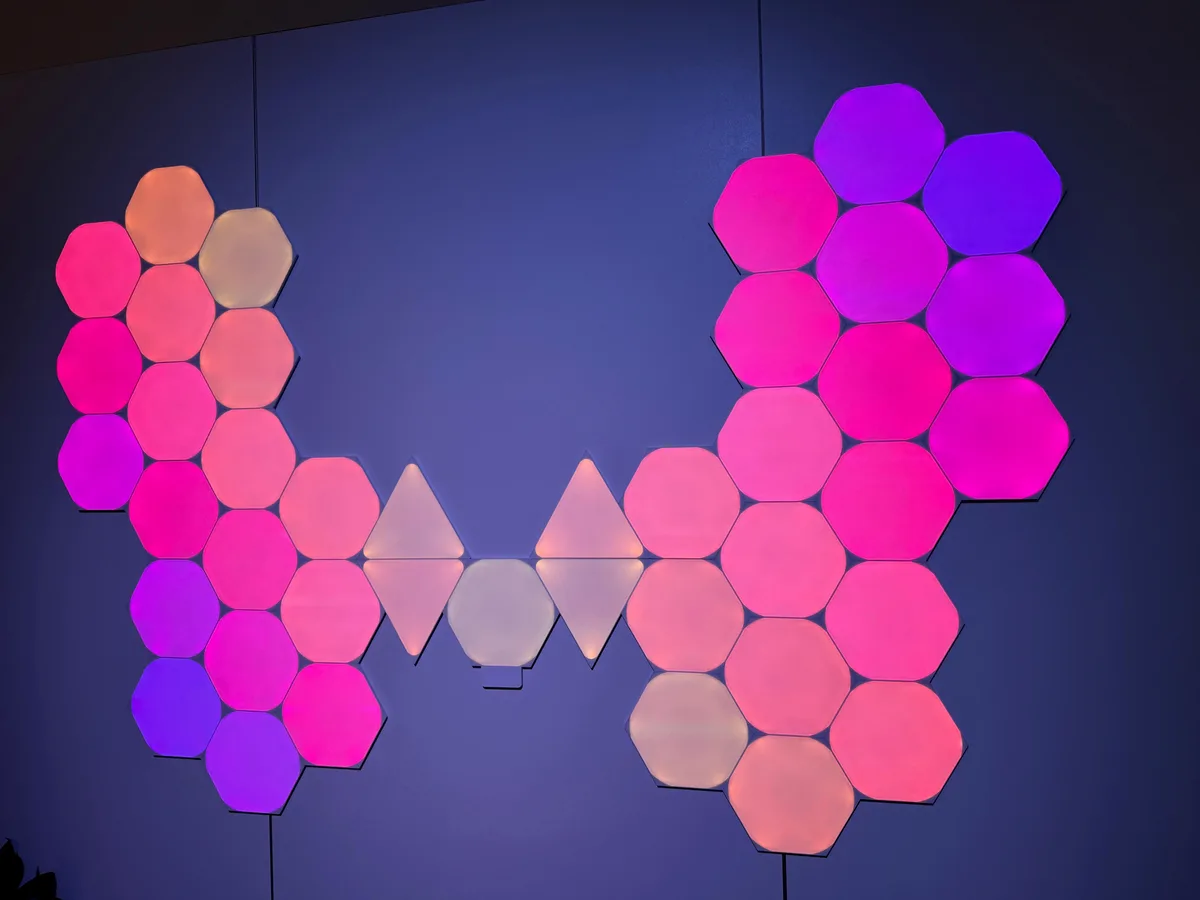
Starting today, September 3rd, if you own Nanoleaf Hexagon, Triangle, or Mini Triangle wall panels, you can integrate them into your Philips Hue ecosystem using a Philips Hue x Nanoleaf Wall Light Module. The $39.99 device has a full Hue connectivity stack inside, running Bluetooth, Zigbee, and Thread concurrently — meaning you can use the Hue app and a Matter app like Apple Home simultaneously.
Once in the Hue app, the module turns the panels into a full Hue light, capable of gradient light and compatible with Hue scenes, automations, switches, and entertainment experiences. They will also integrate with the new MotionAware and Spatial Aware features on the Bridge Pro .
The module snaps onto the panels the same way Nanoleaf’s controller does, but today you have to use one or the other. George Yianni, founder and head of technology at Philips Hue, tells The Verge that the option to use both modules will be coming in the next couple of months.
Until then, if you attach the Hue module, you’ll lose access to Nanoleaf’s dynamic scenes, screen mirroring, and music-reactive features. You also won’t have any physical controls for the light, something the Nanoleaf controller does offer. When dual control arrives, you can use both apps and the most recent software command will take priority, allowing you to switch between the functions of each ecosystem.
However, you can only control the Nanoleaf panels in the Hue app, not the other way around. “This is more for people wanting Nanoleaf in their Hue ecosystem than using Hue in Nanoleaf,” Nanoleaf CEO Gimmy Chu told The Verge .
Chu said he and Yianni have known each other for years and “dreamed about working together” (despite Hue’s parent company, Signify, recently suing Nanoleaf over patent infringement). Yianni said there is clear overlap in their customer base: “We often see our products installed together,” adding that wall panels have “been in our roadmap forever,” but were constantly pushed back in favor of more pressing products. ”They’re quite complicated,“ he said, and Nanoleaf had the best one out there and had “found a pretty good sweet spot” in terms of price and design. Hue could have gone more premium, said Yianni, but that would get expensive.
The two companies have been working on the integration for 18 months, choosing a collaboration over integration through Matter, because Matter doesn’t yet carry the dynamic/entertainment functionality Hue wanted.
5News aggregated this summary from the outlet’s public feed. The full article, with all the context, is on www.theverge.com — the content belongs to The Verge.