New AI chip mimics the human brain's capacity for split-second motor control — it solved problems using 10,000 times fewer calculations
Scientists have developed a new type of artificial intelligence (AI) chip that mimics the human brain's aptitude for instinctive motor responses.
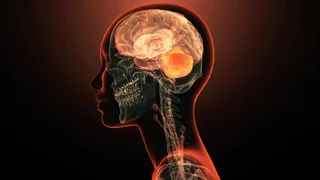
Modeled after the cerebellum , the part of the brain that helps coordinate balance and fine muscle control, the chip is designed to ignore routine information and respond only to unexpected events.
In simulated tests using electrocardiogram (ECG) data, the device flagged irregular heartbeats (arrhythmias) within one-fifth of a heartbeat and with 98% accuracy, according to the researchers — and did so twice as fast as conventional AI systems.
The team published their findings July 10 in the journal Nature Communications .
The device could pave the way for highly responsive, low-power AI systems capable of spotting and reacting to unusual events without relying on the massive computing resources of data centers — from always-on health monitors to self-driving cars and autonomous robots.
A new approach to neuromorphic computing Computer architecture inspired by the human brain is known as neuromorphic computing .
Many researchers consider it key to developing more advanced and efficient AI systems, because it more closely mimics how neurons fire in the human brain .
Rather than processing all incoming information with equal intensity, the brain's biological circuits prioritize important signals and filter out routine background noise, helping it conserve energy.
Most neuromorphic approaches focus on the cerebrum, the largest part of the human brain and the central "thought center." In the new study, the scientists instead focused on the cerebellum, a smaller brain region responsible for coordination and instinctive motor skills — things we do without much conscious thought.
Neural circuits in the cerebellum contain competing excitatory and inhibitory signals that normally balance each other out.
When something unexpected happens, the balance shifts and alerts the brain that it needs to react.
This makes the cerebellum a prime, untapped candidate for neuromorphic AI systems, said study co-author Mark Hersam , a professor of materials science and engineering at Northwestern University.
"The cerebellum is excellent at ignoring the expected and reserving its resources for reacting to the unexpected," Hersam said in a statement .
"That approach ultimately translates into lower energy consumption." A map of the human brain, including the cerebellum. (Image credit: grayjay/Shutterstock) Merging memory and compute While current AI is exceptionally good at recognizing patterns, it spends enormous amounts of computing power continuously analyzing streams of data.
5News aggregated this summary from the outlet’s public feed. The full article, with all the context, is on www.livescience.com — the content belongs to Live Science.