Deloitte puts the lunar economy at up to $566 billion by 2050—and SpaceX is speeding the timeline
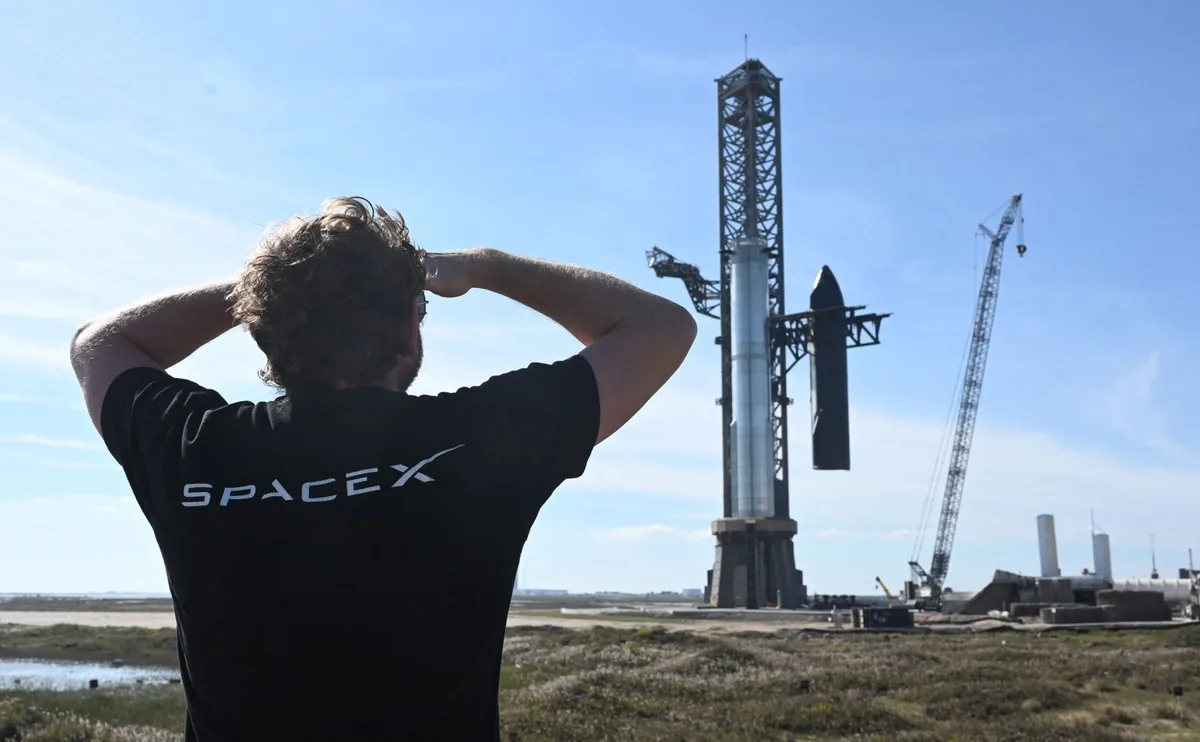
SpaceX CEO Elon Musk described plans to build factories on the moon as he presided over the now public rocket maker’s first earnings call this month.
Even Musk admitted it all sounded “totally nuts.” But while Musk’s rhetoric and his timing estimates often don’t line up with reality, he’s not alone in seeing opportunity on the moon.
Now, a new report is offering a look at the financial underpinnings of what could become a vast $566 billion lunar economy, and the ripple effects that could double it to more than $1.1 trillion.
The new report by advisory firm Deloitte and shared with Fortune in advance of its Wednesday release, estimates the budding moon-based economy could generate between $343 billion and $566 billion in upside through 2050.
The range represents a conservative- to accelerated-growth scenario based on how quickly infrastructure, energy, and transportation services can get up and running on the moon, and then how quickly commercial businesses follow—which is no small feat.
The most bullish scenarios also hinge on whether several bleeding-edge technologies advance over the next two decades, including rocket fuel made from water ice at the lunar poles, extraction of helium-3 to cool quantum computers, and AI data centers built to orbit the moon’s surface.
And despite the high barrier to entry for non-aerospace businesses, new companies are getting in on the action.
Luxe fashion brand Prada used its textiles expertise to help design spacesuits that can withstand extreme temperatures.
Sunglasses brand and optical manufacturer Oakley developed a gold-plated visor for astronauts for use in both darkness and under direct exposure to the sun.
“What was once the domain of governments and a handful of aerospace contractors now includes venture-backed startups, investors, defense firms, and some of the world’s largest companies all seeking a role in the emerging lunar economy,” the report states.
“Although still in its earliest stages, the upside potential could be massive.” The report, “Building the Lunar Economy,” includes insights from interviews with founders, engineers, investors, and government officials, and more than 400 model inputs.
It maps out the infrastructure required for working on the moon, including the transportation, energy, communications, surface mobility, and life support needed—and it considers the unpredictable innovations and value that could be unlocked when humanity enters this new realm.
Why now? Brett Loubert, who leads Deloitte’s space practice and co-authored the report, said momentum in the sector took on even greater intensity last year, which was also a record for venture capital investment in space technology.
5News aggregated this summary from the outlet’s public feed. The full article, with all the context, is on fortune.com — the content belongs to Fortune.