Strange 'hobbit' species walked more like us than like 'Lucy,' hip bones reveal
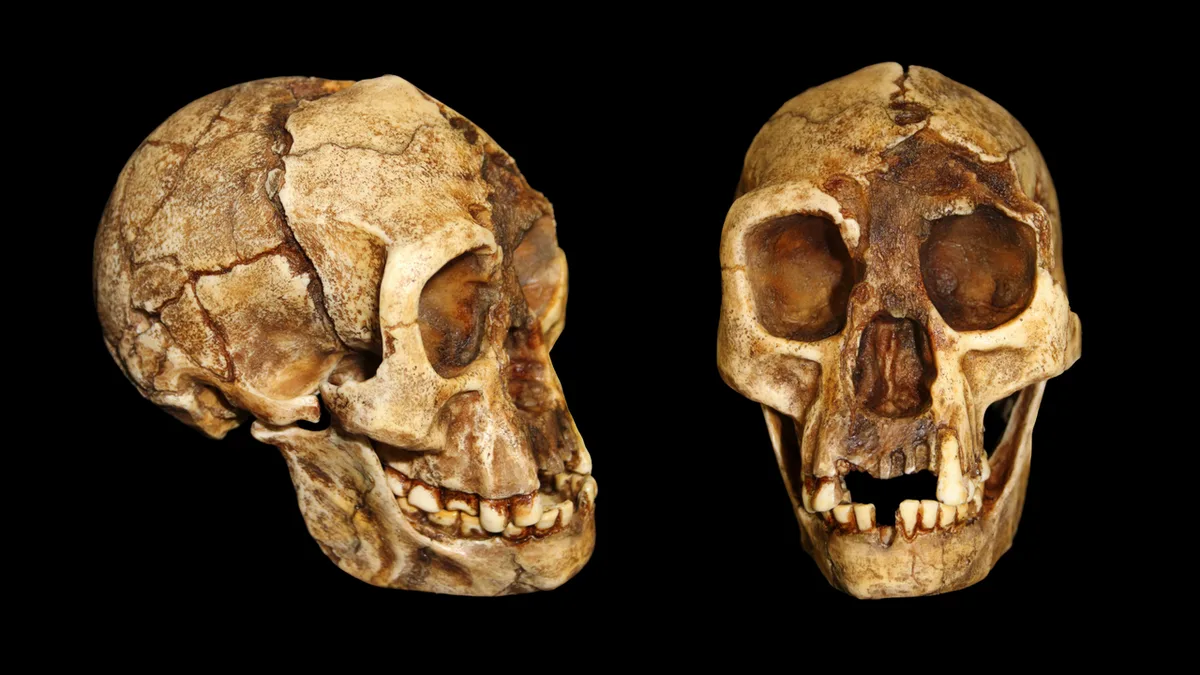
The tiny, now-extinct human relative known as a hobbit had an even more human-like body than previously thought, and probably walked upright somewhat slowly, anthropologists have discovered by studying their hip bones.
But with a more primitive walking style than modern humans and lack of hunting and cooking , the species still differs significantly from Homo sapiens — so with the new findings, the mystery of the hobbits' origins has only deepened.
"Based on just the hip bones, Homo floresiensis looks generally like humans and other genus Homo species and probably could have moved a lot like humans," Kristi Lewton , a biological anthropologist at the University of Southern California, told Live Science.
But H. floresiensis "was not a particularly fast biped and was not traveling long distances," she said.
Lewton and colleagues closely studied the pelvic bones of LB 1, an adult female hobbit who was about 3.5 feet (1 meter) tall when she died between 100,000 and 60,000 years ago on the Indonesian island of Flores.
They looked for clues as to whether members of H. floresiensis were more similar to other Pleistocene human species or to earlier australopithecine species, such as the iconic "Lucy" .
Their study was published Aug.
25 in the American Journal of Biological Anthropology .
Ever since H. floresiensis was discovered in 2003, researchers have tried to figure out why members of this species were so small and which species they evolved from.
The hobbits' skeletons have a unique mixture of human-like and australopithecine-like traits, making assessment of their evolutionary ancestry challenging.
For instance, the hobbits' hand bones are more similar to those found in australopithecines, but their shoulders and upper arms are more human-like.
One physical characteristic that experts have identified in H. floresiensis is known as iliac flare, or the degree to which the hip bones are flared out from the center of the trunk.
A large degree of iliac flare has been linked to australopithecine anatomy and, functionally, to less efficient bipedal walking than is seen in humans.
But a problem that Lewton and colleagues encountered was that different methods used to quantify the "iliac flare" of humans' relatives often produced contradictory results.
5News aggregated this summary from the outlet’s public feed. The full article, with all the context, is on www.livescience.com — the content belongs to Live Science.