388 years ago, Galileo worked out why human giants can't exist—and explained a law of nature
388 years ago, Galileo worked out why human giants can't exist—and explained a law of physics
Giants have featured in stories for millennia, but the reason why they don't exist helps explain the natural world
Acording to legend, giants once roamed the Earth. In Homer’s Odyssey , Odysseus encounters the Cyclops, the one-eyed son of Poseidon, living in a huge cavern, hungry and angry. He grasps men and sheep in one hand, devouring them whole. In the days of King Arthur, a clever young boy earned the title of “Jack the Giant Killer,” using his sharp wit to outsmart and slay the various “giants” plaguing the land. Another Jack—or perhaps it is the same Jack—famously plants some magic beans and climbs the resulting beanstalk to a castle in the clouds, cleverly outwitting the giant residing there.
All these giants of legend have a humanoid form, and they undertake generally human activities—walking, stomping, dancing, carrying heavy loads, running, and so forth. They act and move about in a human manner, only at a larger scale. But if human giants did exist, could they actually survive in this form ?
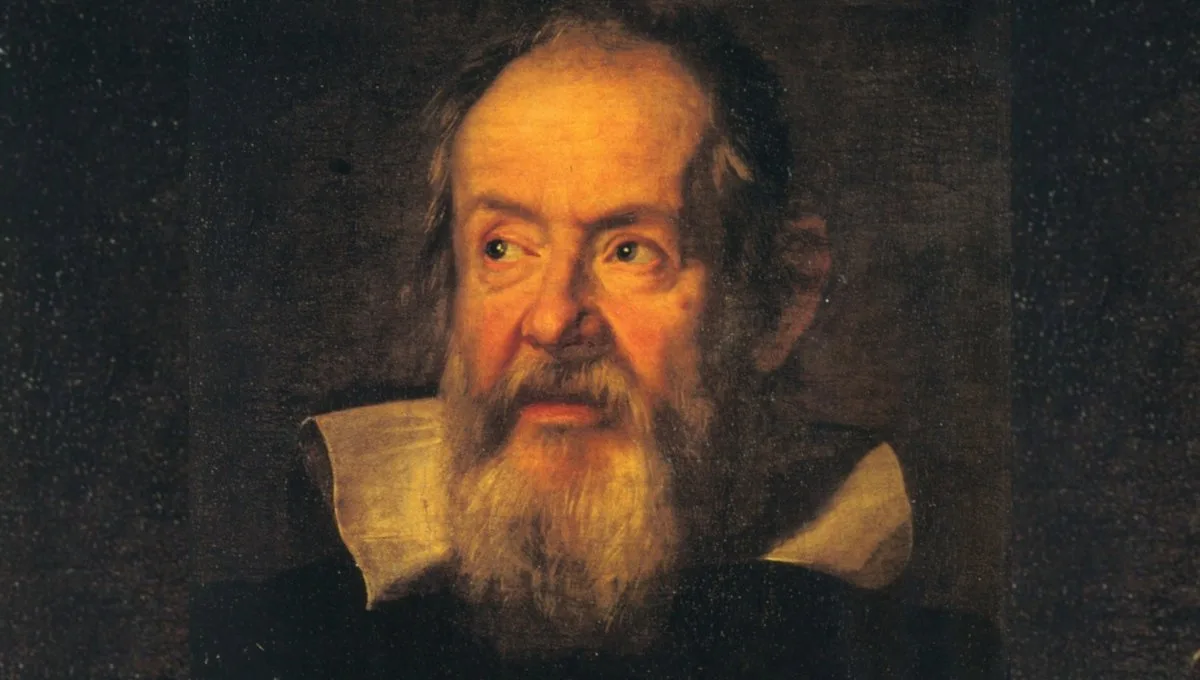
In his foundational 1638 text “Dialogues Concerning Two New Sciences,” Galileo Galilei argues that this folklore understanding of the nature of giants is fundamentally flawed. He contends that this idea of a massive humanlike creature is, quite simply, physically impossible.
If you're enjoying this article, consider supporting our award-winning journalism by subscribing . By purchasing a subscription you are helping to ensure the future of impactful stories about the discoveries and ideas shaping our world today.
To begin his argument, Galileo asks us to imagine a structural beam of sturdy oak. The beam might be used to support a heavy load—perhaps a load of bricks or a great stone.
He then asks us to imagine a much larger oak beam, scaled up in size but with the same proportions and material. A thicker, solid oak beam, of course, will naturally support more than a slender beam of the same wood. But how much more can it support? Will the larger beam be able to support the same load, but also scaled up in size? Should we expect the larger beam to support a scaled-up load of bricks or a scaled-up stone?
Galileo ingeniously argues no —the larger beam will not support a similarly scaled-up load. Indeed, he claims that at a certain sufficient scale, the beam will no longer support even its own weight! His argument relies on a certain subtle observation concerning how scaling works in different dimensions.
Galileo first observes that the load-bearing strength of a beam depends on its cross-sectional area, since a failure of the beam involves it breaking across a cross section. Since area scales as the square of the linear factor, a 10-times larger beam—with length, width, and depth each scaled by a factor of 10—will have a cross-sectional area 100 times larger than before. In other words, a 10-times larger beam is 100 times stronger! It will be able to support 100 times the load as the smaller beam.
That may seem initially very good.
5News aggregated this summary from the outlet’s public feed. The full article, with all the context, is on www.scientificamerican.com — the content belongs to Scientific American.