"National security" becomes Trump's executive sledgehammer
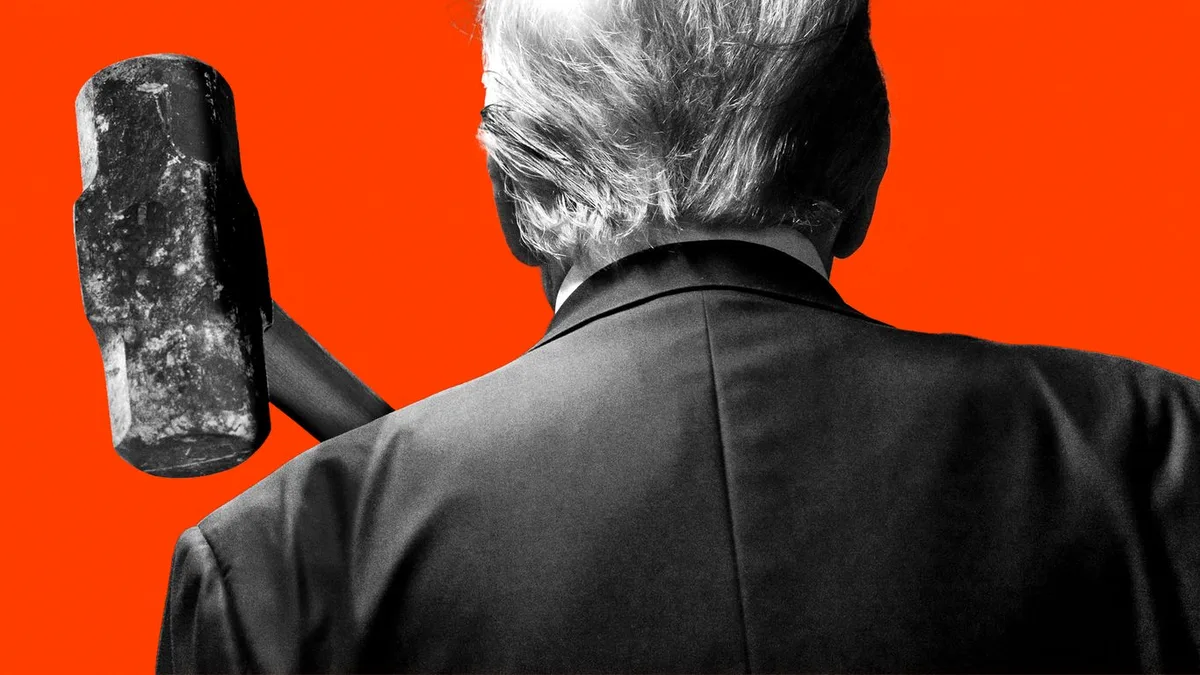
What do a White House ban on journalists, a 250-foot arch near the nation's capital and Greenland have in common? President Trump needs all of them for national security purposes, he and his administration have argued.
Why it matters: As he's unilaterally shattered presidential norms, Trump has justified his sweeping policy priorities with a familiar two-word rationale: national security.
Driving the news: On the morning that the three banned outlets (CNN, MS NOW and Politico) sued the administration , Trump claimed that "FAKE NEWS" is "a threat to our National Security." It's not the first time the administration has said its press restrictions were a national security must: That was also part of the reasoning for new rules for Pentagon reporters , a war on leakers and subpoenas of journalists.
National security purposes are a broad bucket that the president has also used to justify his D.C. redesign: Trump pitched his proposed " triumphal arch " as a dual-use facility housing snipers, drones and ammunition storage "for National Security purposes." That's also why the president was adamant his White House ballroom project must proceed (after he demolished the East Wing).
The White House declined to comment beyond the president's post.
Zoom out: The national security rationale has also fueled the administration's deregulatory AI approach.
Earlier this month, Justice Department attorneys argued that laws that get in the way of a growing AI industry "threaten national security" in a statement of interest backing AI companies in The New York Times' copyright infringement lawsuit.
What they're saying: The executive's use of national security as a justification for policy can trigger "extreme deference" in the courts, says Kimberly Wehle, a University of Baltimore law professor.
Wehle notes the expanded executive power seen in Trump 2.0 has its origins in the Bush-era advancement of the unitary executive theory — though the national psyche today does not necessarily reflect the urgency of the 9/11 era.
"It appears that the Trump administration has taken a page from that era and understands that it's easier to justify power from the standpoint of the public, and even in the courts, if you can say it's in the interest of national security," she says.
Friction point: The argument hasn't always found a receptive audience.
5News aggregated this summary from the outlet’s public feed. The full article, with all the context, is on www.axios.com — the content belongs to Axios.