Thousands of Food-Packaging Chemicals Lack Safety Data
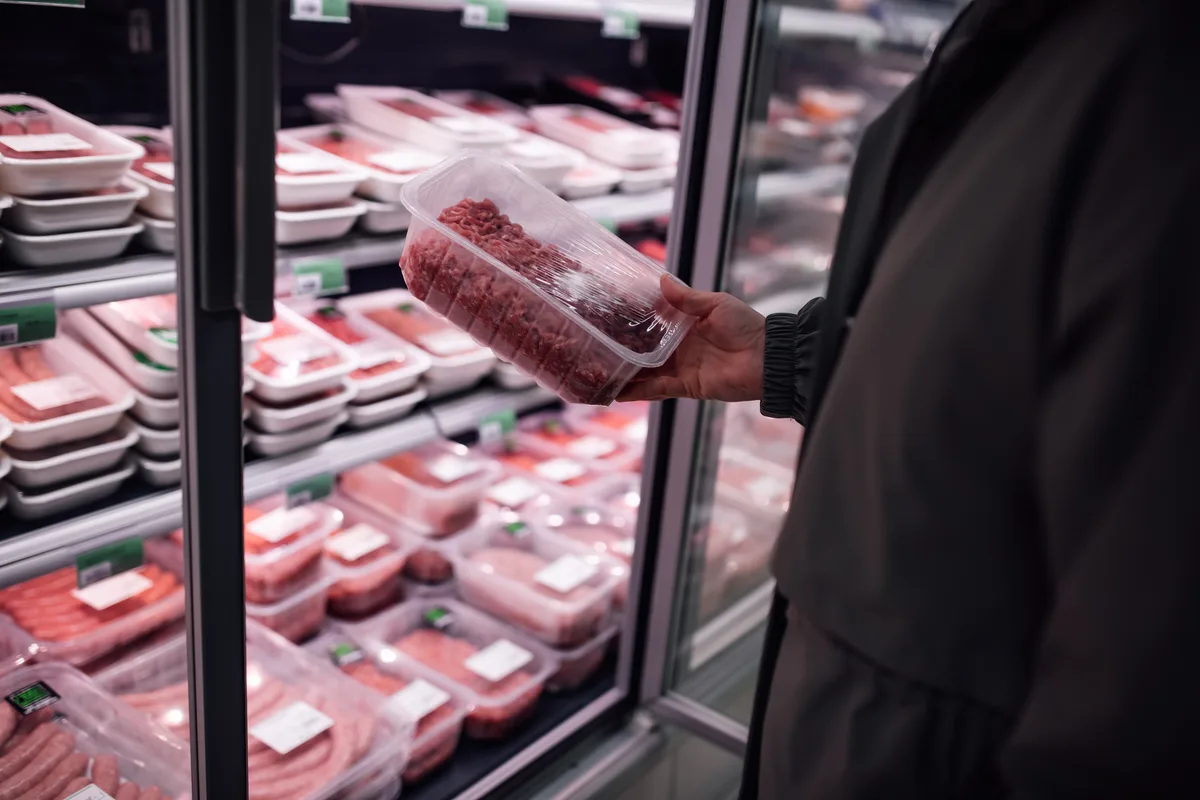
—Getty Images / Tatsiana Volkava We don’t often look with suspicion at the plastic wrapping a block of cheddar, the waxed carton containing milk, or the plastic bottle of ketchup.
We expect food packaging to be more or less inert —breakfast isn’t supposed to come with a side of chemicals, after all.
But evidence suggests that many food-contact materials, as food packaging is known, leach chemicals into the products they house .
The most famous of these is likely bisphenol A (BPA) , an ingredient in plastic that is a potent endocrine disrupter.
In 2025, the E.U. banned BPA’s use in food-contact materials, and in the U.S. it’s banned in baby bottles, sippy cups, and formula packaging.
But when one chemical is demonized, its replacement may not be any safer, says Helene Weisinger, a chemist at the Swiss nonprofit Food Packaging Forum. (BPA, for instance, is often replaced with BPS, which turns out to have similar issues .) It’s “chemical whack-a-mole,” Weisinger says.
In a recent paper in Environmental Science and Technology , she and her colleagues propose a new system for avoiding this situation, in which chemically similar substances are grouped together and may be banned or regulated together, rather than one by one—an idea that could simplify what’s proving to be a difficult process.
A lack of safety information about food packaging The chemicals we encounter in daily life aren’t well understood.
“There's 350,000 chemicals that are put on global markets, and for a lot of those, we have relatively little information about their toxicity.
They've not been exhaustively tested,” says Olwenn Martin, an associate professor in health and environment at University College London who was not involved in the new research.
“That's something that, in my world, is well known, and probably for the general public would come as a bit of a shock.” Chemicals used in food packaging are little different; the health effects of relatively few are well-understood.
Out of about 15,000 chemicals used in food-contact materials, 1,222 have known major health risks, the researchers state in the new paper, while there is little information on most of the others.
“People kept asking us, ‘We can't do measurements for 15,000 chemicals.
What should we really be concerned about?’ And that is kind of how we started off with the study,” says Weisinger.
5News aggregated this summary from the outlet’s public feed. The full article, with all the context, is on time.com — the content belongs to TIME.