On the Ground at the Power to the People Festival, a Day of Protest Music and Solidarity
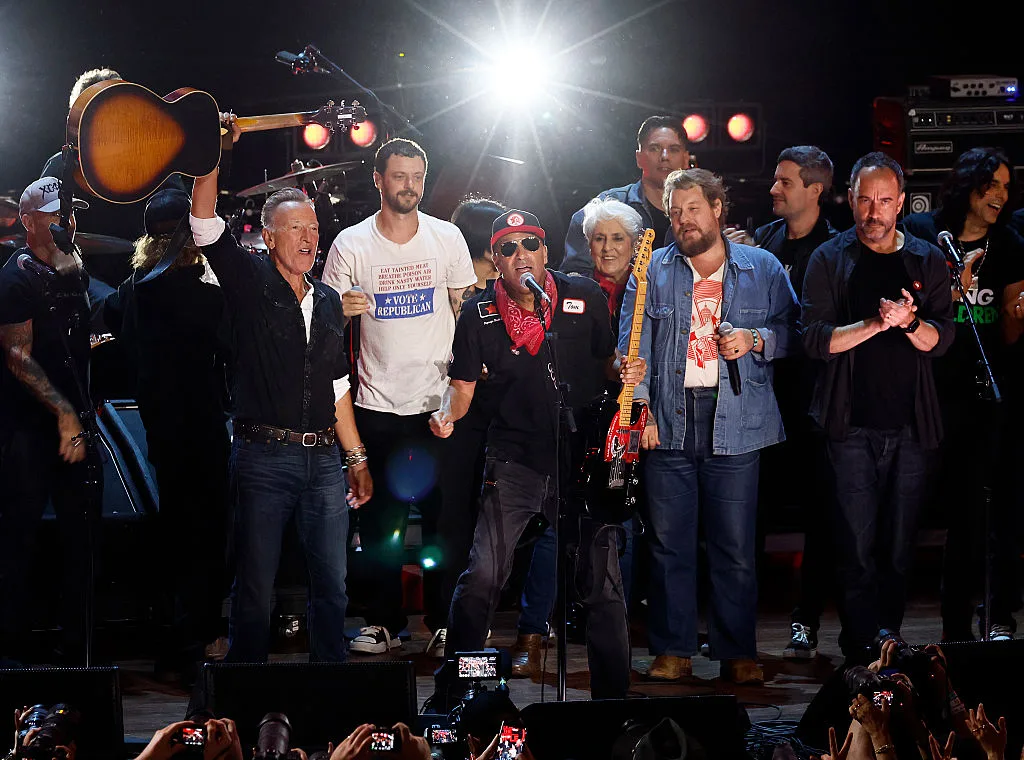
Bruce Springsteen, Tom Morello, Joan Baez, and others appear onstage for the finale of the 2026 Power To The People Festival on Oct.
03, 2026 in Columbia, Md. —Paul Morigi—Getty Images Tom Morello has been staging benefit shows since before Rage Against the Machine made him an icon: $10 at the door, proceeds to a homeless shelter, guitars loud enough to wage a sonic revolt against the establishment.
Last year, while serving as musical director of Back to the Beginning, the Birmingham farewell concert for Ozzy Osbourne and Black Sabbath, he began imagining something bigger: a multigenerational, multigenre festival built on his foundational proposition that music can be an act of resistance—aimed squarely at Donald Trump and the forces he has unleashed.
"It's no accident that the concert was about three weeks out from the midterms," Morello told me after the Oct.
3 Power to the People show at Merriweather Post Pavilion in Columbia, Md., less than 30 minutes from the capital whose balance of power those elections will decide.
"In a time where hatred and division are rife, this is a festival of love and solidarity.
In a time where injustice is rampant, this is a festival celebrating those who are standing up against injustice.
And in a time where artists are either being canceled or censoring themselves, it was a guarantee the artists were going to be able to play what they wanted to play and say what they wanted to say." To that end, Morello assembled a sprawling roster of rebels and rock-n-roll royalty: Joan Baez and Public Enemy; Jack Black and the Dropkick Murphys; Cypress Hill and Nathaniel Rateliff; Killer Mike and Serj Tankian; Stephen Stills and Dave Matthews and the Foo Fighters.
Headlining the event was Bruce Springsteen , fresh off a 20-show tour that had become a nightly rebuke of Trump, MAGA, and the authoritarian currents he saw threatening the American experiment.
Power to the People suggested a rebellious energy stirring at a moment when many artists had grown wary of speaking out, fearful of backlash, of alienating part of their audience, of the wrath of an administration that has repeatedly targeted prominent critics.
"I feel as though we're trying to turn the tide and we're facing a tsunami," said Baez, who sang alongside Bob Dylan and Pete Seeger during the protest movements of the 1960s and '70s.
Then she turned to the crowd.
5News aggregated this summary from the outlet’s public feed. The full article, with all the context, is on time.com — the content belongs to TIME.