Why can you see the moon during the day? This week is the perfect time to find out
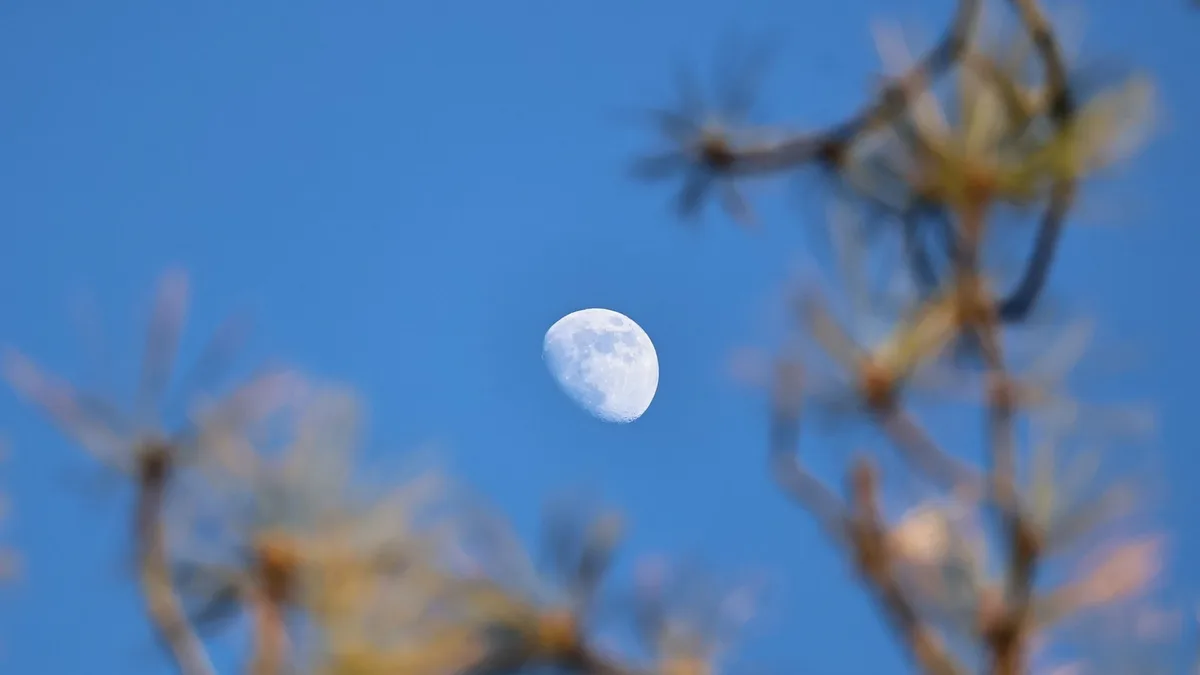
I know perfectly well that the moon comes out during the day.
I have known this for decades.
Yet whenever I spot it in a blue afternoon sky, some primitive part of my brain still thinks it has turned up early.
I'm certainly not the only one.
Many people don't understand how it could be visible in daylight.
In their eyes, the moon is a nighttime object.
Why? Because that's when they notice it — it appears brighter.
We tend to think of the sun as belonging to the day and the moon to the night because that's how they're usually presented to us as children.
Astronomically, it makes little sense.
The moon spends plenty of time above our horizon while the sun is also up — it spends half its time in the daytime sky, in fact.
If the moon, pale but unmistakable, looks slightly out of place against a blue sky , it's not — you are.
This week is a great time to get used to seeing it there.
Just past first quarter, the moon will spend each afternoon hanging in the daytime sky, becoming easier to spot as the sun sinks towards the horizon.
What's happening and when to look The moon reached first quarter on Sunday, Oct.
5News aggregated this summary from the outlet’s public feed. The full article, with all the context, is on www.space.com — the content belongs to Space.com.